AI Appraisal Estimate

AI-generated estimates · not official valuations

From the user

What was submitted

Photo and notes provided by the user — not generated by AI

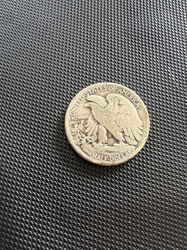
Submitted item photo
Submitted photo · June 27, 2026

User's notes

No additional notes provided.

AI analysis below

AI appraisal

AI analysis & estimate

AI-Generated · Verify before acting

Everything below is generated by AI for informational purposes only. AI can make mistakes — the AI may misidentify items or misattribute them (artist, maker, brand, designer, origin, era). This is not an official valuation and should not be used for insurance, sale, tax, estate, legal, or lending purposes — or any decision requiring a certified appraisal. It is not an authoritative claim about any person, brand, or rights holder — do not share or rely on it as a factual statement about a third party. Always consult qualified professionals before making financial decisions.

Read the full disclaimer

AI Identification

·Not independently authenticated·Verify before acting

United States Buffalo Nickel (Indian Head Nickel)

Numismatics / US Coins

AI Estimated Value

·Not an official valuation·Verify before acting

$0.10 - $0.25

As of June 27, 2026

AI Item Analysis

·AI can make mistakes·Verify before acting
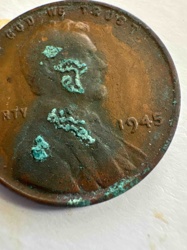
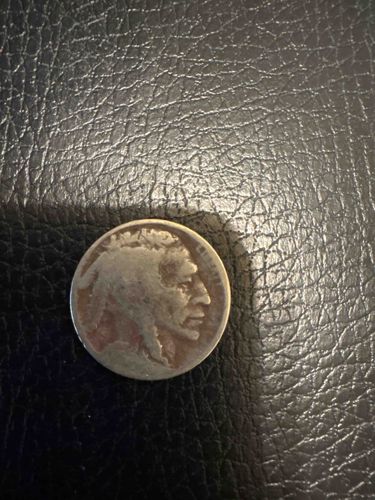
This is a United States five-cent piece, commonly known as a Buffalo Nickel or Indian Head Nickel, designed by sculptor James Earle Fraser. The obverse features the right-facing profile of a Native American man, which Fraser stated was a composite of three different chiefs. This specific specimen exhibits significant circulation wear, typical of a low-grade 'Good' or 'About Good' (AG-3) condition. The surface displays a matte grey patina with areas of darker oxidation and minor surface pitting. Notably, the date normally found on the lower left shoulder of the bust is completely worn away or 'slick,' which is a common occurrence for this series due to the design's high relief in that area. The word 'LIBERTY' remains partially visible along the upper right rim. The coin is composed of 75% copper and 25% nickel. Based on the design, it was minted between 1913 and 1938. The relief is flattened across the hair, braid, and facial features, indicating extensive time in commercial use. No mint mark is visible in this view, as the reverse side (containing the American Bison) is not shown. The overall craftsmanship represents early 20th-century American numismatic art, though the current state shows heavy abrasions and loss of fine detail.
AI Appraisal Report

·AI can make mistakes·Verify before acting
I have carefully examined the high-resolution images provided of this United States Buffalo Nickel. Based on the visual evidence, the coin exhibits characteristics typical of a heavily circulated specimen in 'About Good' (AG-3) or 'Fair' condition. The most critical assessment factor is the date; on this example, the date on the obverse shoulder is completely worn smooth, or 'slick.' In the numismatic market, Buffalo Nickels without a readable date are generally traded at a very low premium, often purely for their silver-less metal content or as 'filler' coins. The surfaces show extensive flattening of the hair braids and facial features, consistent with decades of commerce. Regarding authenticity, the profile, font style of 'LIBERTY,' and the specific matte grey patina appear consistent with genuine 75% copper/25% nickel composition pieces minted between 1913 and 1938. However, without a visible date or mint mark, it lacks the rarity required for a higher valuation. The current market for 'dateless' Buffalo Nickels is steady but limited to bulk purchasers or beginning collectors. For a definitive authentication, I would need to perform an in-person weight measurement (standard 5.0 grams) and a microscopic inspection to rule out contemporary counterfeits. Additionally, a restoration chemical (such as Ferric Chloride) could potentially reveal the date, though such treatments are generally considered damage by collectors and rarely increase value for common dates. My valuation reflects its status as a common circulated specimen lacking its primary identifying numeric mark.

Get your items appraised

Instant estimates of your treasures with AI-powered appraisals

Browse More Appraisals