Mousterian-style Lithic Hand Scraper/Biface
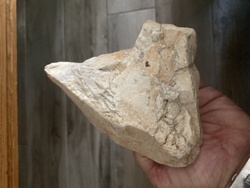
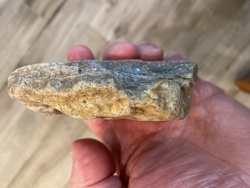
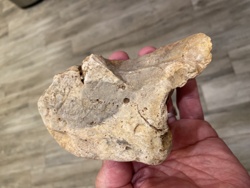
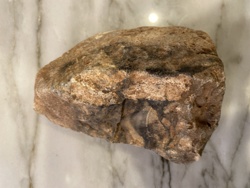
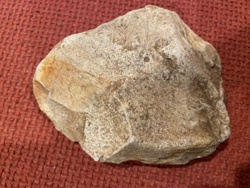
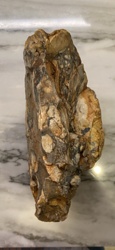
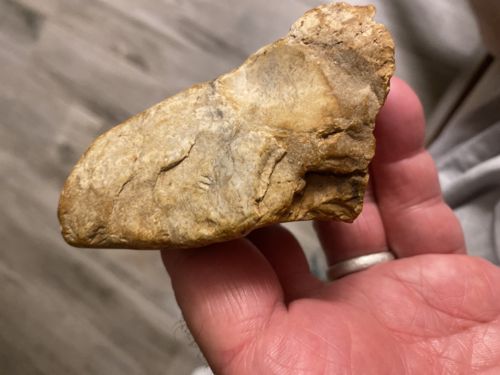
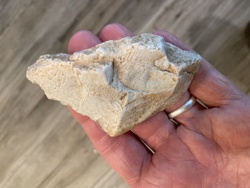
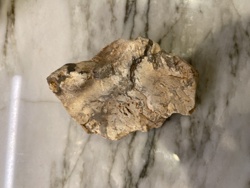
This is a prehistoric lithic tool, approximately 2.5 by 2.5 inches in size, identified as a hand scraper or small biface. The object is composed of a fine-grained sedimentary or metamorphic lithic material, likely a local chert or quartzite, exhibiting a prominent yellowish-tan to ochre patina characteristic of prolonged environmental exposure and mineral staining. The physical construction shows evidence of intentional percussion flaking, with visible flake scars and a distinct bulb of percussion near the thicker base. The tool features a roughly triangular or sub-ovate shape with a tapered working edge that shows signs of unifacial retouching, a common trait in Mousterian industry tools used for processing hides or wood. The surface displays significant weathering and 'desert varnish' or earth-toning, with some minor modern abrasions or micro-chipping along the thinner edges likely due to post-depositional movement in the soil. There are no visible maker's marks, as is typical for artifacts of the Middle Paleolithic/Middle Stone Age era. Its craftsmanship indicates a functional design specialized for a handheld grip, reflecting a high level of prehistoric technical skill. The find location in Guthrie, Oklahoma, suggests it originates from an indigenous North American culture, though it shares morphological similarities with Mousterian technology seen globally.
AI-Generated Appraisal Disclaimer
Estimated Value
$40-$75
Basic Information
Category
Archaeological Artifacts / Prehistoric Stone Tools
Appraised On
February 18, 2026
Estimated Value
$40-$75
Additional Details Provided By Owner
User Provided Information
Paleolithic Mousterian stone hand axe scraper found i. Guthrie OK measuring 2.5" x x 2.5"
Item Description
This is a prehistoric lithic tool, approximately 2.5 by 2.5 inches in size, identified as a hand scraper or small biface. The object is composed of a fine-grained sedimentary or metamorphic lithic material, likely a local chert or quartzite, exhibiting a prominent yellowish-tan to ochre patina characteristic of prolonged environmental exposure and mineral staining. The physical construction shows evidence of intentional percussion flaking, with visible flake scars and a distinct bulb of percussion near the thicker base. The tool features a roughly triangular or sub-ovate shape with a tapered working edge that shows signs of unifacial retouching, a common trait in Mousterian industry tools used for processing hides or wood. The surface displays significant weathering and 'desert varnish' or earth-toning, with some minor modern abrasions or micro-chipping along the thinner edges likely due to post-depositional movement in the soil. There are no visible maker's marks, as is typical for artifacts of the Middle Paleolithic/Middle Stone Age era. Its craftsmanship indicates a functional design specialized for a handheld grip, reflecting a high level of prehistoric technical skill. The find location in Guthrie, Oklahoma, suggests it originates from an indigenous North American culture, though it shares morphological similarities with Mousterian technology seen globally.
Related Tags
Explore similar items and categories:
Get Your Items Appraised
Instant estimates of your treasures with AI-powered instant appraisals