AI Appraisal Estimate

AI-generated estimates · not official valuations

From the user

What was submitted

Photo and notes provided by the user — not generated by AI

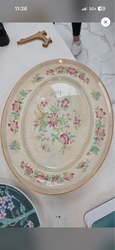
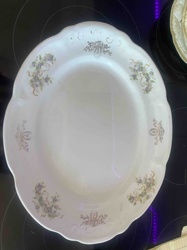
Submitted item photo
Submitted photo · May 27, 2026

User's notes

No additional notes provided.

AI analysis below

AI appraisal

AI analysis & estimate

AI-Generated · Verify before acting

Everything below is generated by AI for informational purposes only. AI can make mistakes — the AI may misidentify items or misattribute them (artist, maker, brand, designer, origin, era). This is not an official valuation and should not be used for insurance, sale, tax, estate, legal, or lending purposes — or any decision requiring a certified appraisal. It is not an authoritative claim about any person, brand, or rights holder — do not share or rely on it as a factual statement about a third party. Always consult qualified professionals before making financial decisions.

Read the full disclaimer

AI Identification

·Not independently authenticated·Verify before acting

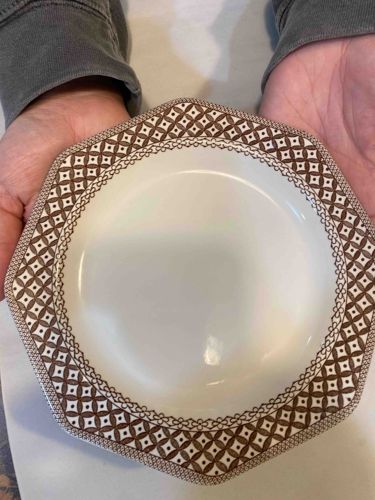
Octagonal Transferware Plate with Geometric Lattice Border

Antique Ceramics & Tableware

AI Estimated Value

·Not an official valuation·Verify before acting

$45-75

As of May 27, 2026

AI Item Analysis

·AI can make mistakes·Verify before acting
This item is an octagonal-shaped ceramic side or salad plate, likely made of earthenware or ironstone. It features a cream-colored glazed body with a monochromatic brown transferware pattern. The design consists of a wide, intricate border featuring a repeating geometric lattice of quatrefoil motifs and dots, flanked by decorative scalloped scrollwork on the inner edge and a micro-dot pattern on the outer rim. The center of the plate remains undecorated, showcasing the smooth, light glaze. Measuring approximately 7 to 8 inches in diameter, the piece displays a distinct eight-sided angular silhouette characteristic of Aesthetic Movement or late Victorian tableware (circa 1880-1910). The transfer is applied with high precision, indicating professional mass-production typical of English potteries like Staffordshire or Minton. The condition appears fair to good with visible glaze crazing throughout, consistent with its age, and a slight darkening of the ceramic body underneath. No major chips or cracks are immediately visible from the top-down perspective, though light surface scratches from utensil use are present. The craftsmanship reflects the industrial period's shift toward highly detailed, mechanically applied ornamentation for the growing middle-class market.
AI Appraisal Report

·AI can make mistakes·Verify before acting
Based on my visual examination of this octagonal transferware plate, I have determined it to be a representative example of late 19th-century British earthenware, likely produced in the Staffordshire region circa 1885 during the Aesthetic Movement. The geometric lattice and quatrefoil border are hallmarks of the 'Japanesque' influence prevalent during this era. The transfer application is crisp, suggesting a high-quality production run, though the absence of a visible maker's mark limits attribution to a specific pottery like Minton or Wedgwood. The condition is fair; while the structural integrity remains intact, the pervasive crazing and slight discoloration or 'browning' of the ironstone body are typical of porous earthenware of this age and detract slightly from its display value. The market for monochromatic transferware remains stable but is currently saturated with common utilitarian forms like side plates. Comparable singles often sell in the $40 to $80 range, whereas complete sets or rare colors (like mulberry or green) command higher premiums. The octagonal shape is a desirable aesthetic feature that adds modest value over standard round plates. A primary limitation of this appraisal is the inability to physically inspect the footrim for chips or feel the glaze texture to rule out professional restoration. To fully authenticate this piece and potentially increase its valuation, I would require a clear macro photograph of any backstamps or registration marks (diamond marks), as well as a physical examination under UV light to check for hidden repairs. Provenance indicating a specific dinner service history would also provide a more definitive valuation.

Get your items appraised

Instant estimates of your treasures with AI-powered appraisals

Browse More Appraisals