Paleolithic Chert Biface Hand Axe Scraper
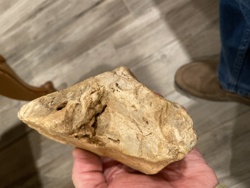
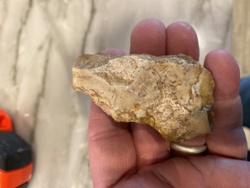
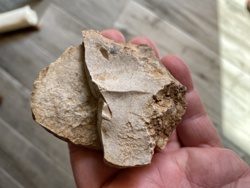
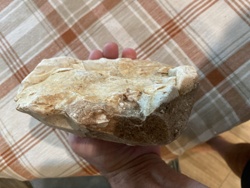
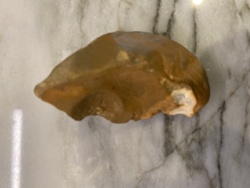
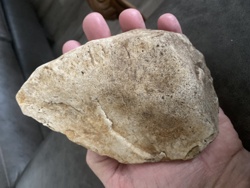
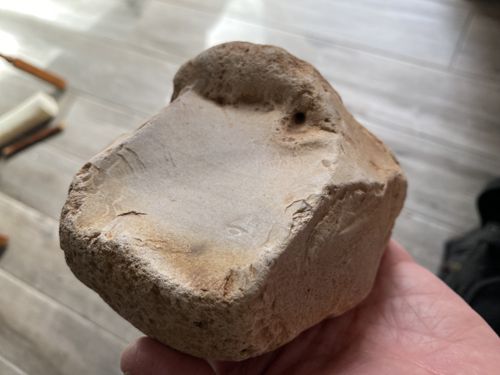
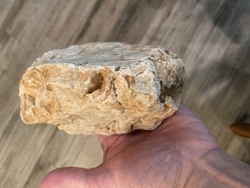
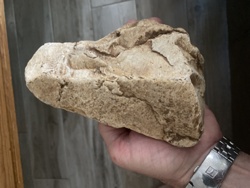
This artifact is a lithic tool measuring approximately 4 inches by 4 inches, discovered in Guthrie, Oklahoma. It is constructed from a dense, light-tan to cream-colored chert, a cryptocrystalline sedimentary rock highly prized by prehistoric cultures for its predictable fracturing and sharp edges. The piece exhibits characteristic bifacial flaking, where material has been removed from both sides to create a functional edge. The surface displays significant patination and weathering, consistent with long-term exposure to the elements or burial in soil, which has softened the original flake scars. Notably, the center shows a large, concave bulb of percussion or a diagnostic flake scar that suggests intentional shaping for use as a scraper or hand-held cutting tool. The edges appear somewhat rounded and worn, indicating heavy use-wear or natural tumbling over millennia. This tool fits the morphological profile of Paleolithic or early Native American lithic technology, functioning as a multi-purpose implement for butchering, hide scraping, or woodworking. The overall craftsmanship is robust rather than delicate, suggesting a utilitarian life cycle. No modern tool marks or recent fractures are visible, supporting its authenticity as an ancient artifact. Its blocky, ergonomic form would have allowed a solid grip for high-pressure scraping tasks.
AI-Generated Appraisal Disclaimer
Estimated Value
$150 - $300
Basic Information
Category
Prehistoric Artifacts / Lithic Tools
Appraised On
February 19, 2026
Estimated Value
$150 - $300
Additional Details Provided By Owner
User Provided Information
Paleolithic chert bi face hand axe scraper found in Guthrie OK 4" x 4"
Item Description
This artifact is a lithic tool measuring approximately 4 inches by 4 inches, discovered in Guthrie, Oklahoma. It is constructed from a dense, light-tan to cream-colored chert, a cryptocrystalline sedimentary rock highly prized by prehistoric cultures for its predictable fracturing and sharp edges. The piece exhibits characteristic bifacial flaking, where material has been removed from both sides to create a functional edge. The surface displays significant patination and weathering, consistent with long-term exposure to the elements or burial in soil, which has softened the original flake scars. Notably, the center shows a large, concave bulb of percussion or a diagnostic flake scar that suggests intentional shaping for use as a scraper or hand-held cutting tool. The edges appear somewhat rounded and worn, indicating heavy use-wear or natural tumbling over millennia. This tool fits the morphological profile of Paleolithic or early Native American lithic technology, functioning as a multi-purpose implement for butchering, hide scraping, or woodworking. The overall craftsmanship is robust rather than delicate, suggesting a utilitarian life cycle. No modern tool marks or recent fractures are visible, supporting its authenticity as an ancient artifact. Its blocky, ergonomic form would have allowed a solid grip for high-pressure scraping tasks.
Get Your Items Appraised
Instant estimates of your treasures with AI-powered instant appraisals