AI Appraisal Estimate

AI-generated estimates · not official valuations

From the user

What was submitted

Photo and notes provided by the user — not generated by AI

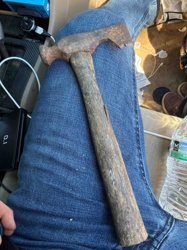
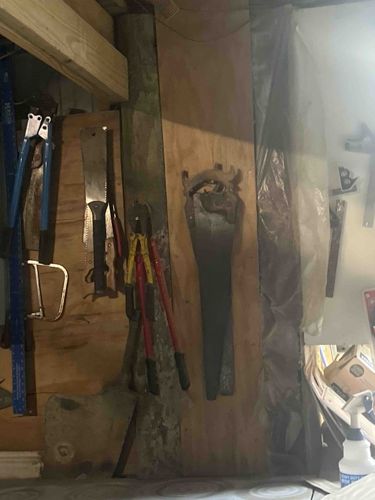
Submitted item photo
Submitted photo · June 10, 2026

User's notes

No additional notes provided.

AI analysis below

AI appraisal

AI analysis & estimate

AI-Generated · Verify before acting

Everything below is generated by AI for informational purposes only. AI can make mistakes — the AI may misidentify items or misattribute them (artist, maker, brand, designer, origin, era). This is not an official valuation and should not be used for insurance, sale, tax, estate, legal, or lending purposes — or any decision requiring a certified appraisal. It is not an authoritative claim about any person, brand, or rights holder — do not share or rely on it as a factual statement about a third party. Always consult qualified professionals before making financial decisions.

Read the full disclaimer

AI Identification

·Not independently authenticated·Verify before acting

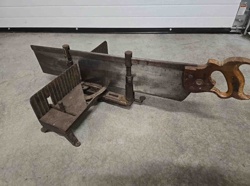
Vintage Carved Wood Handle Crosscut Hand Saw

Hand Tools / Vintage Carpentry Equipment

AI Estimated Value

·Not an official valuation·Verify before acting

$45 - $85

As of June 10, 2026

AI Item Analysis

·AI can make mistakes·Verify before acting
This is a traditional vintage hand-powered crosscut saw, likely dating from the early to mid-20th century. The tool features a tapered steel blade with a visible crosscut tooth pattern, specialized for cutting across wood grain. The blade is secured to a decorative carved wooden handle, commonly referred to as a 'D-handle' or 'pistol grip' style. The handle appears to be crafted from a hardwood like beech or applewood, exhibiting classic scrollwork and a wheat-pattern carving on the grip, which was a hallmark of high-quality manufacturers such as Disston/Atkins during their peak production eras. The handle is attached to the heel of the blade via three or four brass split-nut or medallion screws, though their specific markings are obscured by age. The condition shows heavy signs of utilitarian use and storage: the blade surface is darkened with a significant layer of surface oxidation, rust pitting, and a thick patina that hides any original etched maker's marks or logos. The wooden handle displays rounded edges from years of friction, localized staining, and minor scuffing, but it appears structurally intact without major splits. This saw represents a period of hand-tool craftsmanship where ergonomic design was coupled with aesthetic embellishment, distinguishing it from modern, mass-produced plastic equivalents. The length of the blade appears to be approximately 24 to 26 inches, typical for a standard carpenter's tool.
AI Appraisal Report

·AI can make mistakes·Verify before acting
Based on my visual inspection of this vintage crosscut hand saw, I have identified it as a high-quality carpenter's tool typical of the golden age of American saw manufacturing (circa 1910–1940). The wheat-pattern carving and handle geometry strongly suggest a premium Disston D-8 or a high-end Atkins equivalent. The presence of brass hardware, despite the oxidation, confirms this was a professional-grade tool rather than a budget homeowner model. The condition is 'attic-find' or 'as-found.' The heavy surface oxidation and pitting on the blade significantly impacts the value, as the original etch—crucial for collector identification—is currently obscured. However, the handle remains structurally sound with no visible horns snapped, which preserves its utility for restoration enthusiasts. Currently, the market for vintage hand tools is stable, driven by the 'Galoot' community of traditional woodworkers who prefer refurbished vintage steel over modern induction-hardened blades. Factors limiting the value include the significant labor required to remove rust and sharpen the crosscut teeth. If a rare medallion (such as a 'Disston-Phila' or 'Victory' mark) were found under the patina, the value could shift toward the higher end of the range. Limitations: This appraisal is based solely on digital imagery. Full authentication requires an in-person physical inspection to check for blade straightness (lack of kinks), a 'ring test' for steel integrity, and a solvent cleaning of the medallion to identify the specific production era. Scientific testing is not required, but provenance regarding its use in a specific trade or shop could provide a minor historical premium.

Get your items appraised

Instant estimates of your treasures with AI-powered appraisals

Browse More Appraisals