George II Style Gilt Plaster Pier Mirror
Antiques & Fine Art Glass

George II Style Gilt Plaster Pier Mirror

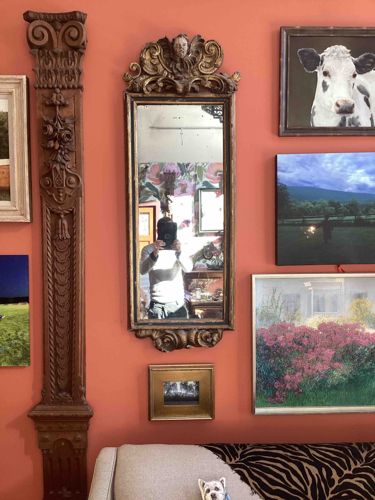
This is a tall, vertical pier mirror constructed with a decorative plaster (stucco) frame that has been finished with oil or water gilding. The mirror exhibits a characteristic mid-18th-century George II or early George III aesthetic, likely dating from the 1700s as per the user context. It features a prominent broken-pediment style cresting or pediment at the top, centered by an exquisitely carved mask (possibly a cherub or Bacchus-inspired face) flanked by symmetrical C-scroll and acanthus leaf flourishes. The framing around the mirror plate is relatively simple and rectilinear, providing a stark contrast to the ornate sculptural elements at the crown and the matching scrolled apron at the base. The gilding shows a significant aged patina, with dark oxidation (bole) showing through in high-relief areas, which is a desirable trait for period antiques. There are visible signs of historical wear, including small chips in the plaster molding and some dulling of the gold leaf finish, which is consistent with its age. The silvering on the glass appears relatively clear in the photograph, though it may be a later replacement plate given the lack of significant foxing typical of mercury-silvered glass from the 18th century. The overall craftsmanship suggests a high-quality workshop production suited for an upper-class interior.

Estimated Value

$4,500 - $6,500

Basic Information

Category

Antiques & Fine Art Glass

Appraised On

February 2, 2026

Estimated Value

$4,500 - $6,500

Additional Details Provided By Owner

User Provided Information

Call Gilder plaster 1700s mirror

Item Description

This is a tall, vertical pier mirror constructed with a decorative plaster (stucco) frame that has been finished with oil or water gilding. The mirror exhibits a characteristic mid-18th-century George II or early George III aesthetic, likely dating from the 1700s as per the user context. It features a prominent broken-pediment style cresting or pediment at the top, centered by an exquisitely carved mask (possibly a cherub or Bacchus-inspired face) flanked by symmetrical C-scroll and acanthus leaf flourishes. The framing around the mirror plate is relatively simple and rectilinear, providing a stark contrast to the ornate sculptural elements at the crown and the matching scrolled apron at the base. The gilding shows a significant aged patina, with dark oxidation (bole) showing through in high-relief areas, which is a desirable trait for period antiques. There are visible signs of historical wear, including small chips in the plaster molding and some dulling of the gold leaf finish, which is consistent with its age. The silvering on the glass appears relatively clear in the photograph, though it may be a later replacement plate given the lack of significant foxing typical of mercury-silvered glass from the 18th century. The overall craftsmanship suggests a high-quality workshop production suited for an upper-class interior.
Get Your Items Appraised

Instant estimates of your treasures with AI-powered instant appraisals

Browse More Appraisals