Vintage Silver-Tone Scimitar Motif Tie Clip
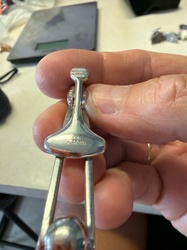
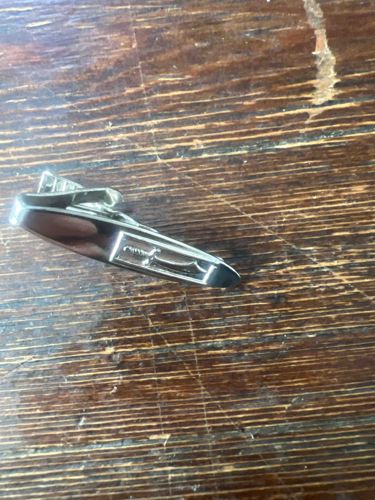
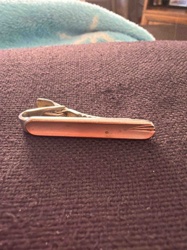
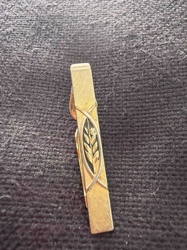
This item is a vintage-style men's tie clip, or tie bar, featuring a distinctive scimitar or curved sword motif. The object is constructed from a silver-toned metal, likely rhodium-plated brass or stainless steel, exhibiting a bright, polished finish. The main body of the clip has an elongated, tapered shape that terminates in a rounded point. A recessed rectangular panel on the right side contains a raised relief of a scimitar with a detailed hilt and curved blade. The mechanism is a spring-loaded alligator-style clasp located on the reverse, designed to secure the tie to the placket of a shirt. Based on the silhouette and casting style, it likely dates to the mid-20th century (circa 1950s-1960s), a period when fraternal or novelty motifs were common in men's accessories. The surface shows minor micro-scratching and light patina consistent with age and gentle use, but no major structural damage or metal fatigue is visible. The craftsmanship is of standard mass-production quality, though the detail in the sword casting is crisp. No visible maker's marks or hallmarks are present on the front surface, which is common for novelty jewelry of this era.
AI-Generated Appraisal Disclaimer
Estimated Value
$25.00 - $45.00
Basic Information
Category
Men's Fashion Accessories / Vintage Jewelry
Appraised On
April 5, 2026
Estimated Value
$25.00 - $45.00
Item Description
This item is a vintage-style men's tie clip, or tie bar, featuring a distinctive scimitar or curved sword motif. The object is constructed from a silver-toned metal, likely rhodium-plated brass or stainless steel, exhibiting a bright, polished finish. The main body of the clip has an elongated, tapered shape that terminates in a rounded point. A recessed rectangular panel on the right side contains a raised relief of a scimitar with a detailed hilt and curved blade. The mechanism is a spring-loaded alligator-style clasp located on the reverse, designed to secure the tie to the placket of a shirt. Based on the silhouette and casting style, it likely dates to the mid-20th century (circa 1950s-1960s), a period when fraternal or novelty motifs were common in men's accessories. The surface shows minor micro-scratching and light patina consistent with age and gentle use, but no major structural damage or metal fatigue is visible. The craftsmanship is of standard mass-production quality, though the detail in the sword casting is crisp. No visible maker's marks or hallmarks are present on the front surface, which is common for novelty jewelry of this era.
Related Tags
Get Your Items Appraised
Instant estimates of your treasures with AI-powered instant appraisals