Vintage Canvas and Cork Canada Goose or Brant Decoy
Antique Sporting Goods / Folk Art Decoys

Vintage Canvas and Cork Canada Goose or Brant Decoy

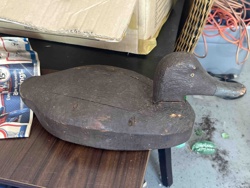
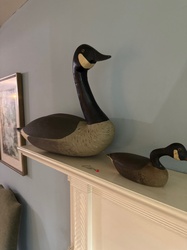
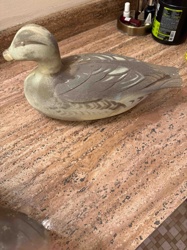
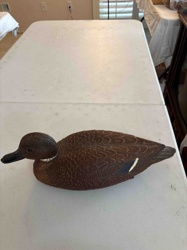
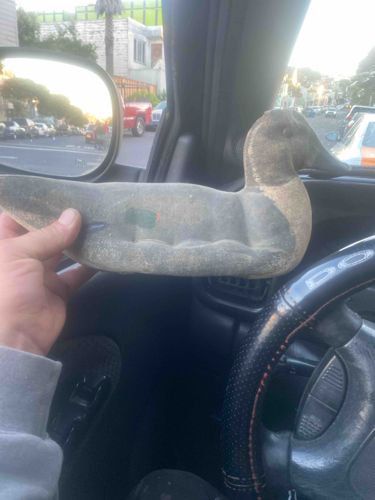
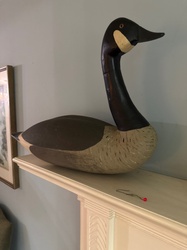
This is a vintage waterfowl decoy, likely representing a Brant or a Canada Goose, constructed using a traditional multi-media approach common in mid-20th-century decoy making. The piece features a solid wooden head and neck with a long, flattened bill, mounted onto a body that appears to be made of canvas stretched over a frame or a cork base. The exterior is covered in a heavy textile or canvas material that has been hand-painted. The color palette consists of weathered grays, browns, and dark chars, with a notable green and red speculum marking on the side. This specific construction style was often utilized to reduce weight for transport while maintaining buoyancy. The condition of the item shows significant honest wear and age-related patina. There is heavy surface soiling, minor fraying of the canvas edges, and areas of paint loss, particularly around the chest and head. The tail is elongated and tapered, a stylistic choice seen in decoys from the Atlantic flyway. While no maker's mark is immediately visible in the image, the folk-art quality and assembly method suggest a mid-1900s origin, possibly by a regional craftsman from a coastal area known for waterfowl hunting. The craftsmanship indicates utility over ornamentation, with visible seams and a rugged build designed for active field use.
Estimated Value

$450 - $700

Basic Information

Category

Antique Sporting Goods / Folk Art Decoys

Appraised On

March 24, 2026

Estimated Value

$450 - $700

Item Description

This is a vintage waterfowl decoy, likely representing a Brant or a Canada Goose, constructed using a traditional multi-media approach common in mid-20th-century decoy making. The piece features a solid wooden head and neck with a long, flattened bill, mounted onto a body that appears to be made of canvas stretched over a frame or a cork base. The exterior is covered in a heavy textile or canvas material that has been hand-painted. The color palette consists of weathered grays, browns, and dark chars, with a notable green and red speculum marking on the side. This specific construction style was often utilized to reduce weight for transport while maintaining buoyancy. The condition of the item shows significant honest wear and age-related patina. There is heavy surface soiling, minor fraying of the canvas edges, and areas of paint loss, particularly around the chest and head. The tail is elongated and tapered, a stylistic choice seen in decoys from the Atlantic flyway. While no maker's mark is immediately visible in the image, the folk-art quality and assembly method suggest a mid-1900s origin, possibly by a regional craftsman from a coastal area known for waterfowl hunting. The craftsmanship indicates utility over ornamentation, with visible seams and a rugged build designed for active field use.
Get Your Items Appraised

Instant estimates of your treasures with AI-powered instant appraisals

Browse More Appraisals