Prehistoric Chert Multi-Tool Core (Hand Axe/Scraper)
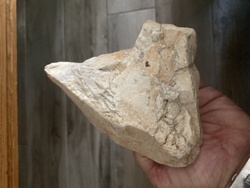
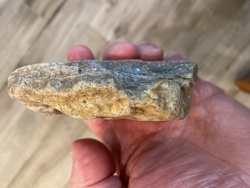
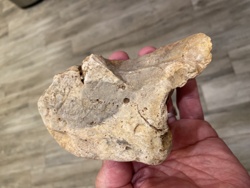
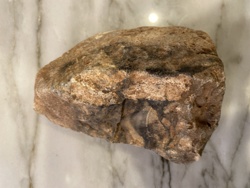
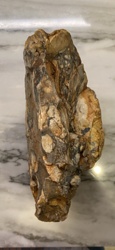
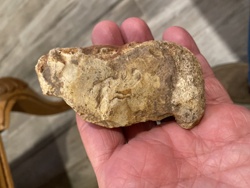
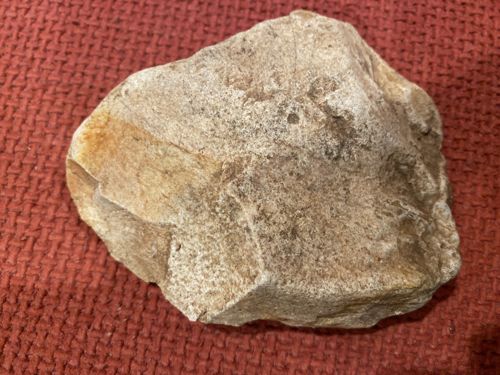
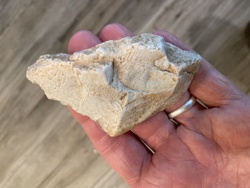
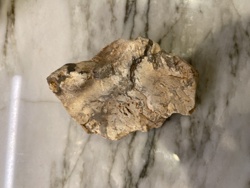
This is a prehistoric lithic artifact, specifically a multi-purpose core tool fashioned from chert, discovered in Guthrie, Oklahoma. Measuring approximately 4.25 inches by 3 inches, the item displays the characteristic physical traits of a Paleolithic or Archaic period hand tool. The material is a dense, cryptocrystalline chert featuring a range of earthy tones, including tans, creams, and subtle ochre iron staining. The construction demonstrates intentional conchoidal fracturing; visible flake scars along the margins indicate percussion flaking used to create a functional working edge. The item possesses a robust, somewhat triangular morphology, allowing it to serve multiple functions such as a hand axe for heavy chopping or a scraper for processing hides. Notably, the specimen retains a significant portion of its original cortex (the weathered outer layer of the raw stone), which provides a tactile grip for the user. Its condition shows heavy patination consistent with long-term environmental exposure, with softened edges on older fractures suggesting significant age. There are no modern maker's marks, as this is a handcrafted indigenous tool. The craftsmanship is utilitarian, reflecting a 'expedient tool' logic where a core is worked just enough to be functional. The quality is indicated by the strategic removal of flakes to create a balanced weight distribution, making it an excellent example of opportunistic prehistoric lithic technology from the Southern Plains region.
AI-Generated Appraisal Disclaimer
Estimated Value
$40 - $75
Basic Information
Category
Archaeological Artifacts / Prehistoric Stone Tools
Appraised On
February 18, 2026
Estimated Value
$40 - $75
Additional Details Provided By Owner
User Provided Information
Prehistoric chert hand axe scraper core found in Guthrie OK measuring 4.25 x 3"
Item Description
This is a prehistoric lithic artifact, specifically a multi-purpose core tool fashioned from chert, discovered in Guthrie, Oklahoma. Measuring approximately 4.25 inches by 3 inches, the item displays the characteristic physical traits of a Paleolithic or Archaic period hand tool. The material is a dense, cryptocrystalline chert featuring a range of earthy tones, including tans, creams, and subtle ochre iron staining. The construction demonstrates intentional conchoidal fracturing; visible flake scars along the margins indicate percussion flaking used to create a functional working edge. The item possesses a robust, somewhat triangular morphology, allowing it to serve multiple functions such as a hand axe for heavy chopping or a scraper for processing hides. Notably, the specimen retains a significant portion of its original cortex (the weathered outer layer of the raw stone), which provides a tactile grip for the user. Its condition shows heavy patination consistent with long-term environmental exposure, with softened edges on older fractures suggesting significant age. There are no modern maker's marks, as this is a handcrafted indigenous tool. The craftsmanship is utilitarian, reflecting a 'expedient tool' logic where a core is worked just enough to be functional. The quality is indicated by the strategic removal of flakes to create a balanced weight distribution, making it an excellent example of opportunistic prehistoric lithic technology from the Southern Plains region.
Get Your Items Appraised
Instant estimates of your treasures with AI-powered instant appraisals