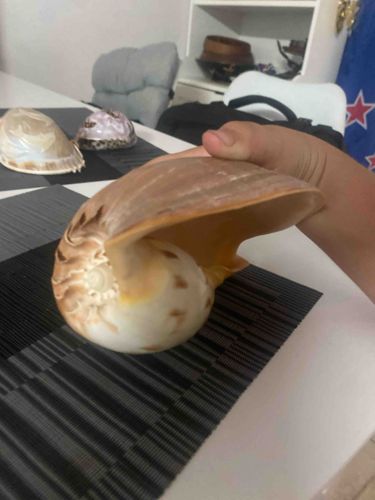
Syrinx aruanus (Australian Trumpet Shell)
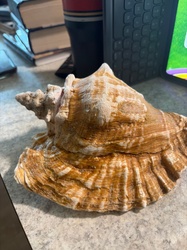
This is a large specimen of the Syrinx aruanus, commonly known as the Australian Trumpet or False Trumpet, which is the largest living snail species in the world. The specimen exhibits the characteristic heavy, spindle-shaped architecture of the species. The exterior shell color varies from a light tan to a deeper brownish-orange hue, while the interior aperture shows a smooth, creamy peach to orange tint. The shell consists of a large, swollen body whorl and a prominent, flared outer lip. At the base, a rounded protoconch with faint brownish mottled markings is visible. In terms of condition, the shell appears to be in good vintage or natural state, displaying a typical matte texture on the exterior consistent with age and natural weathering. There are minor abrasions along the delicate edges of the aperture and outer lip, which are common in organic marine specimens. The size is substantial, as indicated by the human hand holding it for scale, likely measuring between 30 to 50 centimeters in length. The specimen lacks a manufacturer mark as it is a natural biological object, but its clean presentation suggests it was likely prepared for display or as a collector's piece during the mid-to-late 20th century.
AI-Generated Appraisal Disclaimer
Estimated Value
$450 - $650
Basic Information
Category
Natural History / Conchology / Marine Specimens
Appraised On
February 5, 2026
Estimated Value
$450 - $650
Item Description
This is a large specimen of the Syrinx aruanus, commonly known as the Australian Trumpet or False Trumpet, which is the largest living snail species in the world. The specimen exhibits the characteristic heavy, spindle-shaped architecture of the species. The exterior shell color varies from a light tan to a deeper brownish-orange hue, while the interior aperture shows a smooth, creamy peach to orange tint. The shell consists of a large, swollen body whorl and a prominent, flared outer lip. At the base, a rounded protoconch with faint brownish mottled markings is visible. In terms of condition, the shell appears to be in good vintage or natural state, displaying a typical matte texture on the exterior consistent with age and natural weathering. There are minor abrasions along the delicate edges of the aperture and outer lip, which are common in organic marine specimens. The size is substantial, as indicated by the human hand holding it for scale, likely measuring between 30 to 50 centimeters in length. The specimen lacks a manufacturer mark as it is a natural biological object, but its clean presentation suggests it was likely prepared for display or as a collector's piece during the mid-to-late 20th century.
Get Your Items Appraised
Instant estimates of your treasures with AI-powered instant appraisals