Lower Paleolithic Chopper-Style Lithic Tool
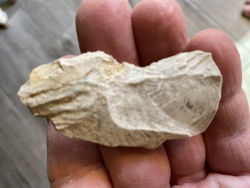
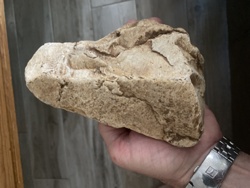
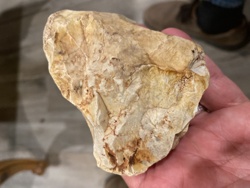
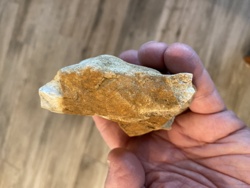
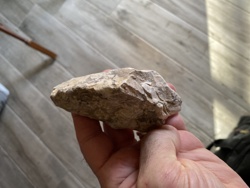
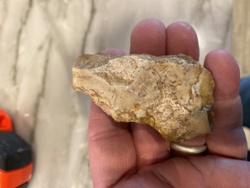
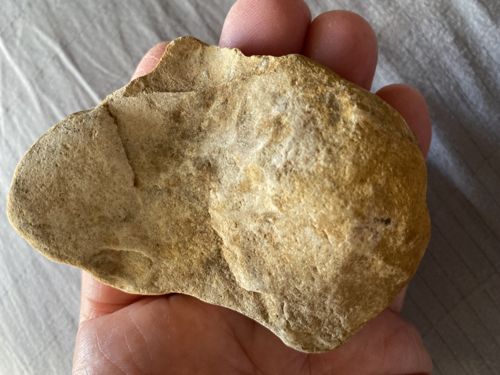
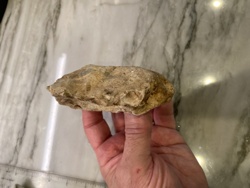
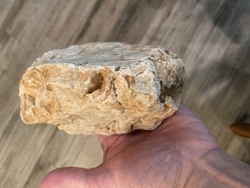
This artifact is a lithic specimen measuring approximately 3 inches by 2 inches, identified as a Lower Paleolithic-style chopper or scraper found in Guthrie, Oklahoma. The item is characterized by a yellowish-tan to light-brown coloration, consistent with locally sourced chert or silicated limestone common in the American Midwest. Its physical construction displays intentional unifacial or bifacial flaking along its perimeter to create a sharp, functional working edge. The body of the stone maintains a weathered, desert-varnish patina, suggesting significant age and environmental exposure. Notable features include percussion bulbs and negative flake scars that indicate human modification rather than natural geofact processes. The overall shape is ergonomic, designed to fit comfortably within a palm for scraping or chopping tasks. Condition issues are minimal, though the edges show micro-chapping consistent with prehistoric use-wear. There are no modern maker's marks, as the item is an ancient tool. The quality of craftsmanship is rudimentary yet effective, representative of early hominid lithic technology. Its primary value indicators lie in its provenance and the preservation of distinct flake patterns that define it as an archaeological artifact.
AI-Generated Appraisal Disclaimer
Estimated Value
$45.00 - $85.00
Basic Information
Category
Prehistoric Artifacts / Lithics
Appraised On
February 20, 2026
Estimated Value
$45.00 - $85.00
Additional Details Provided By Owner
User Provided Information
Lower Paleolithic chopper hand axe scraper found in Guthrie OK 3" x 2"
Item Description
This artifact is a lithic specimen measuring approximately 3 inches by 2 inches, identified as a Lower Paleolithic-style chopper or scraper found in Guthrie, Oklahoma. The item is characterized by a yellowish-tan to light-brown coloration, consistent with locally sourced chert or silicated limestone common in the American Midwest. Its physical construction displays intentional unifacial or bifacial flaking along its perimeter to create a sharp, functional working edge. The body of the stone maintains a weathered, desert-varnish patina, suggesting significant age and environmental exposure. Notable features include percussion bulbs and negative flake scars that indicate human modification rather than natural geofact processes. The overall shape is ergonomic, designed to fit comfortably within a palm for scraping or chopping tasks. Condition issues are minimal, though the edges show micro-chapping consistent with prehistoric use-wear. There are no modern maker's marks, as the item is an ancient tool. The quality of craftsmanship is rudimentary yet effective, representative of early hominid lithic technology. Its primary value indicators lie in its provenance and the preservation of distinct flake patterns that define it as an archaeological artifact.
Get Your Items Appraised
Instant estimates of your treasures with AI-powered instant appraisals