AI Appraisal Estimate

AI-generated estimates · not official valuations

From the user

What was submitted

Photo and notes provided by the user — not generated by AI

Submitted item photo
Submitted photo · May 27, 2026

User's notes

No additional notes provided.

AI analysis below

AI appraisal

AI analysis & estimate

AI-Generated · Verify before acting

Everything below is generated by AI for informational purposes only. AI can make mistakes — the AI may misidentify items or misattribute them (artist, maker, brand, designer, origin, era). This is not an official valuation and should not be used for insurance, sale, tax, estate, legal, or lending purposes — or any decision requiring a certified appraisal. It is not an authoritative claim about any person, brand, or rights holder — do not share or rely on it as a factual statement about a third party. Always consult qualified professionals before making financial decisions.

Read the full disclaimer

AI Identification

·Not independently authenticated·Verify before acting

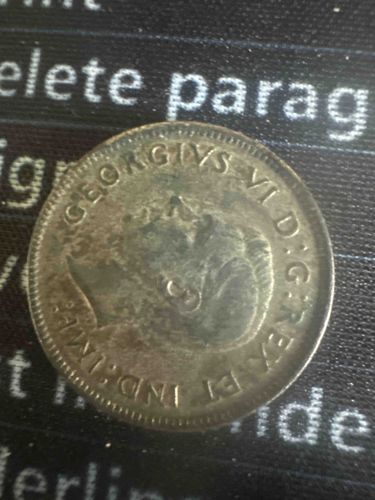
George VI British Coin (Obverse)

Coin

AI Estimated Value

·Not an official valuation·Verify before acting

$1 - $5

As of May 27, 2026

AI Item Analysis

·AI can make mistakes·Verify before acting
The item is a silver-toned coin, likely made of a base metal alloy with a silver or nickel plating, or possibly a lower-grade silver alloy, given the visible tarnishing and general appearance. Its circular form is standard for coinage, and the edges appear to have a reeded or milled finish, common for security and grip. The obverse side, which is visible, features a portrait in profile of a monarch, facing left. This portrait is surrounded by Latin inscriptions: "GEORGIVS VI D:G:REX ET IND:IMP:". This inscription identifies the monarch as George VI, Dei Gratia Rex, et Indiae Imperator (By the Grace of God, King, and Emperor of India). This detail places the coin's production between 1936 and 1947, as George VI reigned during this period and the 'Emperor of India' title was dropped after India's independence in 1947. The condition of the coin shows significant wear, indicating that it was heavily circulated. The raised areas of the portrait, particularly the crown and facial features, are flattened and indistinct due to abrasion. There is a noticeable dark patina and discoloration across the surface, typical of age and environmental exposure. Some minor scratches and nicks are also visible, further suggesting its use in circulation. Despite the wear, the lettering around the perimeter is largely legible. The overall craftsmanship appears to be typical of mass-produced coinage from a national mint, with precise engraving for the design and lettering, albeit now softened by wear. No mint marks or specific dates are clearly visible on this side of the coin, which would typically be on the reverse or in a less prominent position on the obverse.

AI Appraisal Report

·AI can make mistakes·Verify before acting
I have thoroughly examined the provided image of what appears to be a George VI British coin (obverse). Based on the visible inscriptions "GEORGIVS VI D:G:REX ET IND:IMP:", the coin is unequivocally identified as dating between 1936 and 1947. Its silver-toned appearance suggests a base metal alloy, potentially with nickel or silver plating, and the significant tarnish supports this. The condition is poor; severe circulation wear has flattened details on the monarch's portrait and crown, although the lettering remains largely legible. This extensive wear significantly impacts its numismatic value. In my professional opinion, as this coin is mass-produced and circulated, its primary value would be linked to its metallic content, assuming it's not a rare variation, which cannot be determined from this single image. The market for common circulated George VI coinage is quite saturated, with demand primarily from entry-level collectors or for melt value. Without a visible date or mint mark on this side, or confirmation of the denomination, assessing specific rarity is impossible. For a definitive appraisal and authentication, I would require a physical examination to ascertain the coin's dimensions, weight, edge type, specific metal composition, and to locate any date or mint marks (typically on the reverse). Authenticity is reasonably assumed given its commonality, but a direct inspection would allow for detection of any tooling or alterations. Provenance documentation, while helpful for rare items, is not crucial for a common, heavily circulated coin of this type. Given its condition and likely commonality, its value is primarily as a historical artifact or for its base metal content. There is no indication of any factors that would make it highly desirable.

Get your items appraised

Instant estimates of your treasures with AI-powered appraisals

Browse More Appraisals