Paleo-Indian Chert Biface Lithic Tool
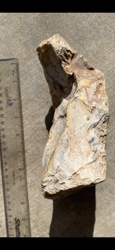
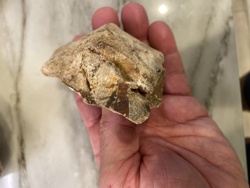
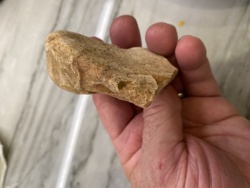
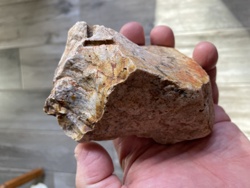
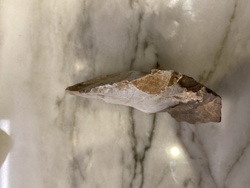
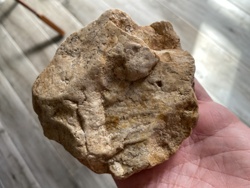
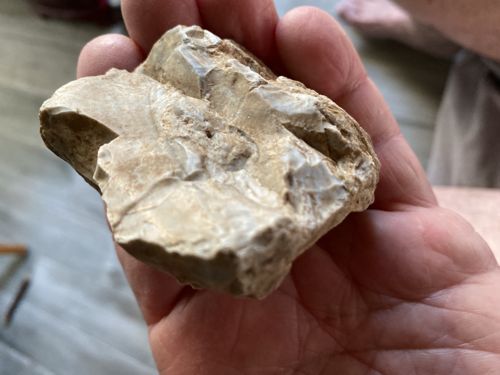
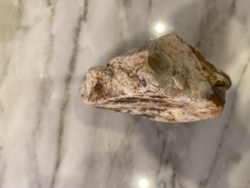
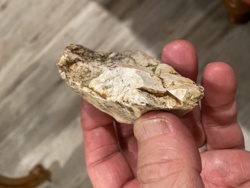
This is a hand-sized lithic tool discovered in Guthrie, Oklahoma, exhibiting characteristics consistent with Paleo-Indian bifacial technology. The item is crafted from a light-colored chert or flint, showing a creamy beige to grayish-white color palette with a matte, slightly waxy luster indicative of high silica content. The construction features pronounced bifacial reduction, where material has been flaked from both sides to create a functional edge. The piece displays several prominent percussion bulbs and negative flake scars, suggesting primary and secondary reduction stages. Notably, the specimen features a tapered, protruding section that may have served as a perforator or drill bit, while the broader body could have functioned as a scrapers or hand axe. Regarding condition, there is significant surface patination consistent with long-term environmental exposure. The edges show signs of use-wear and step-fracturing, likely from prehistoric utilization rather than modern damage. There are no modern maker's marks, as this is a prehistoric artifact. The scale and ergonomic shape suggest it was designed to be held directly in the hand (unhafted) or was perhaps a preform intended for further refinement. The craftsmanship reflects typical knapping techniques of early nomadic Indigenous cultures in the Great Plains region.
AI-Generated Appraisal Disclaimer
Estimated Value
$450 - $700
Basic Information
Category
Prehistoric Native American Artifacts
Appraised On
February 20, 2026
Estimated Value
$450 - $700
Additional Details Provided By Owner
User Provided Information
Paleo Indian chert bi face hand axe drill perforator tool found in Guthrie OK
Item Description
This is a hand-sized lithic tool discovered in Guthrie, Oklahoma, exhibiting characteristics consistent with Paleo-Indian bifacial technology. The item is crafted from a light-colored chert or flint, showing a creamy beige to grayish-white color palette with a matte, slightly waxy luster indicative of high silica content. The construction features pronounced bifacial reduction, where material has been flaked from both sides to create a functional edge. The piece displays several prominent percussion bulbs and negative flake scars, suggesting primary and secondary reduction stages. Notably, the specimen features a tapered, protruding section that may have served as a perforator or drill bit, while the broader body could have functioned as a scrapers or hand axe. Regarding condition, there is significant surface patination consistent with long-term environmental exposure. The edges show signs of use-wear and step-fracturing, likely from prehistoric utilization rather than modern damage. There are no modern maker's marks, as this is a prehistoric artifact. The scale and ergonomic shape suggest it was designed to be held directly in the hand (unhafted) or was perhaps a preform intended for further refinement. The craftsmanship reflects typical knapping techniques of early nomadic Indigenous cultures in the Great Plains region.
Get Your Items Appraised
Instant estimates of your treasures with AI-powered instant appraisals