Hand-Carved Dark Wood Elephant Figurine
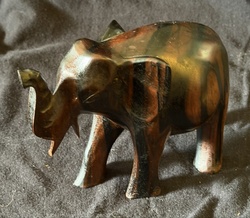
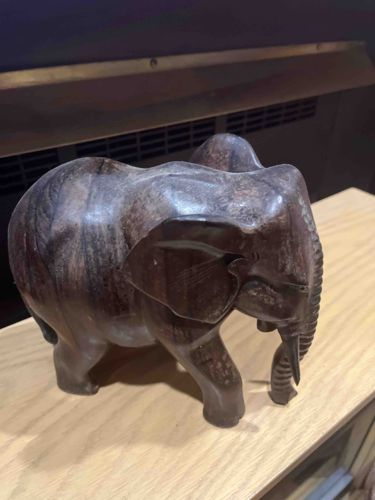
This item is a hand-carved decorative figurine of an African elephant, likely crafted from a dense, dark-grained tropical hardwood such as ebony, rosewood, or ironwood. The sculpture features a medium-brown to dark chocolate patina with visible natural grain patterns throughout the body. The elephant is depicted in a walking stance with its trunk lowered and curled inward. Notable anatomical details include incised lines on the ears and trunk to represent skin texture and folds. The tusks appear to be carved from the same solid block of wood rather than being inset materials. In terms of condition, there is a prominent surface crack or 'check' visible running vertically down the rear haunch, which is common in older wooden sculptures due to humidity changes. The surface shows a light accumulation of dust in the recessed carvings and some mild scuffing on the top of the head and shoulders, suggesting an age likely from the mid-to-late 20th century. This style of folk art is traditionally associated with East African carving traditions (such as the Makonde) or Southeast Asian export markets. No visible maker's marks or signatures are present in the provided view, indicating a workshop or artisanal origin rather than a specific artist-signed piece. The craftsmanship is solid, with a heavy, substantial appearance and stylized anatomical proportions.
AI-Generated Appraisal Disclaimer
Estimated Value
$45 - $75
Basic Information
Category
Decorative Arts and Collectibles / Wood Carvings
Appraised On
January 20, 2026
Estimated Value
$45 - $75
Item Description
This item is a hand-carved decorative figurine of an African elephant, likely crafted from a dense, dark-grained tropical hardwood such as ebony, rosewood, or ironwood. The sculpture features a medium-brown to dark chocolate patina with visible natural grain patterns throughout the body. The elephant is depicted in a walking stance with its trunk lowered and curled inward. Notable anatomical details include incised lines on the ears and trunk to represent skin texture and folds. The tusks appear to be carved from the same solid block of wood rather than being inset materials. In terms of condition, there is a prominent surface crack or 'check' visible running vertically down the rear haunch, which is common in older wooden sculptures due to humidity changes. The surface shows a light accumulation of dust in the recessed carvings and some mild scuffing on the top of the head and shoulders, suggesting an age likely from the mid-to-late 20th century. This style of folk art is traditionally associated with East African carving traditions (such as the Makonde) or Southeast Asian export markets. No visible maker's marks or signatures are present in the provided view, indicating a workshop or artisanal origin rather than a specific artist-signed piece. The craftsmanship is solid, with a heavy, substantial appearance and stylized anatomical proportions.
Related Tags
Get Your Items Appraised
Instant estimates of your treasures with AI-powered instant appraisals