Chinese Faceted Pewter Tea Caddy
Asian Antiques & Metalware

Chinese Faceted Pewter Tea Caddy

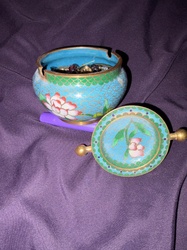
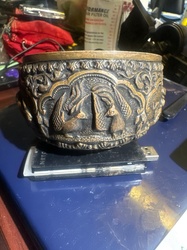
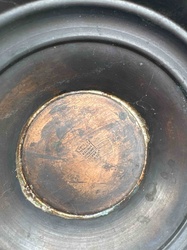
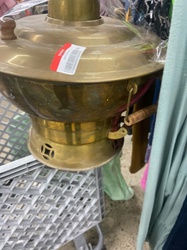
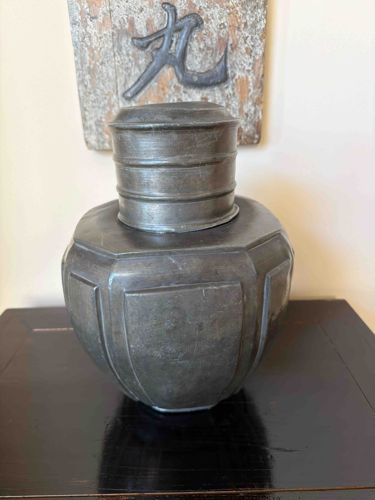
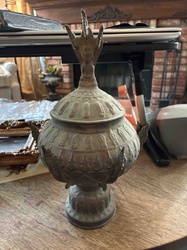
This is a multifaceted antique or vintage tea caddy, likely of Chinese origin, constructed from cast pewter. The vessel features a heavy, medium-gray matte patina characteristic of aged lead-tin alloys. Its body is designed with a series of vertical faceted panels that taper toward a narrow octagonal base, while the shoulder is flat and angled. The matching cylindrical lid is stepped with horizontal ribs, creating a secure closure to preserve tea leaves. The overall construction exhibits a high degree of hand-craftsmanship, visible in the slight irregularities of the faceted planes and the soft, rounded edges of the casting. The surface shows evidence of age through minor scuffing, oxidation, and small surface indentations, which contribute to its authentic antique character. There are no maker's marks visible in the primary view, though such items frequently bear stamps on the underside. Historically, this style dates from the late 19th to early 20th century. The piece demonstrates a utilitarian yet elegant aesthetic rooted in traditional Chinese metalware design, specifically intended for atmospheric protection of high-quality tea.
Estimated Value

$450.00 - $650.00

Basic Information

Category

Asian Antiques & Metalware

Appraised On

February 12, 2026

Estimated Value

$450.00 - $650.00

Item Description

This is a multifaceted antique or vintage tea caddy, likely of Chinese origin, constructed from cast pewter. The vessel features a heavy, medium-gray matte patina characteristic of aged lead-tin alloys. Its body is designed with a series of vertical faceted panels that taper toward a narrow octagonal base, while the shoulder is flat and angled. The matching cylindrical lid is stepped with horizontal ribs, creating a secure closure to preserve tea leaves. The overall construction exhibits a high degree of hand-craftsmanship, visible in the slight irregularities of the faceted planes and the soft, rounded edges of the casting. The surface shows evidence of age through minor scuffing, oxidation, and small surface indentations, which contribute to its authentic antique character. There are no maker's marks visible in the primary view, though such items frequently bear stamps on the underside. Historically, this style dates from the late 19th to early 20th century. The piece demonstrates a utilitarian yet elegant aesthetic rooted in traditional Chinese metalware design, specifically intended for atmospheric protection of high-quality tea.
Get Your Items Appraised

Instant estimates of your treasures with AI-powered instant appraisals

Browse More Appraisals