Prehistoric Chert Scraper Point
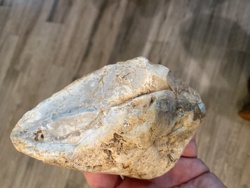
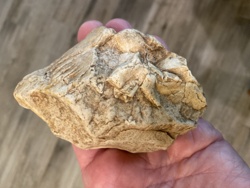
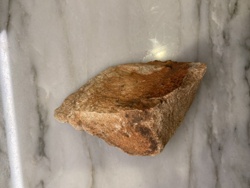
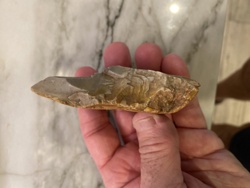
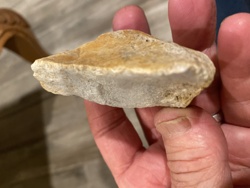
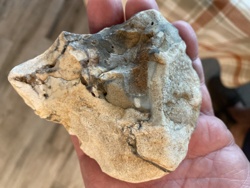
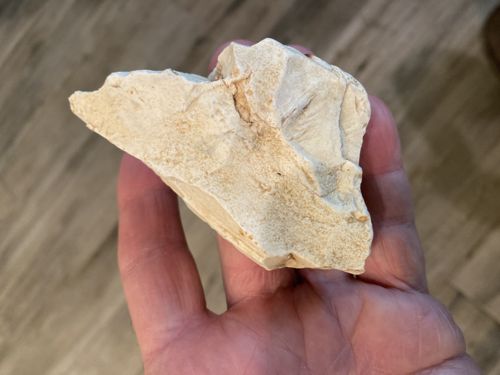
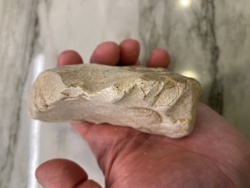
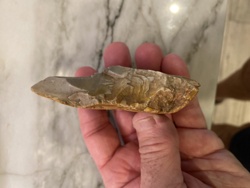
This is a prehistoric lithic tool, specifically a stone scraper or point preform, measuring approximately 3.5 inches by 2 inches. The item is crafted from a light-colored, possibly creamy-tan or off-white chert or flint, characteristic of materials commonly found in the Oklahoma region. Its construction shows evidence of intentional percussion flaking along the edges to create a sharp, functional working surface. The piece exhibits a triangular to sub-rectangular morphology with a thick cross-section, suggesting it may have served as a heavy-duty processing tool for hides or woodworking. The surface displays a distinct patina and mineral staining consistent with long-term burial in soil, particularly visible in the recessed flaked areas. While the edges show some ancient wear and minor modern crushing or chippage, the integrity of the tool remains largely intact. There are no modern maker's marks or signatures, as is typical for an artifact of this age, which likely dates to the Archaic or Woodland period. The craftsmanship reflects an expedient but effective knapping technique, prioritizing function over aesthetic refinement. The find location of Guthrie, Oklahoma, adds significant provenance, situating the piece within the historical context of Native American lithic industries in the Great Plains.
AI-Generated Appraisal Disclaimer
Estimated Value
$45.00 - $75.00
Basic Information
Category
Archaeological Artifacts / Native American Lithics
Appraised On
February 17, 2026
Estimated Value
$45.00 - $75.00
Additional Details Provided By Owner
User Provided Information
Prospect prehistoric stone scraper point found in Guthrie Ok measuring 3.5" x 2
Item Description
This is a prehistoric lithic tool, specifically a stone scraper or point preform, measuring approximately 3.5 inches by 2 inches. The item is crafted from a light-colored, possibly creamy-tan or off-white chert or flint, characteristic of materials commonly found in the Oklahoma region. Its construction shows evidence of intentional percussion flaking along the edges to create a sharp, functional working surface. The piece exhibits a triangular to sub-rectangular morphology with a thick cross-section, suggesting it may have served as a heavy-duty processing tool for hides or woodworking. The surface displays a distinct patina and mineral staining consistent with long-term burial in soil, particularly visible in the recessed flaked areas. While the edges show some ancient wear and minor modern crushing or chippage, the integrity of the tool remains largely intact. There are no modern maker's marks or signatures, as is typical for an artifact of this age, which likely dates to the Archaic or Woodland period. The craftsmanship reflects an expedient but effective knapping technique, prioritizing function over aesthetic refinement. The find location of Guthrie, Oklahoma, adds significant provenance, situating the piece within the historical context of Native American lithic industries in the Great Plains.
Get Your Items Appraised
Instant estimates of your treasures with AI-powered instant appraisals