Vintage Pressed Glass Vinegar or Oil Cruet with Stopper
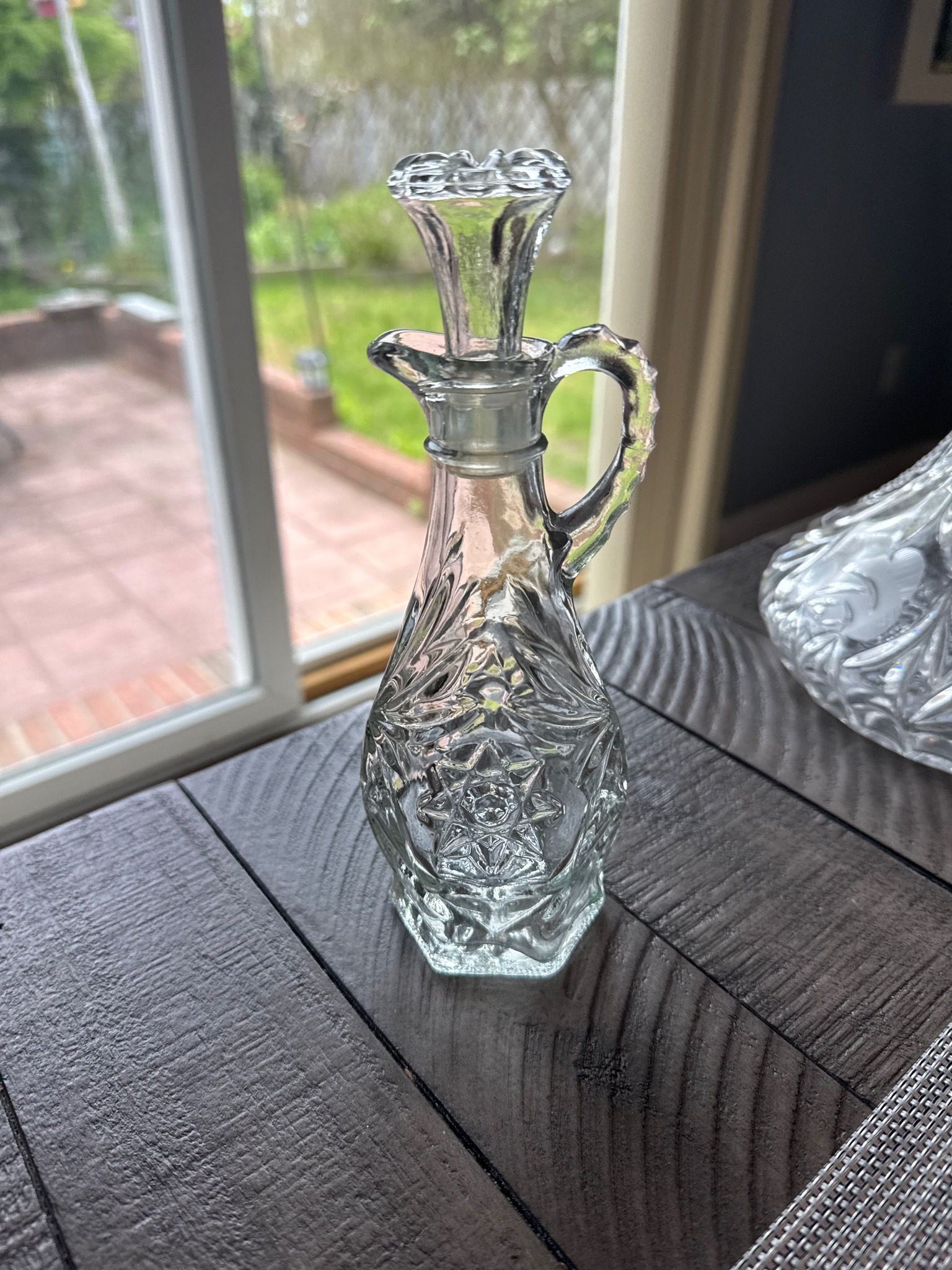
This is a vintage pressed clear glass cruet, intended for serving oil or vinegar. It features an ornate 'Star and Fan' or similar Early American Pattern Glass (EAPG) design, characterized by a central six-pointed star within a geometric field and vertical ribbing on the neck. The vessel stands approximately 6 to 8 inches tall. It is constructed with a bulbous body that tapers to a slender neck, featuring a small pour spout and an applied decorative handle with a notched or crimped outer edge for better grip. The matching glass stopper is tall and flared with a ruffled or scalloped top edge, and its ground base provides a snug fit within the neck. The clarity of the glass suggests a mid-20th-century mass-manufactured origin rather than 19th-century flint glass. The condition appears to be excellent with no visible chips, cracks, or significant clouding (often called 'sick glass'). No maker's marks are immediately visible, which is common for such utility pieces. The craftsmanship is standard for pressed glass of the era, showing faint mold lines and the stylistic influence of Victorian glassware produced by companies like Anchor Hocking or Fenton.
AI-Generated Appraisal Disclaimer
Estimated Value
$25.00 - $45.00
Basic Information
Category
Kitchenware & Tableware
Appraised On
May 13, 2026
Estimated Value
$25.00 - $45.00
Item Description
This is a vintage pressed clear glass cruet, intended for serving oil or vinegar. It features an ornate 'Star and Fan' or similar Early American Pattern Glass (EAPG) design, characterized by a central six-pointed star within a geometric field and vertical ribbing on the neck. The vessel stands approximately 6 to 8 inches tall. It is constructed with a bulbous body that tapers to a slender neck, featuring a small pour spout and an applied decorative handle with a notched or crimped outer edge for better grip. The matching glass stopper is tall and flared with a ruffled or scalloped top edge, and its ground base provides a snug fit within the neck. The clarity of the glass suggests a mid-20th-century mass-manufactured origin rather than 19th-century flint glass. The condition appears to be excellent with no visible chips, cracks, or significant clouding (often called 'sick glass'). No maker's marks are immediately visible, which is common for such utility pieces. The craftsmanship is standard for pressed glass of the era, showing faint mold lines and the stylistic influence of Victorian glassware produced by companies like Anchor Hocking or Fenton.
Related Tags
Get Your Items Appraised
Instant estimates of your treasures with AI-powered instant appraisals