Johnson Brothers Rose Chintz Covered Soup Tureen
Vintage Ceramic Serviceware

Johnson Brothers Rose Chintz Covered Soup Tureen

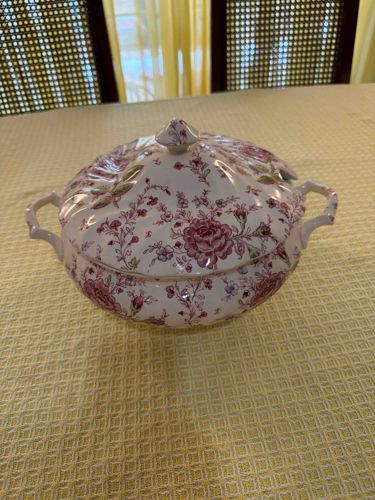
This is a vintage earthenware covered soup tureen produced by Johnson Brothers in the classic 'Rose Chintz' pattern. The piece features a cream-colored ceramic body adorned with a pink/rose-toned floral transferware pattern depicting dense clusters of roses and smaller foliage. The tureen has an oval, scalloped form with two integrated, ornate side handles that exhibit a ribbed, scroll-like design. The matching lid is domed with a central faceted knob and includes a slot for a serving ladle. The construction is characteristic of mid-20th-century English ironstone, likely manufactured between 1930 and 1950, as the pattern was first introduced in 1930. The craftsmanship shows high-quality transfer application with subtle variations in the ink intensity. Based on visual inspection, the item appears to be in good vintage condition with a glossy glaze, though slight crazing or minor staining at the base would be standard for its age. This pattern is highly collectible and sought after for its cottagecore and traditional English aesthetic.
Estimated Value

$150.00 - $225.00

Basic Information

Category

Vintage Ceramic Serviceware

Appraised On

February 5, 2026

Estimated Value

$150.00 - $225.00

Additional Details Provided By Owner

User Provided Information

Johnson Bros Rose Chintz

Item Description

This is a vintage earthenware covered soup tureen produced by Johnson Brothers in the classic 'Rose Chintz' pattern. The piece features a cream-colored ceramic body adorned with a pink/rose-toned floral transferware pattern depicting dense clusters of roses and smaller foliage. The tureen has an oval, scalloped form with two integrated, ornate side handles that exhibit a ribbed, scroll-like design. The matching lid is domed with a central faceted knob and includes a slot for a serving ladle. The construction is characteristic of mid-20th-century English ironstone, likely manufactured between 1930 and 1950, as the pattern was first introduced in 1930. The craftsmanship shows high-quality transfer application with subtle variations in the ink intensity. Based on visual inspection, the item appears to be in good vintage condition with a glossy glaze, though slight crazing or minor staining at the base would be standard for its age. This pattern is highly collectible and sought after for its cottagecore and traditional English aesthetic.
Get Your Items Appraised

Instant estimates of your treasures with AI-powered instant appraisals

Browse More Appraisals