Sedimentary Rock Fragment
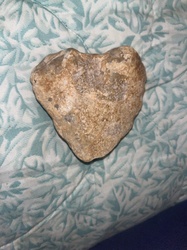
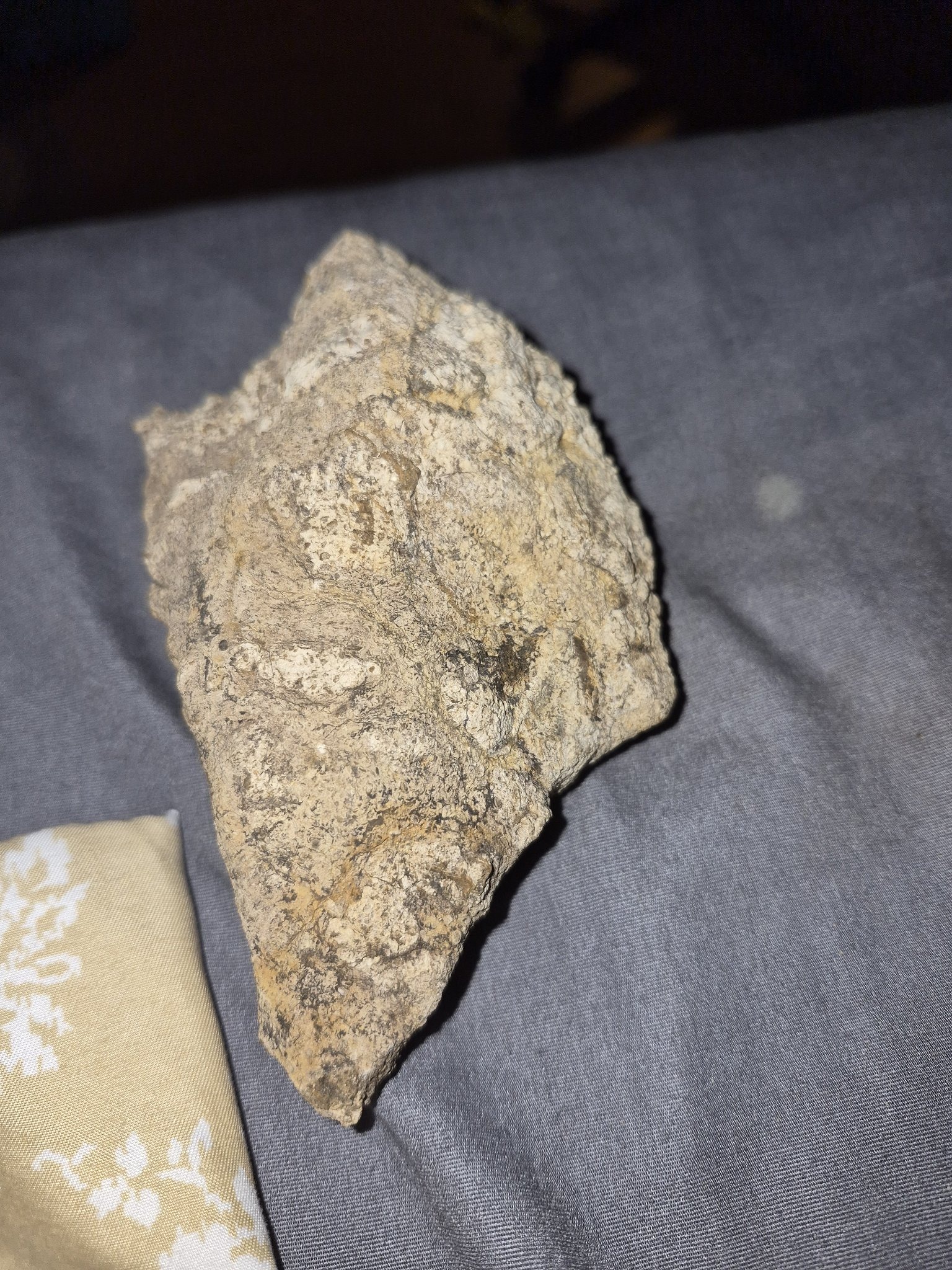
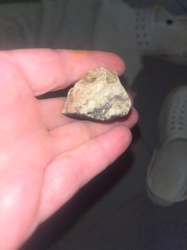
This item is a natural mineral specimen, specifically a fragment of sedimentary rock, which bears a triangular or heart-like silhouette. It is characterized by its light beige, tan, and greyish coloration with visible dark speckling and occasional iron-oxide staining. The texture is notably coarse, gritty, and uneven, exhibiting many pits and ridges that suggest a high concentration of clastic materials or perhaps calcified biological detritus. There are no definitive anatomical markers to suggest this is a 'fossilized pouch,' as soft tissue rarely fossilizes in this manner; rather, its form appears to be the result of natural weathering and fracturing of a larger stone mass. The surface shows significant erosional wear with jagged edges, particularly at the top and the tapered bottom point. The material appears to be limestone or a similar carbonate-based rock based on the porous, crumbly appearance of the matrix. No manufacturing marks, signatures, or artificial manipulations are present, indicating this is a geological find rather than a man-made artifact or a rare organic fossil. Its condition is raw and unpolished, typical of field-collected geological samples.
AI-Generated Appraisal Disclaimer
Estimated Value
$5.00 - $15.00
Basic Information
Category
Geological Specimens
Appraised On
May 9, 2026
Estimated Value
$5.00 - $15.00
Additional Details Provided By Owner
User Provided Information
Category: Other I believe its a fossilized pouch
Item Description
This item is a natural mineral specimen, specifically a fragment of sedimentary rock, which bears a triangular or heart-like silhouette. It is characterized by its light beige, tan, and greyish coloration with visible dark speckling and occasional iron-oxide staining. The texture is notably coarse, gritty, and uneven, exhibiting many pits and ridges that suggest a high concentration of clastic materials or perhaps calcified biological detritus. There are no definitive anatomical markers to suggest this is a 'fossilized pouch,' as soft tissue rarely fossilizes in this manner; rather, its form appears to be the result of natural weathering and fracturing of a larger stone mass. The surface shows significant erosional wear with jagged edges, particularly at the top and the tapered bottom point. The material appears to be limestone or a similar carbonate-based rock based on the porous, crumbly appearance of the matrix. No manufacturing marks, signatures, or artificial manipulations are present, indicating this is a geological find rather than a man-made artifact or a rare organic fossil. Its condition is raw and unpolished, typical of field-collected geological samples.
Related Tags
Get Your Items Appraised
Instant estimates of your treasures with AI-powered instant appraisals