AI Appraisal Estimate

AI-generated estimates · not official valuations

From the user

What was submitted

Photo and notes provided by the user — not generated by AI

Submitted item photo
Submitted photo · June 18, 2026

User's notes

No additional notes provided.

AI analysis below

AI appraisal

AI analysis & estimate

AI-Generated · Verify before acting

Everything below is generated by AI for informational purposes only. AI can make mistakes — the AI may misidentify items or misattribute them (artist, maker, brand, designer, origin, era). This is not an official valuation and should not be used for insurance, sale, tax, estate, legal, or lending purposes — or any decision requiring a certified appraisal. It is not an authoritative claim about any person, brand, or rights holder — do not share or rely on it as a factual statement about a third party. Always consult qualified professionals before making financial decisions.

Read the full disclaimer

AI Identification

·Not independently authenticated·Verify before acting

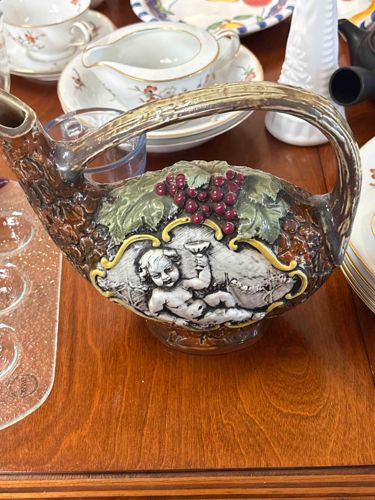
Majolica Style Grapvine and Cherub Pitcher/Ewer

Decorative Ceramics

AI Estimated Value

·Not an official valuation·Verify before acting

$100 - $200

As of June 18, 2026

AI Item Analysis

·AI can make mistakes·Verify before acting
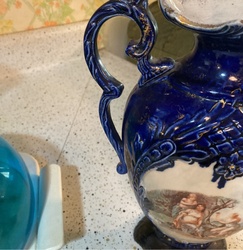
This item is a decorative pitcher or ewer, likely made of ceramic with a majolica-style finish, characterized by its vibrant colors and raised, sculptural elements. The pitcher features a prominent handle shaped to resemble a branch or gnarled wood, painted in shades of brown and silver-gray, giving it a somewhat rustic appearance. The body of the pitcher is adorned with highly detailed, three-dimensional grapevines, including textured green leaves and clusters of deep red 'grapes'. Central to the design is a framed bas-relief panel depicting a classical-style cherub or putto reclining amidst foliage, holding up what appears to be a small goblet or chalice. The frame around the cherub panel is highlighted with yellow or gold accents, adding a touch of elegance. The overall color palette is rich and earthy, with browns, greens, reds, and cream/gray tones for the cherub. The 'tree bark' texture surrounding the grapevine motif is quite pronounced. The spout of the pitcher is distinct, fashioned to seamlessly integrate with the branch-like handle. The base is not fully visible but appears sturdy. There are no discernible maker's marks or signatures visible from this angle. The style suggests a late 19th to mid-20th-century period, drawing inspiration from classical and naturalistic themes commonly found in majolica ware, which often featured mythological figures and botanical motifs. The condition appears to be relatively good, with no obvious chips or cracks, although closer inspection would be needed to assess any minor wear or crazing, which is common in older ceramic pieces. The craftsmanship indicates a decorative, rather than purely utilitarian, piece, designed to be visually appealing.
AI Appraisal Report

·AI can make mistakes·Verify before acting
Upon visual examination of the provided images, this decorative pitcher presents as a Majolica-style ewer, likely of European origin and dating from the late 19th to mid-20th century. The design, featuring a cherub or putto amidst grapevines with a branch-like handle, is characteristic of the period's fascination with classical and naturalistic motifs. From the images, the piece appears to be in good condition, with no visible major chips, cracks, or repairs. The colors are vibrant, and the molded details, such as the tree bark texture and foliage, are well-defined. However, common age-related conditions like fine crazing or minor glaze flakes are impossible to assess without a physical, hands-on inspection under magnification. The market for mass-produced, unmarked Majolica-style ceramics of this type is generally stable but modest. While pieces from renowned makers like Minton, George Jones, or Wedgwood command high prices, similar unmarked ewers are quite common. Current comparables at auction and online marketplaces for unmarked Majolica pitchers with similar motifs and condition typically sell in the $100 to $200 range. The value of this specific piece is primarily decorative. A significant limitation of this appraisal is the inability to authenticate the piece or its maker from images alone. A full authentication would require an in-person examination to search for any impressed or painted maker's marks on the base, which are not visible. Furthermore, assessing the type of clay body, glaze composition, and signs of wear can help confirm its age and origin. Without provenance or a maker's mark, this item is appraised as a handsome decorative piece in the manner of antique Majolica.

Get your items appraised

Instant estimates of your treasures with AI-powered appraisals

Browse More Appraisals