Paleo-Indian Chert Bifacial Hand Axe Scraper
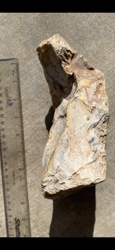
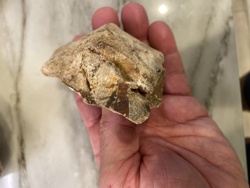
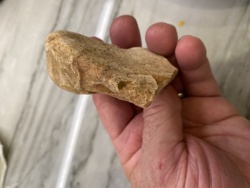
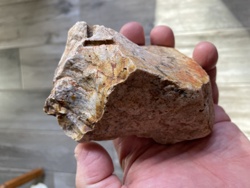
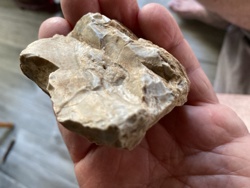
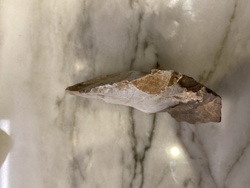
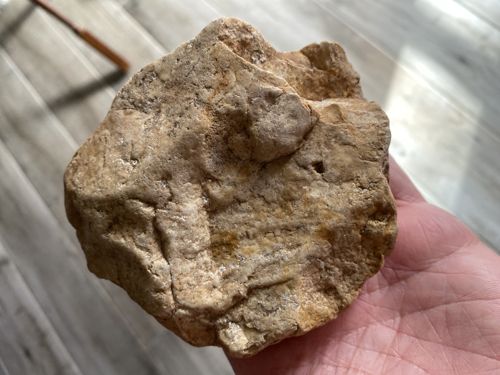
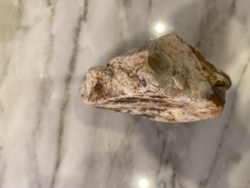
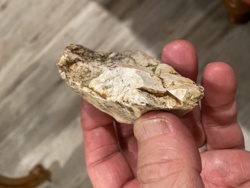
This artifact is a bifacial lithic tool, identified as a hand axe or large scraper, measuring approximately 4 inches by 3.5 inches. Conforming to the Paleo-Indian period (typically dating 10,000+ years BP), the item is crafted from a tan to ochre-colored chert, likely sourced from local Oklahoma deposits. The craftsmanship exhibits characteristic percussion flaking, with irregular, broad flake scars across both faces (bifacial) to create a sharp, functional edge for chopping or hide scraping. The texture is rough and matte with visible mineral staining and a heavy patina consistent with long-term sub-surface deposition in the Guthrie, OK region. The stone shows significant weathering, with rounded edges on some of the higher ridges, suggesting ancient use-wear and natural erosion over millennia. There are visible inclusions and pores within the silicate material, and an absence of modern mechanical grinding or tool marks, which supports its identification as an authentic prehistoric stone tool. The overall form is ergonomic, designed to be held directly in the hand rather than hafted. Condition-wise, it remains structurally sound, though it displays various micro-chips and impact fractures along the perimeter which are typical for lithic items of this age and utility.
AI-Generated Appraisal Disclaimer
Estimated Value
$150 - $250
Basic Information
Category
Prehistoric Native American Artifacts
Appraised On
February 19, 2026
Estimated Value
$150 - $250
Additional Details Provided By Owner
User Provided Information
Paleo indian chert Bi face hand axe scraper tool found in Guthrie OK 4" x 3.5"
Item Description
This artifact is a bifacial lithic tool, identified as a hand axe or large scraper, measuring approximately 4 inches by 3.5 inches. Conforming to the Paleo-Indian period (typically dating 10,000+ years BP), the item is crafted from a tan to ochre-colored chert, likely sourced from local Oklahoma deposits. The craftsmanship exhibits characteristic percussion flaking, with irregular, broad flake scars across both faces (bifacial) to create a sharp, functional edge for chopping or hide scraping. The texture is rough and matte with visible mineral staining and a heavy patina consistent with long-term sub-surface deposition in the Guthrie, OK region. The stone shows significant weathering, with rounded edges on some of the higher ridges, suggesting ancient use-wear and natural erosion over millennia. There are visible inclusions and pores within the silicate material, and an absence of modern mechanical grinding or tool marks, which supports its identification as an authentic prehistoric stone tool. The overall form is ergonomic, designed to be held directly in the hand rather than hafted. Condition-wise, it remains structurally sound, though it displays various micro-chips and impact fractures along the perimeter which are typical for lithic items of this age and utility.
Get Your Items Appraised
Instant estimates of your treasures with AI-powered instant appraisals