Polished Banded Obsidian Specimen
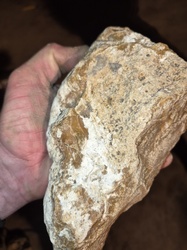
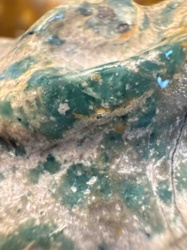
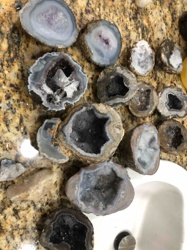
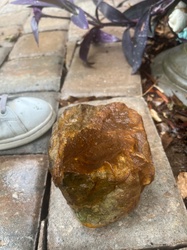
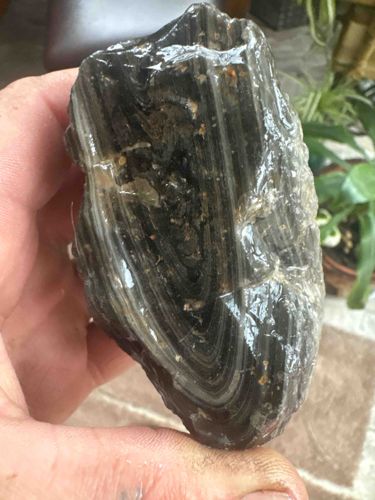
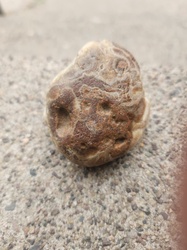
This specimen is a naturally occurring volcanic glass known as banded obsidian. It features a dark, near-black vitreous core characterized by distinct, undulating light-gray or white flow banding. These bands are formed by the presence of minute bubbles or crystallites during the rapid cooling of silica-rich lava. The specimen is roughly palm-sized and appears to have a semi-polished surface that enhances its wet-look luster and reveals the internal flow structure. The edges show characteristic conchoidal fracturing, common in glass-based minerals, which creates sharp, curved surfaces. One side exhibits more of its raw, textured outer 'skin' with a pitted, matte appearance, contrasting with the smooth, reflective dominant face. There are visible inclusions and minor surface abrasions consistent with natural extraction and handling. No specific maker's marks are present as this is a geological specimen. The craftsmanship is limited to the lapidary work used to shape or polish the face to display the layering. It represents a high-quality example of silica-rich volcanic material, likely sourced from active tectonic or volcanic regions, dating to the post-eruptive cooling period of its specific locale.
AI-Generated Appraisal Disclaimer
Estimated Value
$45.00-$65.00
Basic Information
Category
Minerals and Lapidary Specimens
Appraised On
January 10, 2026
Estimated Value
$45.00-$65.00
Item Description
This specimen is a naturally occurring volcanic glass known as banded obsidian. It features a dark, near-black vitreous core characterized by distinct, undulating light-gray or white flow banding. These bands are formed by the presence of minute bubbles or crystallites during the rapid cooling of silica-rich lava. The specimen is roughly palm-sized and appears to have a semi-polished surface that enhances its wet-look luster and reveals the internal flow structure. The edges show characteristic conchoidal fracturing, common in glass-based minerals, which creates sharp, curved surfaces. One side exhibits more of its raw, textured outer 'skin' with a pitted, matte appearance, contrasting with the smooth, reflective dominant face. There are visible inclusions and minor surface abrasions consistent with natural extraction and handling. No specific maker's marks are present as this is a geological specimen. The craftsmanship is limited to the lapidary work used to shape or polish the face to display the layering. It represents a high-quality example of silica-rich volcanic material, likely sourced from active tectonic or volcanic regions, dating to the post-eruptive cooling period of its specific locale.
Get Your Items Appraised
Instant estimates of your treasures with AI-powered instant appraisals