Vintage Wire Cherry Pitter
Antique Kitchen Utensils

Vintage Wire Cherry Pitter

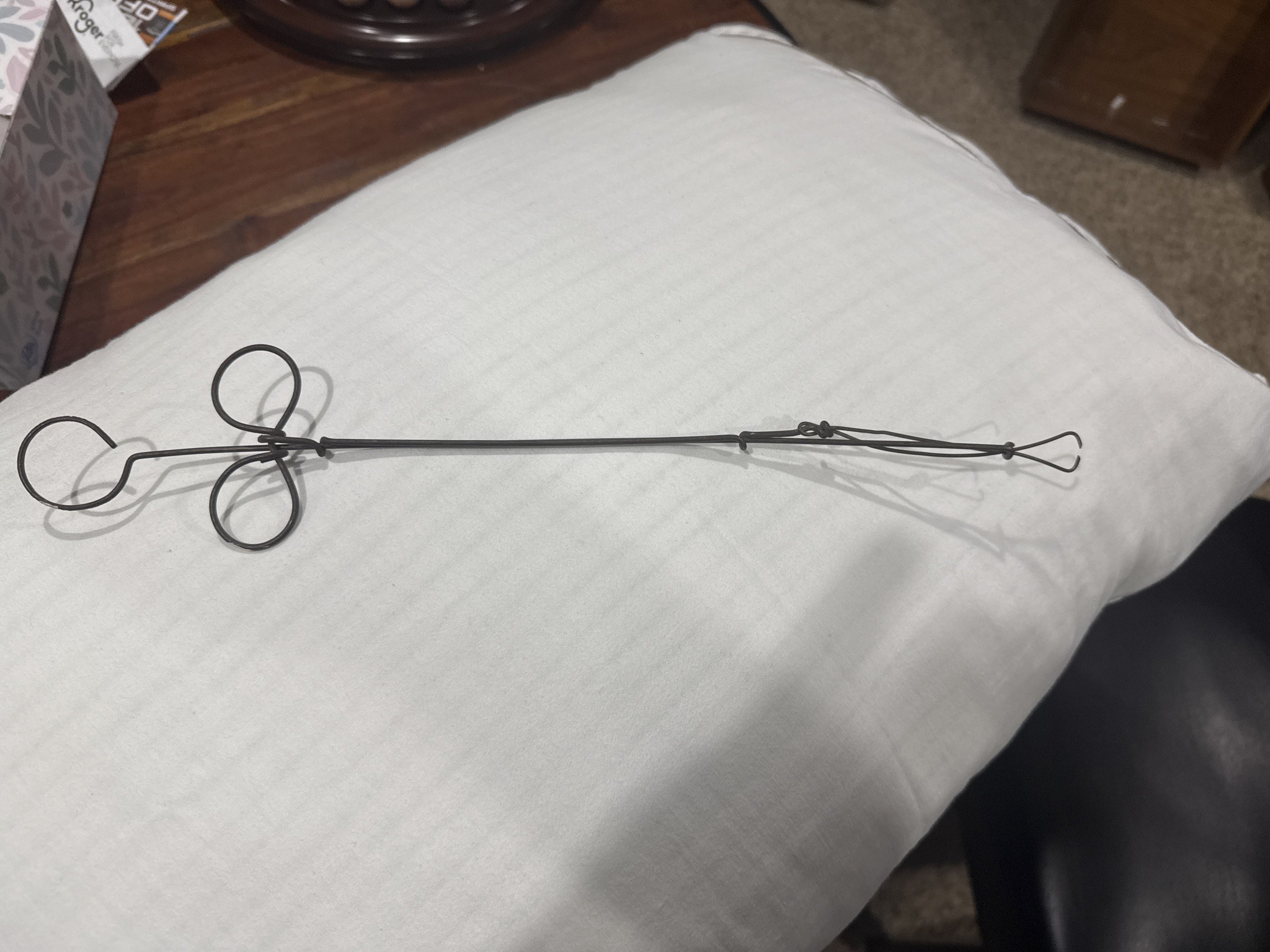
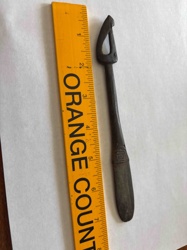
This item is an antique mechanical cherry pitter, likely dating from the late 19th to early 20th century. It is constructed entirely of a dark, patinated iron or steel wire that has been hand-bent and twisted into a functional plunger-style tool. The design features a tripod-like handle at the top consisting of three circular finger loops, which would allow the user to apply pressure with one hand. These loops lead to a central shaft that ends in a bifurcated wire cage or 'stoning' tip. The tip is designed to push the pit through the fruit while the cage structure keeps the flesh of the cherry intact. The wire exhibits a significant dark oxidation or 'black smith' patina throughout, which is appropriate for its age. There are signs of manual craftsmanship in the knot-like twists and irregular bends along the shaft. The condition appears stable with no visible breaks in the wire, though there is general surface wear and some slight deformation in the roundness of the finger loops from historical use. This type of simple, utilitarian primitive kitchen tool was common in rural American households.
Estimated Value

$45 - $75

Basic Information

Category

Antique Kitchen Utensils

Appraised On

May 6, 2026

Estimated Value

$45 - $75

Item Description

This item is an antique mechanical cherry pitter, likely dating from the late 19th to early 20th century. It is constructed entirely of a dark, patinated iron or steel wire that has been hand-bent and twisted into a functional plunger-style tool. The design features a tripod-like handle at the top consisting of three circular finger loops, which would allow the user to apply pressure with one hand. These loops lead to a central shaft that ends in a bifurcated wire cage or 'stoning' tip. The tip is designed to push the pit through the fruit while the cage structure keeps the flesh of the cherry intact. The wire exhibits a significant dark oxidation or 'black smith' patina throughout, which is appropriate for its age. There are signs of manual craftsmanship in the knot-like twists and irregular bends along the shaft. The condition appears stable with no visible breaks in the wire, though there is general surface wear and some slight deformation in the roundness of the finger loops from historical use. This type of simple, utilitarian primitive kitchen tool was common in rural American households.
Get Your Items Appraised

Instant estimates of your treasures with AI-powered instant appraisals

Browse More Appraisals