AI Appraisal Estimate

AI-generated estimates · not official valuations

From the user

What was submitted

Photo and notes provided by the user — not generated by AI

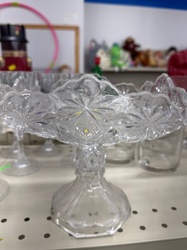
Submitted item photo
Submitted photo · June 10, 2026

User's notes

No additional notes provided.

AI analysis below

AI appraisal

AI analysis & estimate

AI-Generated · Verify before acting

Everything below is generated by AI for informational purposes only. AI can make mistakes — the AI may misidentify items or misattribute them (artist, maker, brand, designer, origin, era). This is not an official valuation and should not be used for insurance, sale, tax, estate, legal, or lending purposes — or any decision requiring a certified appraisal. It is not an authoritative claim about any person, brand, or rights holder — do not share or rely on it as a factual statement about a third party. Always consult qualified professionals before making financial decisions.

Read the full disclaimer

AI Identification

·Not independently authenticated·Verify before acting

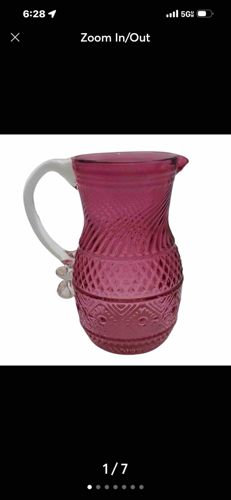
Victorian Era Cranberry Glass Swirl and Hobnail Pitcher with Applied Crystal Handle

Antique Art Glass / Collectible Tableware

AI Estimated Value

·Not an official valuation·Verify before acting

$450 - $650

As of June 10, 2026

AI Item Analysis

·AI can make mistakes·Verify before acting
This is a fine example of Victorian-era art glass, specifically a pitcher crafted in the striking 'cranberry' or 'ruby' hue. The body of the pitcher is comprised of blown-molded glass featuring three distinct decorative segments. The upper neck displays a dynamic spiral optic swirl pattern, transitioning into a middle section of sharp hobnail or diamond points, and finishing with a lower band of molded geometric florets and chevrons. A significant distinguishing feature is the heavy, applied clear crystal handle, which shows 'rigaree' or decorative crimping at the lower terminal point where it joins the body. The color is deep and consistent, suggesting the use of gold chloride in the glass batch, typical of high-quality cranberry glass from the late 19th century. The piece features a polished pontil mark on the base, indicating it was hand-finished. In terms of condition, the glass appears bright with no visible clouding or 'sick' glass symptoms. There are no obvious chips to the delicate hobnails or the spout. The construction reflects the high craftsmanship of North American or British glasshouses such as Fenton or Stourbridge, dating approximately from 1880 to 1900. Its quality is marked by the clarity of the crystal handle and the sharp definition of the decorative molding.
AI Appraisal Report

·AI can make mistakes·Verify before acting
This Victorian-era cranberry glass pitcher represents a superior example of late 19th-century art glass craftsmanship, likely originating from a premier British firm like Stevens & Williams or an American glasshouse such as Hobbs, Brockunier & Co. In my visual assessment, the saturation of the cranberry hue is exceptional, indicating a high concentration of gold chloride. The complexity of the tri-part mold—swirl, hobnail, and geometric floret—paired with a precisely applied crystal rigaree handle, suggests a piece intended for a sophisticated domestic market. The condition appears commemorative of a cabinet piece; the absence of 'flea bites' on the hobnail points and the lack of calcification or 'sick glass' clouding significantly bolsters its marketability. Current market trends for Victorian glass remain stable for multi-patterned pieces, which are rarer than standard thumbprint or plain cranberry items. However, valuation is tempered by the general decline in the 'brown furniture' and 'Victorian parlor' collector base, though high-quality colored glass remains a notable exception. My valuation assumes the piece is free of internal heat cracks at the handle join. It is important to note that this appraisal is based on photographic evidence. A definitive authentication would require a physical inspection to verify the tactile sharpness of the molded patterns and a UV light test to confirm glass batch constituents. Furthermore, while the polished pontil indicates hand-finishing, provenance documentation or original catalog matching would be necessary to definitively attribute the piece to a specific glasshouse and increase its investment-grade status.

Get your items appraised

Instant estimates of your treasures with AI-powered appraisals

Browse More Appraisals