AI estimate as of August 16, 2025 · verify with a professional before acting
AI-Generated · Verify before acting
Everything on this page is generated by AI for informational purposes only. AI can make mistakes — the AI may misidentify items or misattribute them (artist, maker, brand, designer, origin, era). This is not an official valuation and should not be used for insurance, sale, tax, estate, legal, or lending purposes — or any decision requiring a certified appraisal. It is not an authoritative claim about any person, brand, or rights holder — do not share or rely on it as a factual statement about a third party. Always consult qualified professionals before making financial decisions.
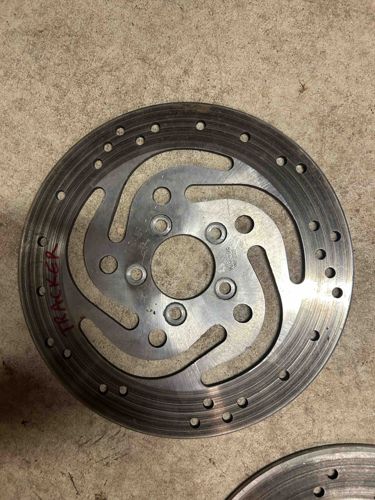
This is a single motorcycle brake rotor, appearing to be made of steel or a similar metal alloy, exhibiting a metallic silver-grey color typical of unpainted or clear-coated brake components. The rotor is circular with a large central hub area and a perforated outer braking surface. The most distinctive feature is the intricate, 'swirling' or 'spiral' cutout pattern in the central part of the disc, between the hub and the braking surface, which likely serves to reduce weight and dissipate heat. The braking surface itself has numerous small, evenly spaced drilled holes, another common feature for enhanced cooling and pad bite, though these appear to be 'blind holes' (not extending through the disc). There are concentric wear marks visible on the braking surface, indicating prior use and friction from brake pads. Some light surface rust or discoloration may be present in areas not contacted by the pads, suggesting exposure to elements. The central hub contains several bolt holes for mounting to the wheel, likely six in total, surrounding what appears to be a larger central bore. The word 'TRACKER' is handwritten in red marker on the surface, possibly an inventory or identification mark from a past owner or shop. The overall condition shows signs of use and wear consistent with a used vehicle component, but no overt damage like cracks or severe warping is immediately apparent. The craftsmanship appears to be industrial standard for motorcycle components, suggesting mass production rather than bespoke manufacture. Given the 'Tracker' annotation, it might imply compatibility with a 'tracker' style motorcycle build or a specific brand of disc.
AI Appraisal Report
I have carefully examined the provided image of this motorcycle brake rotor with a swirl cutout design. My assessment indicates a used, but seemingly functional, brake rotor. The condition shows clear signs of prior use, including concentric wear marks on the braking surface, consistent with friction from brake pads. Some light surface rust or discoloration on non-contact areas suggests exposure to elements. The 'swirling' cutout pattern and drilled holes are design features for weight reduction and heat dissipation. The handwritten 'TRACKER' mark in red marker is likely an inventory or identification tag.
Authenticity, based purely on this image, seems to be that of a mass-produced, aftermarket, or OEM replacement part. Given the wear, it’s not new old stock. Comparables for used motorcycle brake rotors of similar design and condition typically range. Brand (if identifiable), specific motorcycle fitment, and material quality are crucial determinants of value. Without a clear brand identity, precise application, or material specification, a definitive high-end appraisal is challenging. The drilling pattern appears to be 'blind holes' rather than through-holes, which is a design choice impacting performance and lifespan.
Demand for used brake rotors is moderate, mainly driven by individuals restoring or repairing motorcycles on a budget, or seeking specific aesthetic enhancements provided by such designs. Rarity is low as similar swirl-cut rotors are available from various manufacturers.
Factors significantly impacting value include the unknown precise fitment (make/model/year of motorcycle), the type of metal alloy used, the actual run-out/warpage (which cannot be determined from an image), and the remaining service life. The 'TRACKER' annotation might hint at an application or brand, but without further context, it's just an inscription.
Limitations in authenticity verification are significant. Without physical examination, I cannot confirm the rotor’s true structural integrity (e.g., micro-cracks, actual warpage, precise remaining thickness), the specific material composition, or the actual brand. In-person examination would allow for feeler gauge measurements for warpage, micrometer readings for thickness, and potentially non-destructive testing for material composition if warranted, as well as checking the integrity of the drilled holes. Provenance documentation, such as original purchase receipts or fitment guides, would also be invaluable.