AI Appraisal Estimate

AI-generated estimates · not official valuations

From the user

What was submitted

Photo and notes provided by the user — not generated by AI

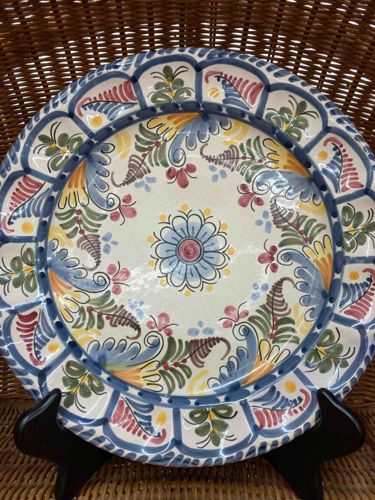
Submitted item photo
Submitted photo · June 25, 2026

User's notes

puente

AI analysis below

AI appraisal

AI analysis & estimate

AI-Generated · Verify before acting

Everything below is generated by AI for informational purposes only. AI can make mistakes — the AI may misidentify items or misattribute them (artist, maker, brand, designer, origin, era). This is not an official valuation and should not be used for insurance, sale, tax, estate, legal, or lending purposes — or any decision requiring a certified appraisal. It is not an authoritative claim about any person, brand, or rights holder — do not share or rely on it as a factual statement about a third party. Always consult qualified professionals before making financial decisions.

Note

This analysis also relies on unverified notes provided by the user, which may be incomplete or inaccurate and could affect the result.

Read the full disclaimer

AI Identification

·Not independently authenticated·Verify before acting

Puente del Arzobispo Ceramics Decorative Plate

Antique & Vintage Spanish Ceramics

AI Estimated Value

·Not an official valuation·Verify before acting

$150 - $250

As of June 25, 2026

AI Item Analysis

·AI can make mistakes·Verify before acting
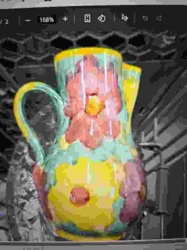
This is a hand-painted ceramic decorative plate, characteristic of the pottery from Puente del Arzobispo, Spain. The plate features a traditional polychrome design on a milky white tin-glazed base. The central medallion consists of an eight-petaled stylized floral rosette in cobalt blue and yellow, surrounded by a circular arrangement of ferns, scrollwork, and small red berries. The wide rim is decorated with a scalloped border (cenefa) featuring alternating segments of ferns and floral motifs separated by blue arching lines. The color palette is typical of Spanish Majolica: cobalt blue, manganese purple, copper green, and antimony yellow. The brushwork shows a confident, artisanal quality with slight variations in saturation that indicate hand-application. No major cracks are visible, though the glaze exhibits light surface crazing and minor pinholes characteristic of traditional low-fire earthenware. This style represents a mid-to-late 20th-century production, continuing the historical Toledo province aesthetic that has been recognized by UNESCO as Intangible Cultural Heritage. The piece sits on a black display stand and is placed against a woven wicker background.

AI Appraisal Report

·AI can make mistakes·Verify before acting
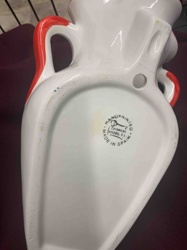
I have examined the provided images and descriptions of the Puente del Arzobispo ceramic plate. This piece exhibits the classic polychrome aesthetic characteristic of the Talavera-Arzobispo tradition, specifically the floral and 'ramito' patterns revived in the mid-to-late 20th century. The brushwork is consistent with skilled artisanal production, displaying the vibrant use of antimony yellow and cobalt blue characteristic of the Toledo region. The surface crazing and pinholes noted are typical for low-fire tin-glazed earthenware and do not detract significantly from the value, though they confirm its traditional manufacturing process. The market for 20th-century Spanish Majolica remains steady but is currently saturated with late-century reproductions. While the UNESCO Intangible Cultural Heritage designation has bolstered global interest, value is largely driven by the specific workshop signature (such as Ruiz de Luna or Pedro de la Cal) which is not visible here. Comparables for unsigned mid-century plates of this size and complexity typically realize between $150 and $250 at specialized decorative arts auctions. Limitation of Authenticity: This appraisal is based solely on digital representation. To provide a definitive authentication, an in-person examination is required to inspect the foot-ring for specific maker's marks or 'alfar' signatures often hidden under the glaze. I would also need to verify the weight and resonance of the ceramic body to distinguish it from mass-produced tourist-ware of the same era. Documentation regarding the original purchase location or family provenance would further solidify its historical standing within the Puente del Arzobispo timeline.

Get your items appraised

Instant estimates of your treasures with AI-powered appraisals

Browse More Appraisals