AI Appraisal Estimate

AI-generated estimates · not official valuations

From the user

What was submitted

Photo and notes provided by the user — not generated by AI

Submitted item photo
Submitted photo · June 10, 2026

User's notes

No additional notes provided.

AI analysis below

AI appraisal

AI analysis & estimate

AI-Generated · Verify before acting

Everything below is generated by AI for informational purposes only. AI can make mistakes — the AI may misidentify items or misattribute them (artist, maker, brand, designer, origin, era). This is not an official valuation and should not be used for insurance, sale, tax, estate, legal, or lending purposes — or any decision requiring a certified appraisal. It is not an authoritative claim about any person, brand, or rights holder — do not share or rely on it as a factual statement about a third party. Always consult qualified professionals before making financial decisions.

Read the full disclaimer

AI Identification

·Not independently authenticated·Verify before acting

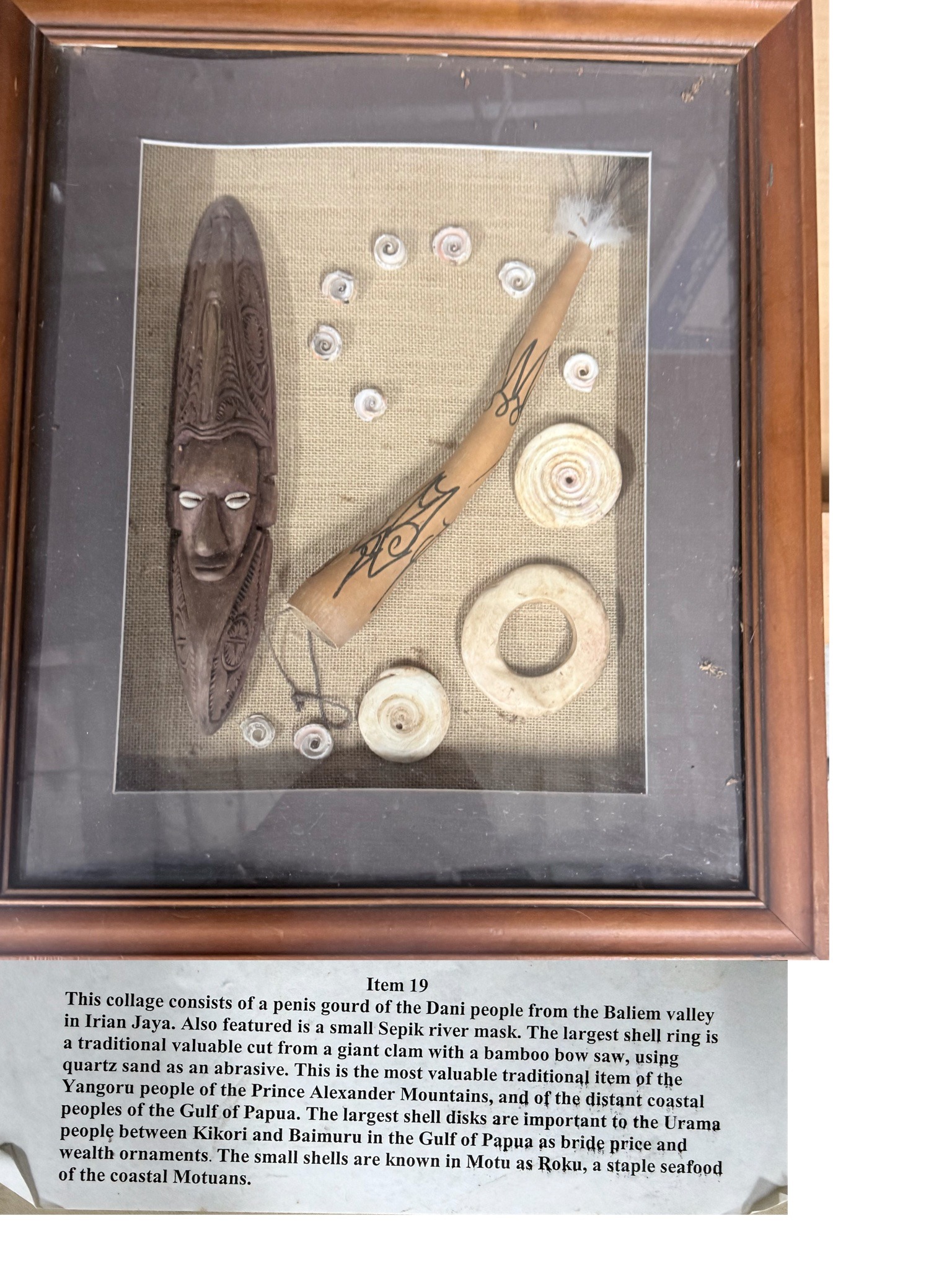
Papua New Guinea and Irian Jaya Ethnographic Shadowbox Collage

Ethnographic Art and Artifacts

AI Estimated Value

·Not an official valuation·Verify before acting

$450 - $650

As of June 10, 2026

AI Item Analysis

·AI can make mistakes·Verify before acting
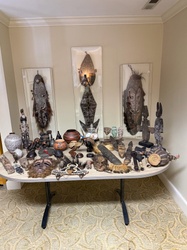
This shadowbox presentation, identified as Item 19, contains a curated collection of significant ethnographic artifacts from the island of New Guinea. The focal point of the display is an elongated, curved 'koteka' (penis gourd) associated with the Dani people of the Baliem Valley, Irian Jaya; it features charred decorative motifs and a tufted white feather tip. To the left is a carved wooden Sepik River mask, characterized by a slender almond shape, intricate incised patterns, and cowrie shell eyes. The arrangement is completed by several shell artifacts, including a substantial ring hand-cut from a giant clam shell using traditional sand-abrasive techniques, several flat shell disks from the Gulf of Papua used as bride price/wealth ornaments, and several small 'Roku' shells. The items are mounted on a tan burlap-style fabric within a deep-profile wood frame behind glass. The condition appears stable within the display, though some minor dust accumulation and light surface patina are visible on the wood and shell surfaces, consistent with mid-to-late 20th-century craftsmanship. The quality is indicative of authentic regional artifacts collected and preserved for educational or decorative display.
AI Appraisal Report

·AI can make mistakes·Verify before acting
I have conducted a visual examination of the Papua New Guinea and Irian Jaya ethnographic shadowbox (Item 19). The assemblage represents a typical 'collector's selection' of mid-to-late 20th-century artifacts. The Dani koteka shows authentic charring and plume work, while the Sepik mask exhibits traditional incised motifs, though its size suggests it was created for the 'airport art' or trade market rather than ceremonial use. The clam shell ring and bride price ornaments appear to be genuine traditional currency, showing the expected irregularities of hand-abrasive manufacture. The overall condition is stable; the burlap mounting and framing are characteristic of 1970s-1990s archival styles. The market for New Guinea ethnographic material is currently bifurcated: high-end ceremonial pieces with provenance command thousands, while decorative assemblages like this one cater to the interior design and entry-level tribal art markets. Comparables for framed ethnographic collections of this size typically hammer between $400 and $700 at regional auctions. Limitations: This appraisal is based solely on digital imagery. A physical inspection is required to verify the age of the wood patination and to ensure the shells are not modern resin replicas. Absolute authentication would require provenance documentation (original field collection notes) and potentially microscopic analysis of the tool marks on the Sepik mask to differentiate between traditional stone/shell tools and modern steel rasps. Furthermore, the feather tip on the koteka must be inspected to ensure compliance with international wildlife trade regulations (CITES). The value reflects the items' appeal as a decorative ethnographic historical set.

Get your items appraised

Instant estimates of your treasures with AI-powered appraisals

Browse More Appraisals