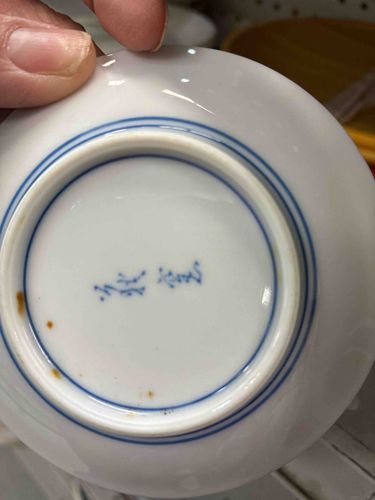
Japanese Arita-style Blue and White Porcelain Saucery with Calligraphic Mark
This item is a circular porcelain saucer or small plate, likely of Japanese origin, specifically in the Arita or Imari tradition. It is constructed from a fine-grained white porcelain clay body and finished with a smooth, semi-glossy transparent glaze. The underside features a prominent unglazed ring foot (kiln-rim) that shows the natural white body of the ceramic. Within the foot rim, there is a hand-painted underglaze blue calligraphic signature or maker's mark consisting of two characters, likely representing the artist or the kiln name. The base is further decorated with two concentric blue circles (rings) bordering the foot rim, a classic motif in East Asian ceramics. In terms of condition, there are several visible orange-brown iron spots or kiln 'rust' marks on the white surface, which are impurities in the clay or glaze that oxidized during firing. There is also a small amount of shelf wear and minor grime accumulation along the unglazed foot. The overall craftsmanship suggests a mass-produced but traditional piece of domestic tableware, likely dating from the mid-to-late 20th century. The porcelain appears thin and vitrified, indicating a high-fire manufacturing process typical of quality Japanese stoneware and porcelain.
AI-Generated Appraisal Disclaimer
Estimated Value
$45-65
Basic Information
Category
Asian Ceramics and Porcelain
Appraised On
March 26, 2026
Estimated Value
$45-65
Item Description
This item is a circular porcelain saucer or small plate, likely of Japanese origin, specifically in the Arita or Imari tradition. It is constructed from a fine-grained white porcelain clay body and finished with a smooth, semi-glossy transparent glaze. The underside features a prominent unglazed ring foot (kiln-rim) that shows the natural white body of the ceramic. Within the foot rim, there is a hand-painted underglaze blue calligraphic signature or maker's mark consisting of two characters, likely representing the artist or the kiln name. The base is further decorated with two concentric blue circles (rings) bordering the foot rim, a classic motif in East Asian ceramics. In terms of condition, there are several visible orange-brown iron spots or kiln 'rust' marks on the white surface, which are impurities in the clay or glaze that oxidized during firing. There is also a small amount of shelf wear and minor grime accumulation along the unglazed foot. The overall craftsmanship suggests a mass-produced but traditional piece of domestic tableware, likely dating from the mid-to-late 20th century. The porcelain appears thin and vitrified, indicating a high-fire manufacturing process typical of quality Japanese stoneware and porcelain.
Get Your Items Appraised
Instant estimates of your treasures with AI-powered instant appraisals