Paleolithic-Style Multi-Tool (Chert Scraper/Knife)
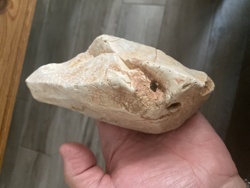
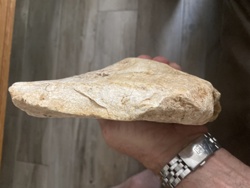
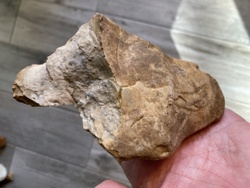
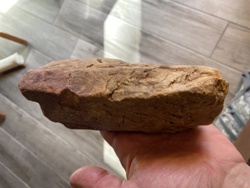
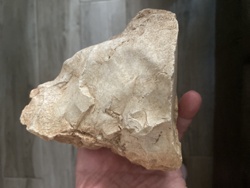
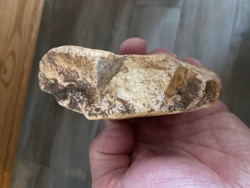
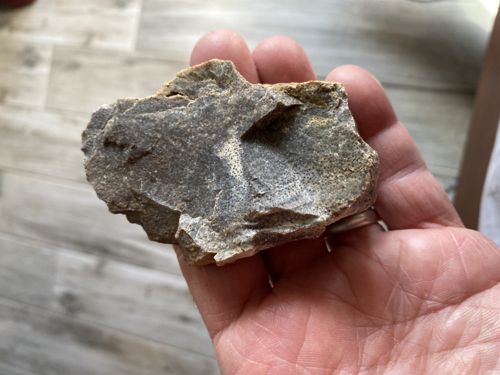
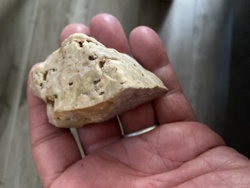
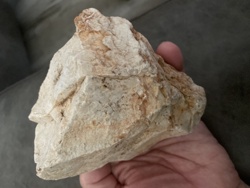
This specimen is a lithic artifact consistent with a Middle Paleolithic-style multi-tool, potentially utilized as a scraper or knife. Measuring approximately 2.5 inches by 1.25 inches, the item displays the characteristic properties of worked chert or flint-like stone. The coloration is a variegated gray and tan, reflecting the natural mineral composition found in the Oklahoma region. Its construction exhibits clear evidence of percussion flaking, with visible conchoidal fractures along the edges, indicating deliberate shaping for functional use. The dorsal surface features several large flake scars, while the profile reveals a steep retouch on one edge, typical of scrapers used for hide preparation or woodworking. The item's texture is gritty with a slight limestone-like patina, suggesting significant age and environmental exposure. The overall condition shows no modern fractures, though the edges exhibit ancient wear and minor step-fracturing consistent with prehistoric use. While no formal maker's marks exist, the craftsmanship level suggests a proficient knapper working within a lithic tradition. The artifact's age is estimated to be several thousand years old, belonging to the regional Paleoindian or Archaic cultural periods, often colloquially associated with 'Middle Paleolithic' techniques despite the North American geographic context.
AI-Generated Appraisal Disclaimer
Estimated Value
$45.00 - $75.00
Basic Information
Category
Prehistoric Lithic Artifacts
Appraised On
February 21, 2026
Estimated Value
$45.00 - $75.00
Additional Details Provided By Owner
User Provided Information
Middle Paleolithic multi tool such as a knife or scraper tool found in Guthrie OK measuring 2.5" x 1.25
Item Description
This specimen is a lithic artifact consistent with a Middle Paleolithic-style multi-tool, potentially utilized as a scraper or knife. Measuring approximately 2.5 inches by 1.25 inches, the item displays the characteristic properties of worked chert or flint-like stone. The coloration is a variegated gray and tan, reflecting the natural mineral composition found in the Oklahoma region. Its construction exhibits clear evidence of percussion flaking, with visible conchoidal fractures along the edges, indicating deliberate shaping for functional use. The dorsal surface features several large flake scars, while the profile reveals a steep retouch on one edge, typical of scrapers used for hide preparation or woodworking. The item's texture is gritty with a slight limestone-like patina, suggesting significant age and environmental exposure. The overall condition shows no modern fractures, though the edges exhibit ancient wear and minor step-fracturing consistent with prehistoric use. While no formal maker's marks exist, the craftsmanship level suggests a proficient knapper working within a lithic tradition. The artifact's age is estimated to be several thousand years old, belonging to the regional Paleoindian or Archaic cultural periods, often colloquially associated with 'Middle Paleolithic' techniques despite the North American geographic context.
Get Your Items Appraised
Instant estimates of your treasures with AI-powered instant appraisals