AI Appraisal Estimate

AI-generated estimates · not official valuations

From the user

What was submitted

Photo and notes provided by the user — not generated by AI

Submitted item photo
Submitted photo · June 13, 2026

User's notes

No additional notes provided.

AI analysis below

AI appraisal

AI analysis & estimate

AI-Generated · Verify before acting

Everything below is generated by AI for informational purposes only. AI can make mistakes — the AI may misidentify items or misattribute them (artist, maker, brand, designer, origin, era). This is not an official valuation and should not be used for insurance, sale, tax, estate, legal, or lending purposes — or any decision requiring a certified appraisal. It is not an authoritative claim about any person, brand, or rights holder — do not share or rely on it as a factual statement about a third party. Always consult qualified professionals before making financial decisions.

Read the full disclaimer

AI Identification

·Not independently authenticated·Verify before acting

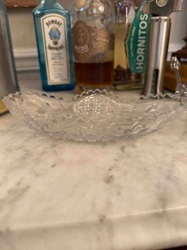
Early American Pattern Glass Pedestal Fruit Bowl

Antique Glassware / Collectibles

AI Estimated Value

·Not an official valuation·Verify before acting

$125 - $175

As of June 13, 2026

AI Item Analysis

·AI can make mistakes·Verify before acting
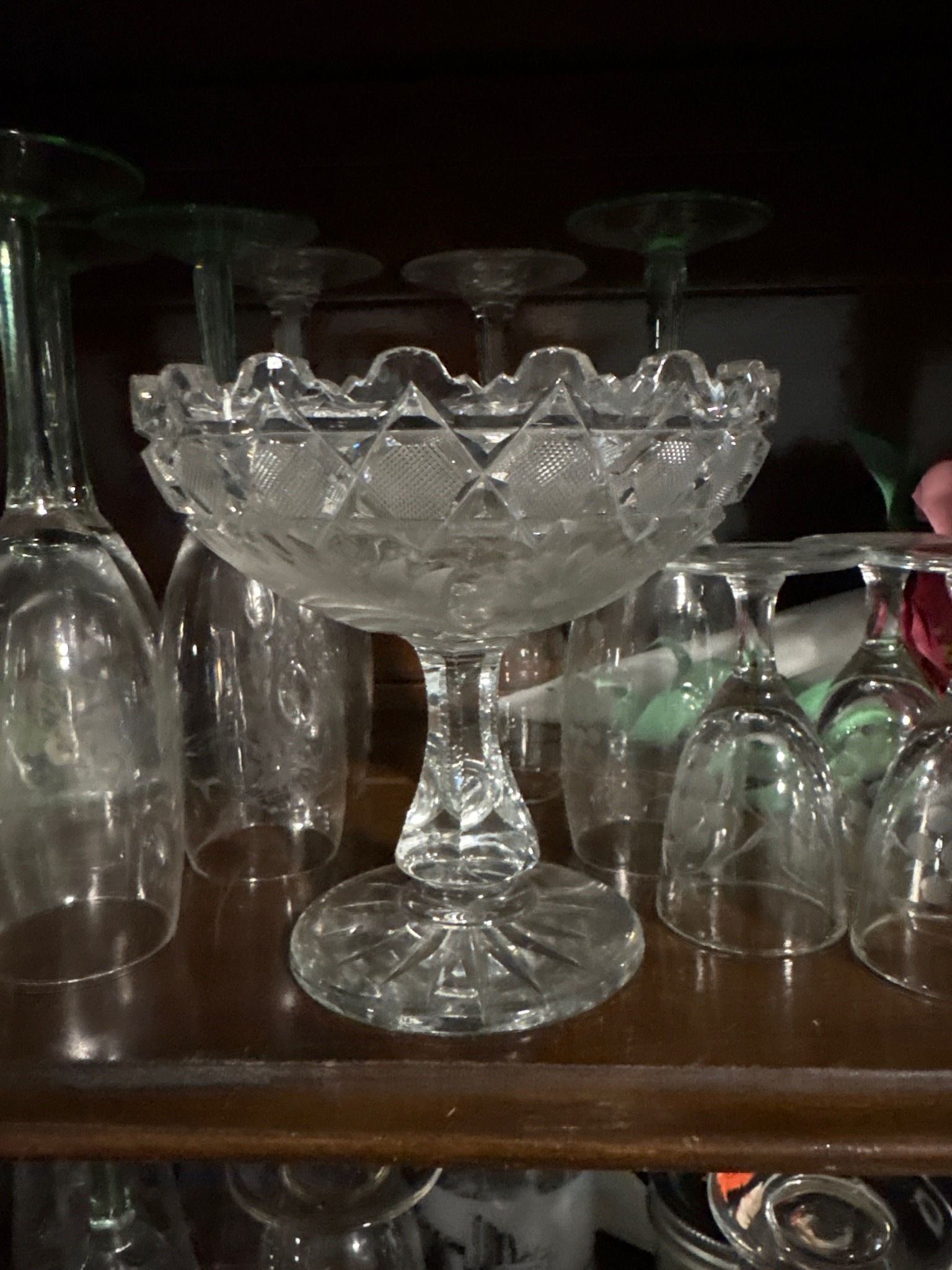
This item is an Early American Pattern Glass (EAPG) goblet-style pedestal bowl, often referred to as a compote or sweetmeat dish. The piece is constructed from thick, pressed clear flint or lead glass, showcasing high clarity and characteristic light refraction. The bowl features a deeply scalloped, saw-tooth rim above a band of geometric 'Diamond Point' and 'Fine Cut' patterns. These patterns consist of recessed equilateral triangles and fine-grid cross-hatching, common in mid-to-late 19th-century American glassmaking. The bowl's lower section transitions into a faceted, knopped stem with six flattened sides, leading down to a wide, circular domed base. The underside of the base contains a pressed starburst or sunburst ray pattern, which provides both stability and aesthetic interest when viewed from above. In terms of condition, the glass appears to be in good vintage state with no visible major chips or cracks, although the sharp scalloped edges are prone to 'flea bites' or minute nibbles from age and use. There are no readily apparent maker's marks, which is typical for EAPG of this era. The weight and sharp definition of the pressing suggest quality craftsmanship from the Victorian period, likely dating between 1870 and 1895.
AI Appraisal Report

·AI can make mistakes·Verify before acting
I have examined the digital representations of this Early American Pattern Glass (EAPG) goblet-style compote. The piece demonstrates hallmarks of high-quality flint glass production from the late 19th century, specifically the 'Diamond Point' and 'Fine Cut' motifs prevalent between 1870 and 1890. The clarity of the lead glass and the sharpness of the pressed facets suggest a superior manufacturer, possibly Boston & Sandwich or New England Glass Company. Visually, the piece is in excellent condition; the scalloped sawtooth rim—highly susceptible to damage—appears remarkably intact, though I must assume standard 'flea bite' wear consistent with age. The market for EAPG remains steady but specialized. While common patterns fetch modest sums, the complexity of this geometric pressing and the presence of the rayed base elevate its desirability among collectors of Victorian tableware. Comparables for similar flint glass compotes in this size range generally realize between $110 and $200 at specialized auction. The value is primarily driven by the lack of significant chips to the delicate rim. However, an image-based appraisal has inherent limitations. To fully authenticate this item and confirm it is not a high-quality 20th-century reproduction (such as those by Imperial or Metropolitan Museum replicas), I would require a physical inspection to test for 'resonance' (a clear ring when tapped, indicative of lead content), weight verification, and a UV light test to check for the characteristic green or yellow fluorescence found in 19th-century glass. Provenance regarding its lineage within a specific collection would further solidify its market standing.

Get your items appraised

Instant estimates of your treasures with AI-powered appraisals

Browse More Appraisals