Qajar Dynasty Style Repoussé Mixed-Metal Tray
Antique Middle Eastern Metalware

Qajar Dynasty Style Repoussé Mixed-Metal Tray

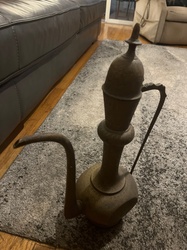
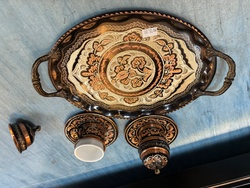
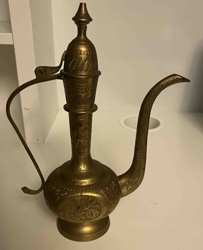
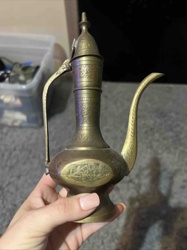
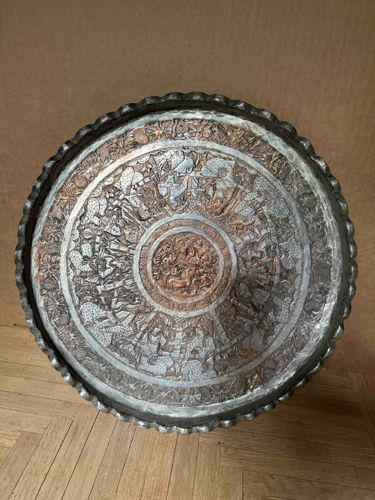
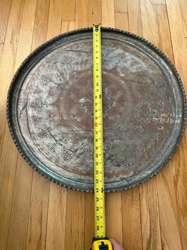
This is a circular, hand-hammered mixed-metal tray, likely of Persian (Iranian) origin in the Qajar style, dating from the late 19th to early 20th century. The piece demonstrates a sophisticated use of metalwork, featuring a tri-tonal appearance achieved through the combination of copper, brass, and possibly a silver/tin wash or plating. The tray is structured with a scalloped, pie-crust rim that shows distinct hand-forged indentations. The central composition is divided into concentric registers: the innermost medallion depicts a figurative scene with animals and flora, surrounded by a larger band featuring multiple figures, possibly depicting a royal court scene, hunt, or mythological narrative. The figures are rendered in deep relief using repoussé and chasing techniques. The craftsmanship is evidenced by the intricate floral scrollwork (islimi) filling the negative space between the primary figures. Regarding condition, the tray shows a significant aged patina with uneven wear to the surface plating, revealing the warm copper tones beneath the silver-colored finish. There are visible surface scratches, small indentations consistent with use, and darkening in the recessed areas (oxidation), which highlights the depth of the carving. No significant structural cracks or modern repairs are immediately apparent, suggesting the item has been well-preserved as a decorative object. The dense iconographic layout and traditional metal-smithing techniques are characteristic of Isfahan metalwork from the late Qajar period.
Estimated Value

$450 - $700

Basic Information

Category

Antique Middle Eastern Metalware

Appraised On

February 12, 2026

Estimated Value

$450 - $700

Item Description

This is a circular, hand-hammered mixed-metal tray, likely of Persian (Iranian) origin in the Qajar style, dating from the late 19th to early 20th century. The piece demonstrates a sophisticated use of metalwork, featuring a tri-tonal appearance achieved through the combination of copper, brass, and possibly a silver/tin wash or plating. The tray is structured with a scalloped, pie-crust rim that shows distinct hand-forged indentations. The central composition is divided into concentric registers: the innermost medallion depicts a figurative scene with animals and flora, surrounded by a larger band featuring multiple figures, possibly depicting a royal court scene, hunt, or mythological narrative. The figures are rendered in deep relief using repoussé and chasing techniques. The craftsmanship is evidenced by the intricate floral scrollwork (islimi) filling the negative space between the primary figures. Regarding condition, the tray shows a significant aged patina with uneven wear to the surface plating, revealing the warm copper tones beneath the silver-colored finish. There are visible surface scratches, small indentations consistent with use, and darkening in the recessed areas (oxidation), which highlights the depth of the carving. No significant structural cracks or modern repairs are immediately apparent, suggesting the item has been well-preserved as a decorative object. The dense iconographic layout and traditional metal-smithing techniques are characteristic of Isfahan metalwork from the late Qajar period.
Get Your Items Appraised

Instant estimates of your treasures with AI-powered instant appraisals

Browse More Appraisals