Vintage German Brass Pocket Compass
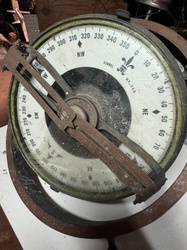
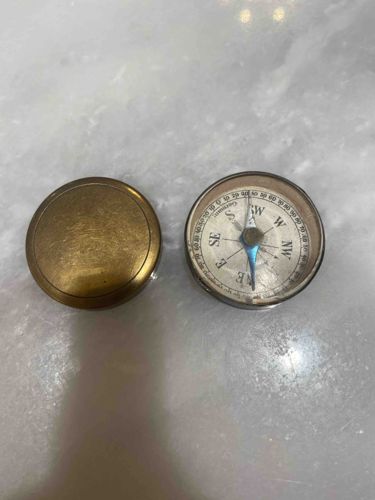
This is a small, circular pocket compass constructed primarily of brass with a separate, detachable brass lid. The device features a cream-colored or aged white dial face displaying a cardinal and intercardinal direction layout (N, NE, E, SE, S, SW, W, NW) in a classic serif font. An outer degree ring is present, graduated from 0 to 90 degrees in both directions. The word "Germany" is visibly printed on the upper left quadrant of the dial, indicating its country of origin. The needle is made of heat-blued steel, exhibiting a distinct iridescent blue finish, which is a common indicator of quality in 19th and early 20th-century scientific instruments. The compass is protected by a clear crystal, likely glass. Regarding physical condition, the brass casing shows a significant aged patina with surface oxidation, fine scratches, and darkening, particularly on the separate lid. There is visible wear around the bezel and some potential moisture spotting or light foxing on the dial face near the edges. The construction is typical of early to mid-20th-century German manufacturing, characterized by robust metalwork and precise typography. The presence of the blued needle suggests a mid-range to high-quality utilitarian field instrument, possibly for military, scouting, or hiking use.
AI-Generated Appraisal Disclaimer
Estimated Value
$45.00-$75.00
Basic Information
Category
Scientific Instruments / Nautical Antiques
Appraised On
February 17, 2026
Estimated Value
$45.00-$75.00
Additional Details Provided By Owner
User Provided Information
Compass
Item Description
This is a small, circular pocket compass constructed primarily of brass with a separate, detachable brass lid. The device features a cream-colored or aged white dial face displaying a cardinal and intercardinal direction layout (N, NE, E, SE, S, SW, W, NW) in a classic serif font. An outer degree ring is present, graduated from 0 to 90 degrees in both directions. The word "Germany" is visibly printed on the upper left quadrant of the dial, indicating its country of origin. The needle is made of heat-blued steel, exhibiting a distinct iridescent blue finish, which is a common indicator of quality in 19th and early 20th-century scientific instruments. The compass is protected by a clear crystal, likely glass. Regarding physical condition, the brass casing shows a significant aged patina with surface oxidation, fine scratches, and darkening, particularly on the separate lid. There is visible wear around the bezel and some potential moisture spotting or light foxing on the dial face near the edges. The construction is typical of early to mid-20th-century German manufacturing, characterized by robust metalwork and precise typography. The presence of the blued needle suggests a mid-range to high-quality utilitarian field instrument, possibly for military, scouting, or hiking use.
Get Your Items Appraised
Instant estimates of your treasures with AI-powered instant appraisals