West German 1 Deutsche Mark Coin
Numismatics / Currency

West German 1 Deutsche Mark Coin

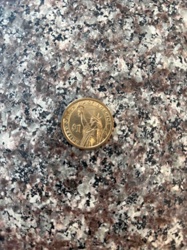
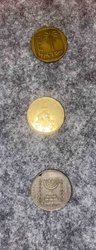
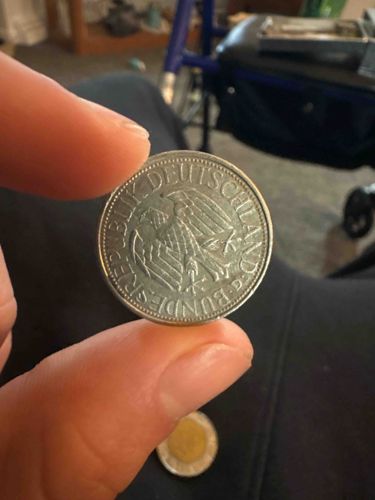
This is a circular metallic coin from the Federal Republic of Germany (West Germany), specifically a 1 Deutsche Mark denomination. The obverse side shown features the stylized Federal Eagle (Bundesadler), which is the national symbol of Germany. Encircling the eagle is the inscription 'BUNDESREPUBLIK DEUTSCHLAND' in a bold, sans-serif typeface. To the right of the eagle's tail, a small 'G' mint mark is visible, indicating it was struck at the Karlsruhe Mint. The coin appears to be minted from a copper-nickel alloy, giving it a bright silver-colored appearance. In terms of condition, the coin displays significant signs of circulation and age. There are numerous fine surface scratches, small nicks, and abrasions consistent with long-term pocket wear. A light greyish patina and localized oxidation are present across the fields and high points of the design. The rim shows some minor impact marks, though the overall structure remains intact. This design was standard for West German currency from 1950 until the introduction of the Euro in 2002. The craftsmanship reflects the industrial precision typical of mid-20th-century European state minting, with clear lettering and a strong, balanced central motif.
Estimated Value

$1.50 - $4.00

Basic Information

Category

Numismatics / Currency

Appraised On

February 11, 2026

Estimated Value

$1.50 - $4.00

Item Description

This is a circular metallic coin from the Federal Republic of Germany (West Germany), specifically a 1 Deutsche Mark denomination. The obverse side shown features the stylized Federal Eagle (Bundesadler), which is the national symbol of Germany. Encircling the eagle is the inscription 'BUNDESREPUBLIK DEUTSCHLAND' in a bold, sans-serif typeface. To the right of the eagle's tail, a small 'G' mint mark is visible, indicating it was struck at the Karlsruhe Mint. The coin appears to be minted from a copper-nickel alloy, giving it a bright silver-colored appearance. In terms of condition, the coin displays significant signs of circulation and age. There are numerous fine surface scratches, small nicks, and abrasions consistent with long-term pocket wear. A light greyish patina and localized oxidation are present across the fields and high points of the design. The rim shows some minor impact marks, though the overall structure remains intact. This design was standard for West German currency from 1950 until the introduction of the Euro in 2002. The craftsmanship reflects the industrial precision typical of mid-20th-century European state minting, with clear lettering and a strong, balanced central motif.
Get Your Items Appraised

Instant estimates of your treasures with AI-powered instant appraisals

Browse More Appraisals