Paleolithic Bifacial Chert Tool (Hand Axe/Scraper/Core)
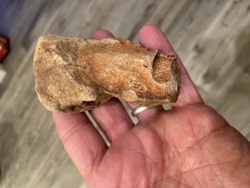
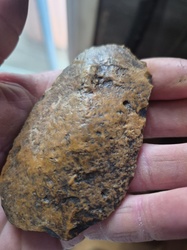
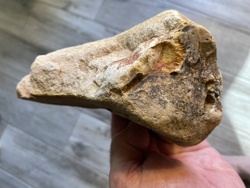
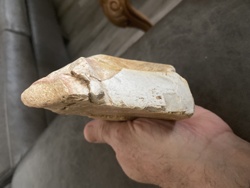
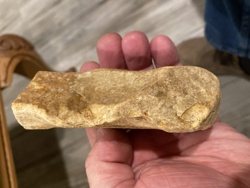
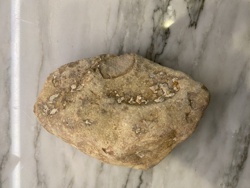
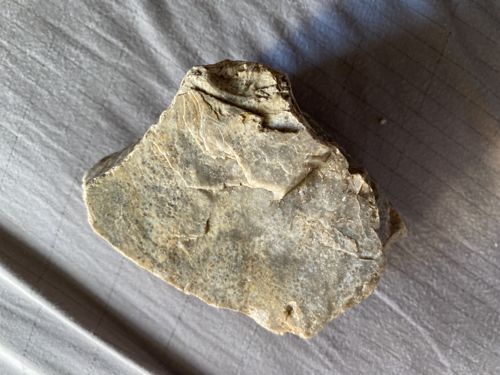
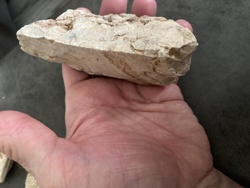
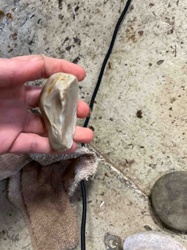
This artifact is a bifacial lithic tool crafted from chert, measuring approximately 3 inches by 3 inches. The item exhibits a roughly cordiform or triangular shape, characteristic of multipurpose prehistoric hand tools. The material is a light beige to tan chert with a matte, weathered surface texture. Its construction shows clear evidence of percussion flaking, with broad, shallow flake scars across both faces, indicative of a bifacial reduction process. The edges appear roughly worked to create a sharp, functional perimeter suitable for scraping or cutting. There is a distinct thickness to the center of the stone, suggesting it may have also served as a core from which smaller flakes were struck for other uses. The overall condition shows significant age-appropriate weathering and a heavy patina, with softened edges from historical soil exposure. No modern tool marks or recent breaks are visible, which aligns with an ancient origin. As a Paleolithic-style find from the Guthrie, Oklahoma area, it represents early human lithic technology and resource utilization in the North American Great Plains region, displaying a utility-focused craftsmanship meant for durability rather than aesthetic refinement.
AI-Generated Appraisal Disclaimer
Estimated Value
$45.00 - $75.00
Basic Information
Category
Archaeological Artifact / Lithic Tools
Appraised On
February 20, 2026
Estimated Value
$45.00 - $75.00
Additional Details Provided By Owner
User Provided Information
Paleolithic chert bi face hand axe scraper core tool found in Guthrie OK 3" x 3"
Item Description
This artifact is a bifacial lithic tool crafted from chert, measuring approximately 3 inches by 3 inches. The item exhibits a roughly cordiform or triangular shape, characteristic of multipurpose prehistoric hand tools. The material is a light beige to tan chert with a matte, weathered surface texture. Its construction shows clear evidence of percussion flaking, with broad, shallow flake scars across both faces, indicative of a bifacial reduction process. The edges appear roughly worked to create a sharp, functional perimeter suitable for scraping or cutting. There is a distinct thickness to the center of the stone, suggesting it may have also served as a core from which smaller flakes were struck for other uses. The overall condition shows significant age-appropriate weathering and a heavy patina, with softened edges from historical soil exposure. No modern tool marks or recent breaks are visible, which aligns with an ancient origin. As a Paleolithic-style find from the Guthrie, Oklahoma area, it represents early human lithic technology and resource utilization in the North American Great Plains region, displaying a utility-focused craftsmanship meant for durability rather than aesthetic refinement.
Get Your Items Appraised
Instant estimates of your treasures with AI-powered instant appraisals