AI Appraisal Estimate

AI-generated estimates · not official valuations

From the user

What was submitted

Photo and notes provided by the user — not generated by AI

Submitted item photo
Submitted photo · June 18, 2026

User's notes

No additional notes provided.

AI analysis below

AI appraisal

AI analysis & estimate

AI-Generated · Verify before acting

Everything below is generated by AI for informational purposes only. AI can make mistakes — the AI may misidentify items or misattribute them (artist, maker, brand, designer, origin, era). This is not an official valuation and should not be used for insurance, sale, tax, estate, legal, or lending purposes — or any decision requiring a certified appraisal. It is not an authoritative claim about any person, brand, or rights holder — do not share or rely on it as a factual statement about a third party. Always consult qualified professionals before making financial decisions.

Read the full disclaimer

AI Identification

·Not independently authenticated·Verify before acting

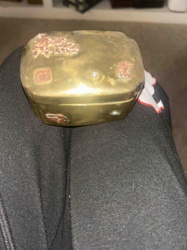
Japanese Ginbari Cloisonné Ginger Jar

Asian Art and Antiques - Japanese Metalwork

AI Estimated Value

·Not an official valuation·Verify before acting

$450 - $650

As of June 18, 2026

AI Item Analysis

·AI can make mistakes·Verify before acting
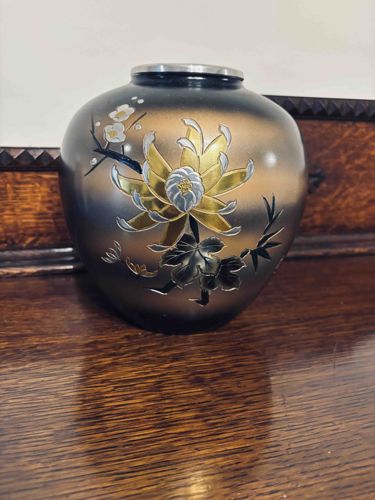
This is a globular, small-mouthed 'ginger jar' style vessel, likely of Japanese origin, demonstrating the ginbari cloisonné technique. The body features a striking matte finish with a gradient transition from charcoal black at the base and shoulders to a warm, bronzed taupe in the center. The primary decorative motif is an oversized, multi-petaled chrysanthemum bloom rendered in vibrant gold and silver tones with fine wirework edges. Flanking the main flower are cherry blossom sprigs and dark, stylized foliage. The usage of varied metallic inlays creates a high-relief effect against the smooth body. The vessel is topped with a simple, polished metal rim that contrasts with the textured body. Physically, the item appears to be made of a base metal (likely copper or brass) with an enamel and foil overlay. The construction shows high levels of craftsmanship, particularly in the delicate wirework and the subtle ombre background. In terms of condition, there is light shelf wear on the base and some minor surface artifacts consistent with age, though no major chips, cracks, or large-scale metal oxidation are visible. Stylistically, this piece aligns with the Mid-20th Century Showa period (c. 1950s-1970s), characterized by the blending of traditional cloisonné techniques with more modern, graphic color palettes.
AI Appraisal Report

·AI can make mistakes·Verify before acting
I have conducted a visual inspection of this Japanese Ginbari cloisonné ginger jar. This piece represents an excellent example of mid-20th-century Showa-era craftsmanship. The 'Ginbari' technique—utilizing embossed foil under translucent enamels—is expertly executed here, particularly in the chrysanthemum and cherry blossom motifs which exhibit a desirable 'high-relief' aesthetic. The matte gradient background is a sophisticated departure from more common high-gloss finishes of the period, increasing its decorative appeal. The condition appears remarkably stable; the absence of visible 'star' cracks or substantial pitting in the enamel is a significant value driver, as these pieces are notoriously fragile. The metal rims show appropriate patina without signs of silver-plate loss or aggressive oxidation. In the current market, mid-range Japanese cloisonné remains steady. While not as valuable as Meiji-era masterpieces by Ando or Namikawa, the 'ginger jar' form remains highly collectible for Western interior design. Comparables for similar high-quality 20th-century Ginbari show realized prices between $400 and $700 depending on the complexity of the foil work. The primary limitation of this appraisal is the inability to physically inspect for sub-surface hairlines or to verify the presence of a maker's mark (such as the Ando 'J' mark or the Sato mark) on the base. A full authentication would require a tactile examination to confirm the weight and base metal composition, a loupe inspection of the wire junctions, and any available provenance documentation to trace its import history. Without a confirmed hallmark, the valuation remains within the standard high-quality attribution range.

Get your items appraised

Instant estimates of your treasures with AI-powered appraisals

Browse More Appraisals