AI Appraisal Estimate

AI-generated estimates · not official valuations

From the user

What was submitted

Photo and notes provided by the user — not generated by AI

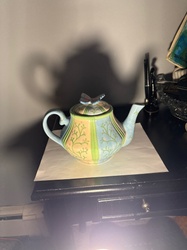
Submitted item photo
Submitted photo · June 26, 2026

User's notes

No additional notes provided.

AI analysis below

AI appraisal

AI analysis & estimate

AI-Generated · Verify before acting

Everything below is generated by AI for informational purposes only. AI can make mistakes — the AI may misidentify items or misattribute them (artist, maker, brand, designer, origin, era). This is not an official valuation and should not be used for insurance, sale, tax, estate, legal, or lending purposes — or any decision requiring a certified appraisal. It is not an authoritative claim about any person, brand, or rights holder — do not share or rely on it as a factual statement about a third party. Always consult qualified professionals before making financial decisions.

Read the full disclaimer

AI Identification

·Not independently authenticated·Verify before acting

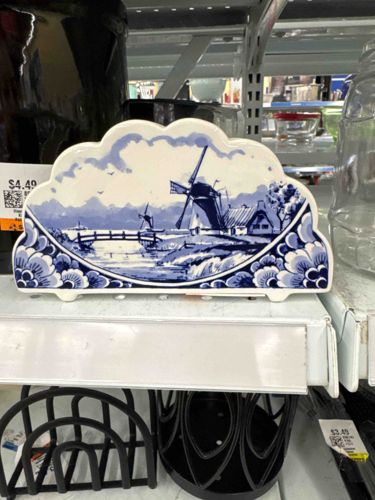
Delft Blue Style Ceramic Napkin Holder

Kitchenware / Decorative Ceramics

AI Estimated Value

·Not an official valuation·Verify before acting

$15.00 - $25.00

As of June 26, 2026

AI Item Analysis

·AI can make mistakes·Verify before acting
This is a decorative ceramic napkin holder featuring a traditional Dutch-inspired Delftware aesthetic. The piece is constructed from a white glazed ceramic material, likely earthenware or porcelain. The primary decoration is a blue monochromatic transfer-print or hand-painted scene depicting a classic Dutch landscape, including a prominent windmill, a smaller windmill in the distance, a footbridge over water, and a small cottage. The scalloped top edge frames the scene like a cloud, while the lower corners are adorned with stylized floral scrollwork reminiscent of 17th-century Dutch pottery styles. The item features two small ceramic feet at the base for stability. In terms of condition, there appears to be a small orange or brown stain or chip visible on the lower-center front edge near the base, and minor glaze imperfections consistent with mass production. The overall gloss of the glaze is high, suggesting a mid-to-late 20th-century manufacture. While it mimics the look of authentic Royal Delft (Koninklijke Porceleyne Fles), the lack of a visible signature on the face suggests it is likely a souvenir or decorative kitchenware piece rather than a high-end hand-painted antique. The craftsmanship is clean but standard for functional household ceramics.
AI Appraisal Report

·AI can make mistakes·Verify before acting
I have carefully examined the provided images of this Delft-style ceramic napkin holder. The item is a decorative table accessory featuring traditional blue-on-white chalcography. Based on its high-gloss finish, the uniformity of the scalloped edges, and the specific transfer-print application of the windmill scene, I have identified this as a mid-to-late 20th-century souvenir or mass-market household item, rather than an authentic hand-painted piece from the Koninklijke Porceleyne Fles (Royal Delft) factory. The condition is fair to good; while the glaze retains its luster, there is a visible particulate inclusion or small chip on the lower front edge which detracts from its display value. The market for 'Delft-style' souvenir ware is currently saturated. Unlike signed 18th-century pieces which command thousands, or contemporary hand-painted Royal Delft which retails for significantly more, mass-produced transfer-ware is valued strictly for its functional and decorative utility. Comparables on the secondary market (online auctions and vintage shops) consistently sell within the $10 to $30 range. Because this assessment was conducted via digital images, there are inherent limitations. A physical inspection is required to check for crazing, internal hairline fractures, or manufacturer marks on the underside which could slightly alter the provenance. To fully authenticate a piece as 'Royal Delft,' one would need to verify the presence of the jar, the JT initials, and the city mark (Delft) in underglaze blue. Without a physical signature or provenance documentation from the original point of purchase in the Netherlands, this must be valued as a decorative household ceramic.

Related Tags

Explore similar items and categories

Get your items appraised

Instant estimates of your treasures with AI-powered appraisals

Browse More Appraisals