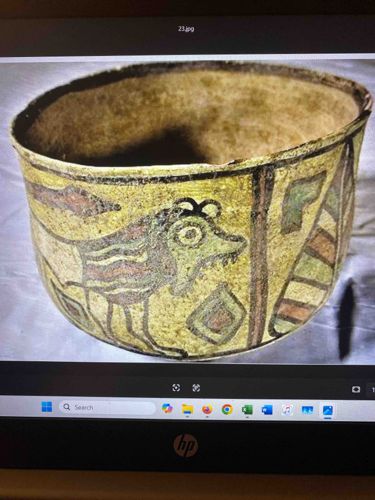
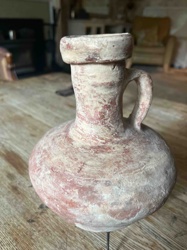
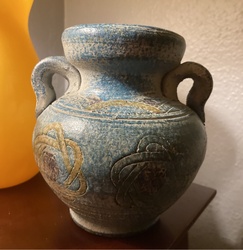
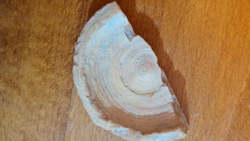
2000 BC Indus Valley Harappan Terracotta Vessel with beast motifs
These notes were written by the person who submitted this item. Appraiser.AI has not verified them, and the AI's identification and estimate may rely on them.
AI Estimated Value
Not an official valuation
$2,500-4,000
AI estimate as of July 18, 2025 · verify with a professional before acting
AI-Generated · Verify before acting
Everything on this page is generated by AI for informational purposes only. AI can make mistakes — the AI may misidentify items or misattribute them (artist, maker, brand, designer, origin, era). This is not an official valuation and should not be used for insurance, sale, tax, estate, legal, or lending purposes — or any decision requiring a certified appraisal. It is not an authoritative claim about any person, brand, or rights holder — do not share or rely on it as a factual statement about a third party. Always consult qualified professionals before making financial decisions.
This analysis also relies on unverified notes provided by the user, which may be incomplete or inaccurate and could affect the result.
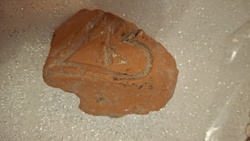
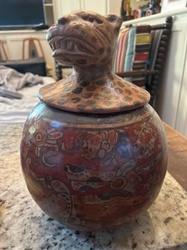
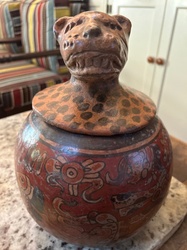
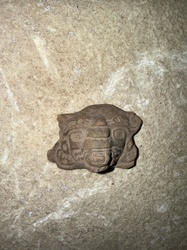
This is a Harappan Terracotta Vessel, a type of pottery common in the Indus Valley Civilization around 2000 BC. The vessel is circular with a slightly outward-flaring rim, suggesting it might have been used as a bowl or a storage container. Its material is terracotta, evident from the earthy, light brown to reddish-brown hues of the unglazed interior and rim, consistent with fired clay. The exterior is adorned with intricate painted motifs, primarily featuring a stylized beast or fantastical creature with large, circular eyes and a somewhat reptilian or mammalian head, depicted in dark outlines against a light yellow or beige ground color. The creature's body is filled with horizontal reddish-brown and lighter striped patterns, indicative of early artistic conventions. Surrounding this central figure are geometric and abstract patterns in various shades of green, reddish-brown, and possibly some faded black or dark gray, creating a rich tapestry of design. The craftsmanship appears robust, though the visible surface displays significant wear and patina, commensurate with its age and historical context. There are visible chips and abrasions along the rim, and the painted decoration shows signs of fading and flaking in areas, indicating the passage of time and potential exposure to elements. Despite the wear, the integrity of the vessel seems largely intact, with no obvious signs of major breaks or repairs. The uneven coloration and texture inside the pot suggest a hand-built or hand-finished process, typical of ancient pottery. This piece is a significant artifact due to its distinctive beast motifs, which are characteristic of the Harappan period and provide insight into their cultural and artistic expressions.
AI Appraisal Report
Upon examining the provided image and information for this Harappan Terracotta Vessel, I assess its condition as fair to good for an artifact of its age. The visible chips and abrasions on the rim, along with the fading and flaking of the painted decoration, are expected signs of wear for a piece dating back to 2000 BC. The overall structural integrity appears largely intact, with no obvious major breaks or repairs, which is a significant plus. The unglazed interior and uneven texture are consistent with ancient hand-built pottery techniques.
From the visual evidence, the distinctive beast motifs, color palette (earthy tones, dark outlines, yellow/beige ground), and form (circular with flaring rim) strongly align with known Harappan pottery characteristics from the Indus Valley Civilization. The specific artistic conventions, such as the stylized eyes and striped body of the creature, reinforce its period authenticity. This style is highly recognizable and sought after by collectors specializing in early Bronze Age civilizations and ancient Near Eastern/South Asian art.
Market conditions for authentic Harappan artifacts are stable, with a consistent, albeit niche, demand from museums, academic institutions, and private collectors. Rarity is high for well-preserved examples with clear, characteristic motifs. The presence of the intricate beast motif significantly enhances its appeal and value, as these artistic expressions provide valuable cultural insights.
However, it is crucial to state that full authentication cannot be definitively confirmed from images alone. A physical in-person examination would be essential to verify the terracotta's composition, assess the tactile quality of the surface, and discern any signs of modern intervention or restoration that might not be visible in photographs. Additionally, provenance documentation, detailing the item's history of ownership and acquisition, would significantly bolster its authenticity and market value. Thermoluminescence (TL) testing would provide scientific verification of the firing date, conclusively proving its ancient origin and solidifying its authenticity.