Lower Paleolithic Style Petrified Wood Hand Axe Scraper
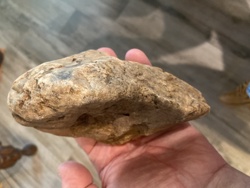
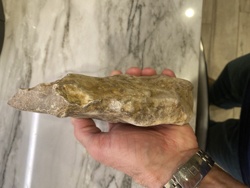
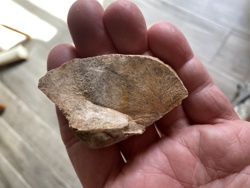
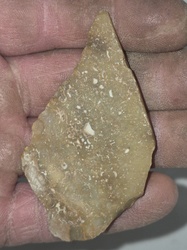
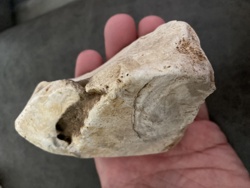
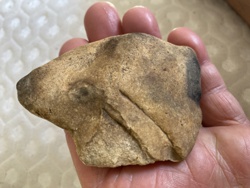
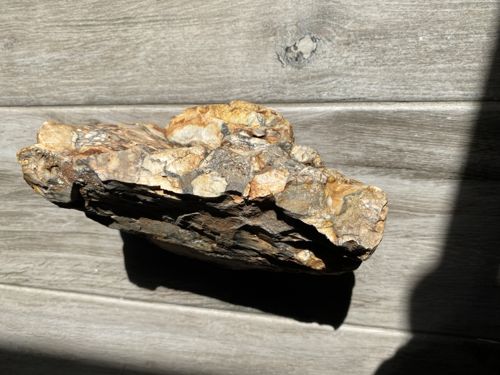
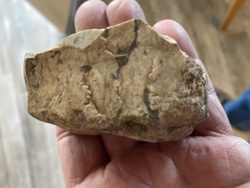
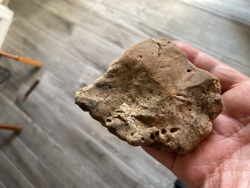
This item is a large lithic specimen, measuring approximately 6.25 inches by 3 inches, identified as being composed of silicified or petrified wood found in Guthrie, Oklahoma. The physical characteristics exhibit a robust, bifacial-style reduction commonly associated with Lower Paleolithic lithic traditions such as the Acheulean. The color palette is a complex mix of earthy tones: ochre, tan, and cream on the cortical surfaces, transitioning to deep grays and browns where the inner material has been exposed through flaking. The texture is markedly heterogeneous, showing the fibrous, grained structure of fossilized wood combined with the conchoidal-like fracture patterns typical of high-silica stone tools. Notable features include multiple percussion scars along the perimeter, indicating intentional shaping to create a sharpened working edge or 'bit.' The condition appears stable with heavy mineralization and natural patination over the worked surfaces, which suggests significant antiquity. There are no modern maker's marks, as is typical for prehistoric artifacts. The craftsmanship shows a primitive but functional mastery of heavy-duty percussion flaking to produce a tool suitable for scraping or chopping. The overall quality is indicative of an opportunistic yet purposeful lithic industry using locally available fossilized materials.
AI-Generated Appraisal Disclaimer
Estimated Value
$150-$300
Basic Information
Category
Archeological Artifacts / Prehistoric Stone Tools
Appraised On
February 19, 2026
Estimated Value
$150-$300
Additional Details Provided By Owner
User Provided Information
Lower Paleolithic Petrified wood large hand axe scraper found in Guthrie OK measuring 6.25" x 3"
Item Description
This item is a large lithic specimen, measuring approximately 6.25 inches by 3 inches, identified as being composed of silicified or petrified wood found in Guthrie, Oklahoma. The physical characteristics exhibit a robust, bifacial-style reduction commonly associated with Lower Paleolithic lithic traditions such as the Acheulean. The color palette is a complex mix of earthy tones: ochre, tan, and cream on the cortical surfaces, transitioning to deep grays and browns where the inner material has been exposed through flaking. The texture is markedly heterogeneous, showing the fibrous, grained structure of fossilized wood combined with the conchoidal-like fracture patterns typical of high-silica stone tools. Notable features include multiple percussion scars along the perimeter, indicating intentional shaping to create a sharpened working edge or 'bit.' The condition appears stable with heavy mineralization and natural patination over the worked surfaces, which suggests significant antiquity. There are no modern maker's marks, as is typical for prehistoric artifacts. The craftsmanship shows a primitive but functional mastery of heavy-duty percussion flaking to produce a tool suitable for scraping or chopping. The overall quality is indicative of an opportunistic yet purposeful lithic industry using locally available fossilized materials.
Related Tags
Explore similar items and categories:
Get Your Items Appraised
Instant estimates of your treasures with AI-powered instant appraisals