Vienna Regulator Style Wall Clock
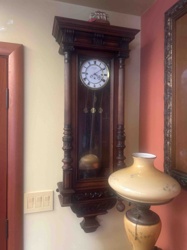
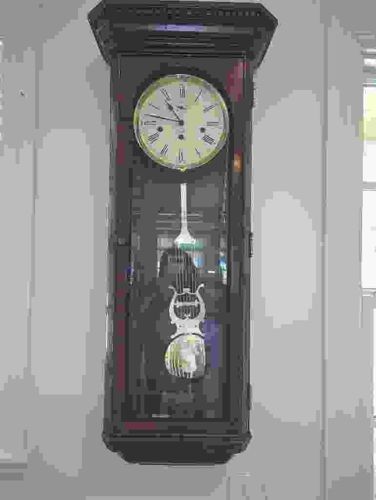
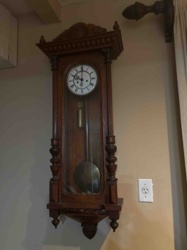
This item is a large-format, wall-mounted regulator clock, appearing to be in the late 19th-century Vienna Regulator style. The case is constructed of a dark-toned hardwood, likely walnut or mahogany, and features a significant rectangular glass-paneled door that provides a full view of the internal mechanics. The clock head is capped with a prominent decorative pediment featuring molded horizontal detailing. The dial is a circular white enamel or porcelain-on-metal face with crisp black Roman numeral hour markers and a secondary track for minutes. The clock possesses a three-train movement, indicated by the three winding holes on the dial, which suggests it includes time-keeping, striking, and chiming (likely Westminster) functions. One of the most striking physical characteristics is the ornate lyre-shaped pendulum bob made of polished brass, suspended from a multi-rod temperature-compensating gridiron. The movement appears to be weight-driven, with weights visible through the side or rear of the case. The craftsmanship is high-quality, with precise joinery and a clear, well-preserved glass door. Regarding condition, the case shows a deep, aged patina consistent with an antique, though the image clarity limits a detailed assessment of minor surface scratches. There are no obvious signs of restorative repairs or modern hardware replacements visible from this angle. Overall, it is an impressive example of European horological design, likely dating from 1880 to 1910.
AI-Generated Appraisal Disclaimer
Estimated Value
$2,500 - $4,500
Basic Information
Category
Antique Horology / Wall Clocks
Appraised On
February 16, 2026
Estimated Value
$2,500 - $4,500
Item Description
This item is a large-format, wall-mounted regulator clock, appearing to be in the late 19th-century Vienna Regulator style. The case is constructed of a dark-toned hardwood, likely walnut or mahogany, and features a significant rectangular glass-paneled door that provides a full view of the internal mechanics. The clock head is capped with a prominent decorative pediment featuring molded horizontal detailing. The dial is a circular white enamel or porcelain-on-metal face with crisp black Roman numeral hour markers and a secondary track for minutes. The clock possesses a three-train movement, indicated by the three winding holes on the dial, which suggests it includes time-keeping, striking, and chiming (likely Westminster) functions. One of the most striking physical characteristics is the ornate lyre-shaped pendulum bob made of polished brass, suspended from a multi-rod temperature-compensating gridiron. The movement appears to be weight-driven, with weights visible through the side or rear of the case. The craftsmanship is high-quality, with precise joinery and a clear, well-preserved glass door. Regarding condition, the case shows a deep, aged patina consistent with an antique, though the image clarity limits a detailed assessment of minor surface scratches. There are no obvious signs of restorative repairs or modern hardware replacements visible from this angle. Overall, it is an impressive example of European horological design, likely dating from 1880 to 1910.
Get Your Items Appraised
Instant estimates of your treasures with AI-powered instant appraisals