AI identification & appraisal estimate

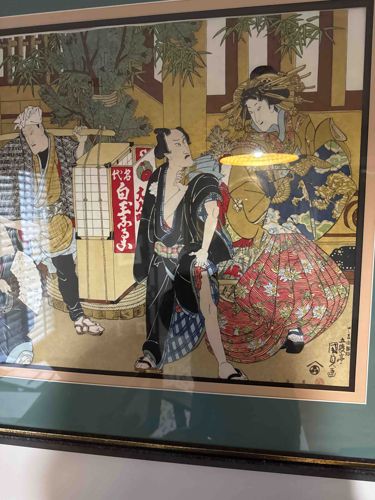
Japanese Ukiyo-e Woodblock Print of Theatrical Scene (Shirao Gyoku)

Submitted photo of Japanese Ukiyo-e Woodblock Print of Theatrical Scene (Shirao Gyoku)
Photo submitted by the user — not generated by AI

AI Estimated Value

Not an official valuation

$400 - $600

AI estimate as of December 1, 2025 · verify with a professional before acting

AI-Generated · Verify before acting

Everything on this page is generated by AI for informational purposes only. AI can make mistakes — the AI may misidentify items or misattribute them (artist, maker, brand, designer, origin, era). This is not an official valuation and should not be used for insurance, sale, tax, estate, legal, or lending purposes — or any decision requiring a certified appraisal. It is not an authoritative claim about any person, brand, or rights holder — do not share or rely on it as a factual statement about a third party. Always consult qualified professionals before making financial decisions.

Read the full disclaimer

AI Item Analysis

This item is a framed Japanese ukiyo-e woodblock print, likely depicting a scene from a kabuki play or a genre scene, within a residential or theatrical setting. The print features three main figures. On the left, a male figure wearing a textured patterned robe with a white head covering carries a large, segmented straw-like object and a rectangular lantern with Japanese characters (possibly 'Shirao Gyoku' in red text on a white ground). His sandals are visible. In the center, another male figure in a dramatic posture, wearing a dark kimono with intricate patterns, has one arm raised and one leg exposed, suggesting movement or a theatrical pose. His facial expression appears intense or emotional. To the right, a female figure in elaborate attire, including a richly decorated gold-colored garment with blue and white floral or cloud motifs, wears a complex hairstyle adorned with numerous decorative hairpins. Her lower garment is a vibrant red with white floral patterns. The background features architectural elements such as wooden pillars and bamboo foliage, rendered in shades of green and brown. A distinct artist's signature or seal is visible in the lower right corner of the print, providing a potential clue to its creator. The print exhibits characteristic ukiyo-e coloring with clear outlines and flat areas of color. The entire print is matted with a light beige border and framed under glass in a dark green and gold-toned frame. The visible condition suggests some reflections on the glass, which obscures parts of the image, but the print itself appears well-preserved under glass, with colors seemingly vibrant. No significant damage or wear to the print itself is immediately apparent from the image, but a full assessment would require removal from the frame. The framing indicates that it is an item meant for display. The style and subject matter highly suggest an Edo period origin or a later reproduction in the ukiyo-e tradition, likely dating from the 19th or early 20th century.

AI Appraisal Report

Based on my examination of the provided images, this is a Japanese ukiyo-e woodblock print, likely a triptych or part of one, depicting a kabuki theatrical scene. The print is attributed to Utagawa School artists, possibly Kunisada or a contemporary, from the mid-19th century Edo period. The vibrant colors and dynamic composition are characteristic of this era. The print appears to be in good condition for its age, with strong color retention, though it is framed under glass which obscures a full assessment of the paper's surface, margins, and any potential toning or foxing. The market for authentic 19th-century kabuki prints is stable. Similar single sheets by artists like Kunisada and Kuniyoshi in good condition typically sell in the $200-$400 range at auction. This subject, identified as featuring the actor 'Shirao Gyoku', has a specific appeal to collectors of kabuki-related art. The current framed presentation adds to its decorative appeal but can also hide condition issues or information about the publisher and date, which are critical for valuation. The primary factor limiting this appraisal is the inability to authenticate the print in person. Without removing it from the frame, I cannot verify if it is an original 19th-century impression or a later Meiji-era or 20th-century reproduction, which would significantly decrease its value. A full authentication would require physical examination of the paper fibers, impression quality, and any publisher's seals or censor marks that may be hidden by the matting. Provenance documentation would also greatly enhance its value. The current valuation assumes it is an original period piece in the condition seen.

Keep exploring

More art print appraisals

Get your items appraised

Instant AI-powered appraisal estimates from a photo

Browse More Appraisals