Shiva Nataraja Steel/Alloy Statue
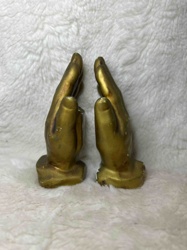
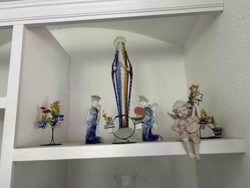
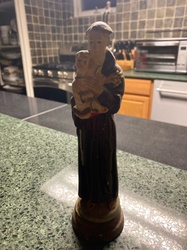
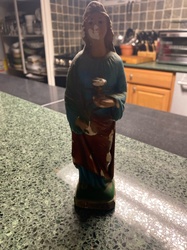
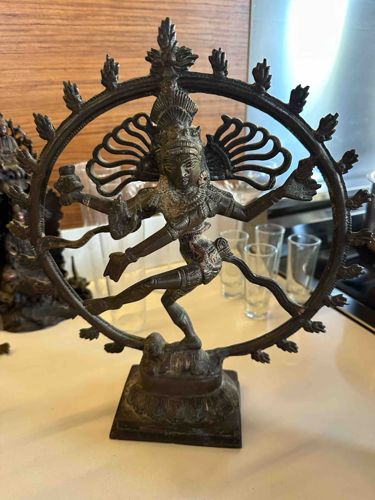
This is a cast metal representation of Shiva as Nataraja, the Lord of the Dance, shown performing the Tandava within a circular flame-edged aureole (prabhamandala). The deity is depicted with four arms: the upper right hand holds the damaru (drum), the upper left carries the agni (fire), the lower right is in the abhaya mudra (fearlessness), and the lower left points toward his raised foot. Shiva balances on his right leg atop the dwarf figure Apasmara, a symbol of ignorance. The statue is likely cast from an alloy, possibly bronze or brass with a dark, aged patina that includes visible verdigris and oxidation in recessed areas. The construction suggests a lost-wax casting method given the intricate details of the jata (matted hair) and the flared crown. The figure stands on a tiered lotiform base which rests on a square pedestal. Condition-wise, the statue shows significant surface wear, dust accumulation, and pitting consistent with mid-20th-century mass-market production rather than an ancient artifact. No visible maker's marks are apparent in the provided view, but the overall craftsmanship indicates it is a decorative souvenir or domestic altar piece likely manufactured in India during the late 20th century. The details in the facial expression and the flame geometry suggest a standard commercial quality rather than a fine arts commission.
AI-Generated Appraisal Disclaimer
Estimated Value
$40 - $75
Basic Information
Category
Religious Art & Figurines
Appraised On
March 20, 2026
Estimated Value
$40 - $75
Item Description
This is a cast metal representation of Shiva as Nataraja, the Lord of the Dance, shown performing the Tandava within a circular flame-edged aureole (prabhamandala). The deity is depicted with four arms: the upper right hand holds the damaru (drum), the upper left carries the agni (fire), the lower right is in the abhaya mudra (fearlessness), and the lower left points toward his raised foot. Shiva balances on his right leg atop the dwarf figure Apasmara, a symbol of ignorance. The statue is likely cast from an alloy, possibly bronze or brass with a dark, aged patina that includes visible verdigris and oxidation in recessed areas. The construction suggests a lost-wax casting method given the intricate details of the jata (matted hair) and the flared crown. The figure stands on a tiered lotiform base which rests on a square pedestal. Condition-wise, the statue shows significant surface wear, dust accumulation, and pitting consistent with mid-20th-century mass-market production rather than an ancient artifact. No visible maker's marks are apparent in the provided view, but the overall craftsmanship indicates it is a decorative souvenir or domestic altar piece likely manufactured in India during the late 20th century. The details in the facial expression and the flame geometry suggest a standard commercial quality rather than a fine arts commission.
Get Your Items Appraised
Instant estimates of your treasures with AI-powered instant appraisals