Teal Pressed Glass Two-Handled Sugar Bowl
Vintage Glassware/Kitchenware

Teal Pressed Glass Two-Handled Sugar Bowl

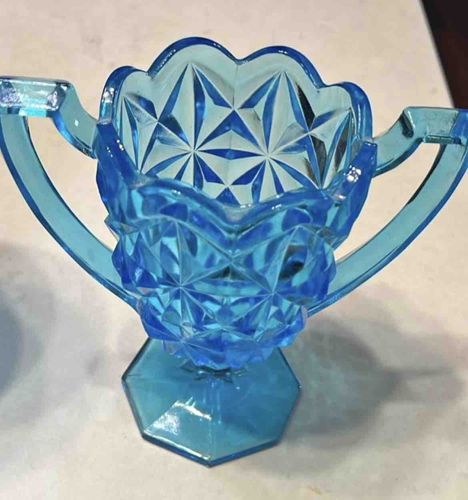
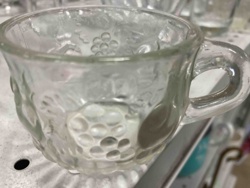
This item is a vibrant teal or cerulean blue pressed glass sugar bowl, likely dating from the mid-20th century, specifically the Depression glass or Early American Pattern Glass (EAPG) revival era. The piece features a deep 'Whirling Star' or daisy-and-button diamond geometric pattern that provides high refractive brilliance. It is constructed with two large, angular arching handles and a scalloped rim, which transitions into a footed hexagonal base. The color is consistent throughout the transparent glass, suggesting a high-quality mineral dye used during the molding process. In terms of condition, the glass appears structurally sound with no major cracks or heavy chips visible, though common surface 'flea bites' or manufacturing straw marks might be present upon closer tactile inspection. The geometric facets are sharp, indicating the mold was in good condition. The lack of visible maker's marks is typical for mass-produced glass of this period, though it bears stylistic similarities to patterns produced by Fostoria or Imperial Glass. This piece represents a fine example of American domestic glassware aesthetic, combining utility with ornamental charm.
Estimated Value

$45.00 - $65.00

Basic Information

Category

Vintage Glassware/Kitchenware

Appraised On

February 6, 2026

Estimated Value

$45.00 - $65.00

Item Description

This item is a vibrant teal or cerulean blue pressed glass sugar bowl, likely dating from the mid-20th century, specifically the Depression glass or Early American Pattern Glass (EAPG) revival era. The piece features a deep 'Whirling Star' or daisy-and-button diamond geometric pattern that provides high refractive brilliance. It is constructed with two large, angular arching handles and a scalloped rim, which transitions into a footed hexagonal base. The color is consistent throughout the transparent glass, suggesting a high-quality mineral dye used during the molding process. In terms of condition, the glass appears structurally sound with no major cracks or heavy chips visible, though common surface 'flea bites' or manufacturing straw marks might be present upon closer tactile inspection. The geometric facets are sharp, indicating the mold was in good condition. The lack of visible maker's marks is typical for mass-produced glass of this period, though it bears stylistic similarities to patterns produced by Fostoria or Imperial Glass. This piece represents a fine example of American domestic glassware aesthetic, combining utility with ornamental charm.
Get Your Items Appraised

Instant estimates of your treasures with AI-powered instant appraisals

Browse More Appraisals