AI estimate as of November 9, 2025 · verify with a professional before acting
AI-Generated · Verify before acting
Everything on this page is generated by AI for informational purposes only. AI can make mistakes — the AI may misidentify items or misattribute them (artist, maker, brand, designer, origin, era). This is not an official valuation and should not be used for insurance, sale, tax, estate, legal, or lending purposes — or any decision requiring a certified appraisal. It is not an authoritative claim about any person, brand, or rights holder — do not share or rely on it as a factual statement about a third party. Always consult qualified professionals before making financial decisions.
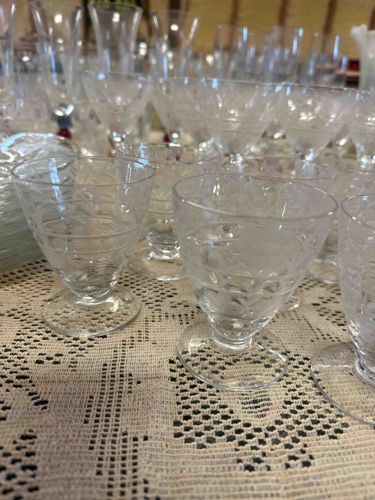
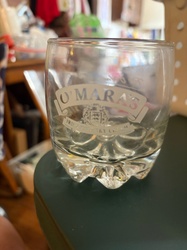
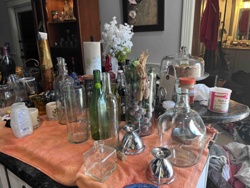
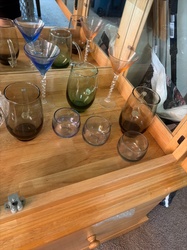
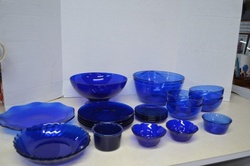
This image displays a collection of clear glass dessert dishes, often referred to as sherbet glasses, characterized by their stemmed design and etched decoration. Each vessel features a flared, open-mouthed bowl atop a short, cylindrical stem that connects to a circular footed base. The glass appears to be of standard thickness for drinkware or dessertware, providing reasonable durability without being overly heavy. The most prominent feature is the intricate etched pattern covering the exterior of the bowl, which appears to depict a floral or vine motif with delicate leaves and possibly small blossoms. The etching is consistent across the visible pieces, suggesting a manufactured set. The color is transparent clear glass, showing no obvious tint or discoloration. No visible maker's marks, signatures, or stamps are discernible in the provided image. The overall condition appears to be good, with no obvious chips, cracks, or significant wear visible, though specific imperfections would require closer inspection. The style suggests an era ranging from the late 19th century to the mid-20th century, a period known for its popularity of etched glass patterns in dinnerware and serving pieces. The uniformity of the design and construction indicates mass production with a high degree of quality control, pointing towards a recognized glass manufacturer from that period. These pieces would have been used for serving individual portions of desserts like sherbet, fruit cocktail, or parfaits, and their elegant design adds a touch of sophistication to a table setting. The craftsmanship appears competent, with smooth edges and a well-formed foot and stem, indicative of typical production standards for such items.
AI Appraisal Report
Based on my visual examination of the provided image, this set of etched glass dessert dishes/sherbet glasses appears to be in good overall condition. I do not observe any obvious chips, cracks, or significant wear. The etching is consistent, suggesting a well-maintained set. Authenticity, based solely on visual inspection of the etching style, aligns with typical mass-produced glassware from the late 19th to mid-20th century, a period known for such decorative pieces. However, without physical inspection, I cannot confirm specific manufacturing details or detect hairline fractures or subtle losses.
Market conditions for this type of glassware are moderate. While etched glass has a classic appeal, these particular pieces, lacking a distinct maker's mark or exceptionally rare design, fall into a more common category. Comparable sales for similar vintage etched sherbet sets (typically 6-8 pieces) range from $40 to $100, depending on the intricacy of the pattern and overall condition. Demand is steady among collectors of vintage glassware and those seeking period-appropriate dining accessories, but it is not high enough to command premium prices. Rarity is low to moderate; while individual patterns can vary, the general form and decorative style are relatively common.
Factors significantly impacting value include the number of pieces in the complete set (the image shows multiples but not the full quantity), the absence of any damage (which is hard to fully ascertain from images), and the lack of a known manufacturer, which would typically elevate value.
Limitations in authenticity verification are significant. Without an in-person examination, I cannot identify specific maker's marks, assess the exact quality of the glass or etching texture, or definitively rule out minor damage. Provenance documentation, if available, linking these to a specific maker or collection, would further enhance their value and confirm authenticity beyond visual cues.