Prehistoric Lithic Multi-Tool Core
Archaeological Artifacts & Antiquities

Prehistoric Lithic Multi-Tool Core

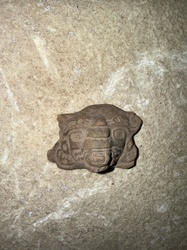
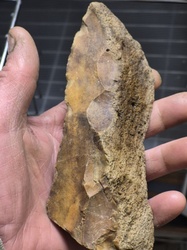
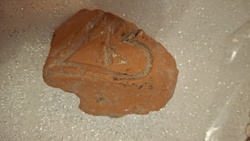
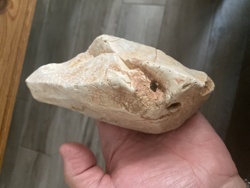
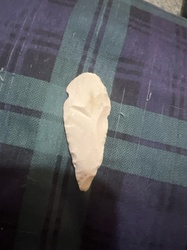
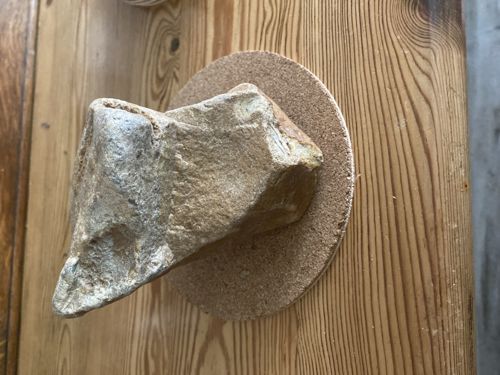
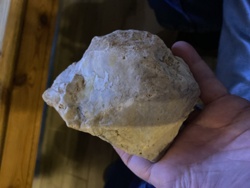
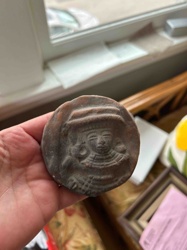
This item is a prehistoric lithic tool, measuring approximately 5 inches by 3.5 inches, consistent with North American Paleolithic or Early Archaic stone industries. It is likely a multi-functional implement or a tool core found in the Guthrie, OK region. The stone appears to be a local sedimentary or silicious material, exhibiting a granular texture with colors ranging from pale tan and beige to earthy ochre tones. The construction is characterized by percussion flaking, visible in the wide, shallow flake scars and steep edge retouching along the narrow end, which may have served as a scraper, adze, or hand-ax. The object features a heavy, ergonomic base that fits into the palm, transitioning to a narrower, more worked tip. Surface condition shows significant desert varnish and patina, suggesting long-term exposure to the elements and high antiquity. There are visible signs of historical wear along the working edges, including micro-chipping (use-wear) and some more recent surface abrasions. The absence of modern mechanical tooling marks supports its authenticity as an ancient artifact. While no maker's mark is present, the specific flake patterns indicate deliberate human modification for utilitarian purposes, reflecting high-quality early lithic craftsmanship and survival technology.
Estimated Value

$150 - $250

Basic Information

Category

Archaeological Artifacts & Antiquities

Appraised On

February 19, 2026

Estimated Value

$150 - $250

Additional Details Provided By Owner

User Provided Information

Prehistoric stone lithic multi tool likely from the Paleolithic era found in Guthrie OK measuring 5" x 3.5"

Item Description

This item is a prehistoric lithic tool, measuring approximately 5 inches by 3.5 inches, consistent with North American Paleolithic or Early Archaic stone industries. It is likely a multi-functional implement or a tool core found in the Guthrie, OK region. The stone appears to be a local sedimentary or silicious material, exhibiting a granular texture with colors ranging from pale tan and beige to earthy ochre tones. The construction is characterized by percussion flaking, visible in the wide, shallow flake scars and steep edge retouching along the narrow end, which may have served as a scraper, adze, or hand-ax. The object features a heavy, ergonomic base that fits into the palm, transitioning to a narrower, more worked tip. Surface condition shows significant desert varnish and patina, suggesting long-term exposure to the elements and high antiquity. There are visible signs of historical wear along the working edges, including micro-chipping (use-wear) and some more recent surface abrasions. The absence of modern mechanical tooling marks supports its authenticity as an ancient artifact. While no maker's mark is present, the specific flake patterns indicate deliberate human modification for utilitarian purposes, reflecting high-quality early lithic craftsmanship and survival technology.
Get Your Items Appraised

Instant estimates of your treasures with AI-powered instant appraisals

Browse More Appraisals