Prehistoric Native American Flint Scraper Multi-tool
Native American Prehistoric Artifacts

Prehistoric Native American Flint Scraper Multi-tool

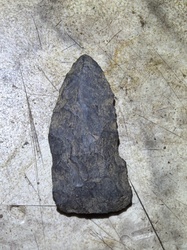
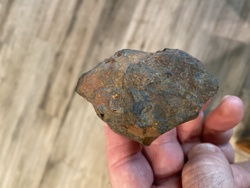
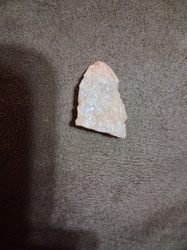
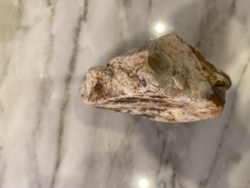
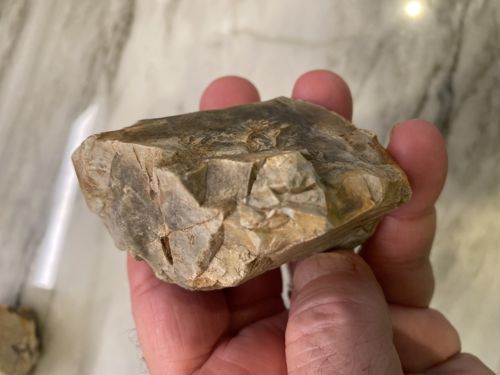
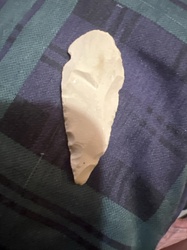
This artifact is a prehistoric lithic multi-tool, identified as a scraper, discovered in Guthrie, Oklahoma. Measuring approximately 3 inches by 2 inches, the item is crafted from high-quality flint or chert, likely sourced from local Oklahoma quarries such as Kay County or Frisco chert. The tool displays a variegated color palette of earthy tan, cream, and darker grey architectural mineral veins. The physical construction is characterized by unifacial flaking and significant dorsal percussion scars, indicating it was struck from a larger core. One edge shows deliberate retouching to create a steep, durable working surface suitable for hide scraping, wood shaping, or fiber processing. The surface exhibits a waxy luster and a smooth desert varnish or archaeological patina, consistent with long-term exposure to the elements and burial in soil. Notable features include numerous hinge fractures and bulbs of percussion that demonstrate human intentionality rather than natural geologic breaking. The condition is excellent for its age, showing typical edge wear from usage and minor post-depositional nicking along the margins. As a pre-contact tool, it likely dates to the Archaic or Woodland period, showing the high level of craftsmanship and functional design inherent in indigenous North American stone industries.
Estimated Value

$45 - $85

Basic Information

Category

Native American Prehistoric Artifacts

Appraised On

February 18, 2026

Estimated Value

$45 - $85

Additional Details Provided By Owner

User Provided Information

Prehistoric flint scraper multi tool found in Guthrie, OK measuring 3" x2"

Item Description

This artifact is a prehistoric lithic multi-tool, identified as a scraper, discovered in Guthrie, Oklahoma. Measuring approximately 3 inches by 2 inches, the item is crafted from high-quality flint or chert, likely sourced from local Oklahoma quarries such as Kay County or Frisco chert. The tool displays a variegated color palette of earthy tan, cream, and darker grey architectural mineral veins. The physical construction is characterized by unifacial flaking and significant dorsal percussion scars, indicating it was struck from a larger core. One edge shows deliberate retouching to create a steep, durable working surface suitable for hide scraping, wood shaping, or fiber processing. The surface exhibits a waxy luster and a smooth desert varnish or archaeological patina, consistent with long-term exposure to the elements and burial in soil. Notable features include numerous hinge fractures and bulbs of percussion that demonstrate human intentionality rather than natural geologic breaking. The condition is excellent for its age, showing typical edge wear from usage and minor post-depositional nicking along the margins. As a pre-contact tool, it likely dates to the Archaic or Woodland period, showing the high level of craftsmanship and functional design inherent in indigenous North American stone industries.
Get Your Items Appraised

Instant estimates of your treasures with AI-powered instant appraisals

Browse More Appraisals