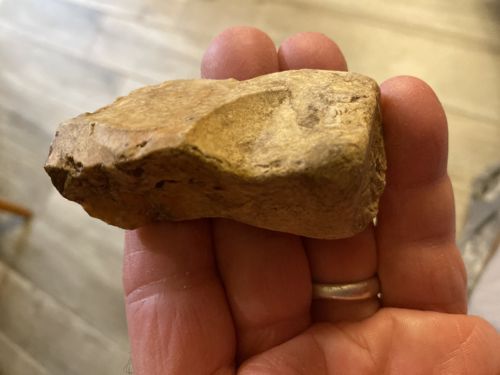
Lower Paleolithic Style Chert Scraper Tool
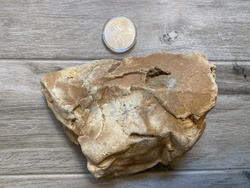
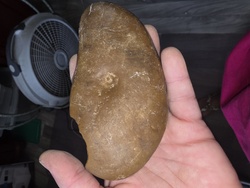
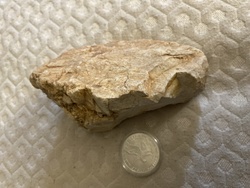
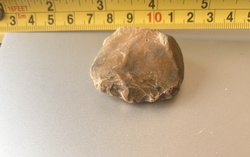
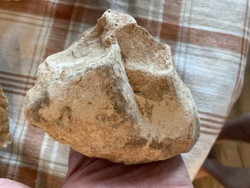
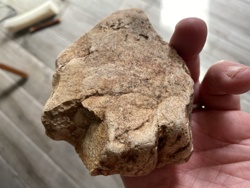
This artifact is a lithic scraper tool recovered from Guthrie, Oklahoma, measuring approximately 2.5 inches in length by 1.5 inches in width. It is fashioned from high-quality lithic material, specifically a variety of chert, characterized by a matte, earth-toned tan and light brown coloration. The item exhibits classic unifacial retouching along the primary working edge, a hallmark of prehistoric scraping tools used for hide preparation or woodworking. The dorsal surface shows significant flake scars and a prominent bulb of percussion, indicating intentional percussion flaking. Its construction is robust, designed for a handheld grip with a thick 'backing' to protect the user's hand while applying pressure. The condition reveals a heavy desert patina and significant cortical smoothing, consistent with extreme age and exposure to the elements. There is visible micro-chipping along the utilized edge, suggesting repetitive use-wear. While the user identifies this as 'Lower Paleolithic,' it is important to note that such stone tool technologies in North America are traditionally associated with Paleo-Indian or Archaic periods, approximately 3,000 to 12,000+ years BP. The craftsmanship displays efficient utilitarian design rather than aesthetic refinement, emphasizing durable functionality.
AI-Generated Appraisal Disclaimer
Estimated Value
$45.00 - $75.00
Basic Information
Category
Prehistoric Stone Artifacts / Archaeology
Appraised On
March 15, 2026
Estimated Value
$45.00 - $75.00
Additional Details Provided By Owner
User Provided Information
Lower Paleolithic chert scraper tool found in Guthrie, OK measuring 2.5" x 1.5"
Item Description
This artifact is a lithic scraper tool recovered from Guthrie, Oklahoma, measuring approximately 2.5 inches in length by 1.5 inches in width. It is fashioned from high-quality lithic material, specifically a variety of chert, characterized by a matte, earth-toned tan and light brown coloration. The item exhibits classic unifacial retouching along the primary working edge, a hallmark of prehistoric scraping tools used for hide preparation or woodworking. The dorsal surface shows significant flake scars and a prominent bulb of percussion, indicating intentional percussion flaking. Its construction is robust, designed for a handheld grip with a thick 'backing' to protect the user's hand while applying pressure. The condition reveals a heavy desert patina and significant cortical smoothing, consistent with extreme age and exposure to the elements. There is visible micro-chipping along the utilized edge, suggesting repetitive use-wear. While the user identifies this as 'Lower Paleolithic,' it is important to note that such stone tool technologies in North America are traditionally associated with Paleo-Indian or Archaic periods, approximately 3,000 to 12,000+ years BP. The craftsmanship displays efficient utilitarian design rather than aesthetic refinement, emphasizing durable functionality.
Get Your Items Appraised
Instant estimates of your treasures with AI-powered instant appraisals