Lion Canine Tooth
Natural History / Taxidermy Specimens

Lion Canine Tooth

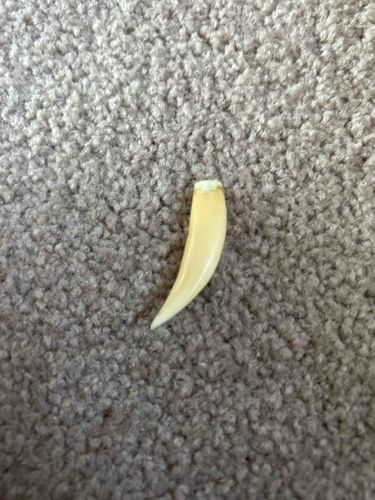
This specimen is an isolated large mammalian canine tooth, identified as originating from a lion (Panthera leo). The tooth displays a curved, conical shape typical of predatory carnassials, with a smooth, polished enamel surface over the crown. The coloration is an aged creamy-white to light ivory yellow, consistent with natural maturation and the provided context of being 20 years old. In terms of construction, it is a biological hard tissue composed of dentin and enamel. The root section appears to be recessed or missing, showing a flat, slightly rough top where it likely separated from the gum line or jawbone. Notable features include the sharp apex and subtle longitudinal striations visible under close examination. Condition-wise, the tooth exhibits a natural patina with minor surface scratches and a small amount of residue at the base, but it remains structurally sound with no significant cracks or calcification loss. While there are no maker's marks, as it is a natural biological object, the high degree of preservation suggests it has been stored in a climate-controlled environment. Such items are often kept as part of natural history collections or as ethnographic curiosities.
Estimated Value

$450 - $650

Basic Information

Category

Natural History / Taxidermy Specimens

Appraised On

January 12, 2026

Estimated Value

$450 - $650

Additional Details Provided By Owner

User Provided Information

Lions tooth 20 years

Item Description

This specimen is an isolated large mammalian canine tooth, identified as originating from a lion (Panthera leo). The tooth displays a curved, conical shape typical of predatory carnassials, with a smooth, polished enamel surface over the crown. The coloration is an aged creamy-white to light ivory yellow, consistent with natural maturation and the provided context of being 20 years old. In terms of construction, it is a biological hard tissue composed of dentin and enamel. The root section appears to be recessed or missing, showing a flat, slightly rough top where it likely separated from the gum line or jawbone. Notable features include the sharp apex and subtle longitudinal striations visible under close examination. Condition-wise, the tooth exhibits a natural patina with minor surface scratches and a small amount of residue at the base, but it remains structurally sound with no significant cracks or calcification loss. While there are no maker's marks, as it is a natural biological object, the high degree of preservation suggests it has been stored in a climate-controlled environment. Such items are often kept as part of natural history collections or as ethnographic curiosities.
Get Your Items Appraised

Instant estimates of your treasures with AI-powered instant appraisals

Browse More Appraisals