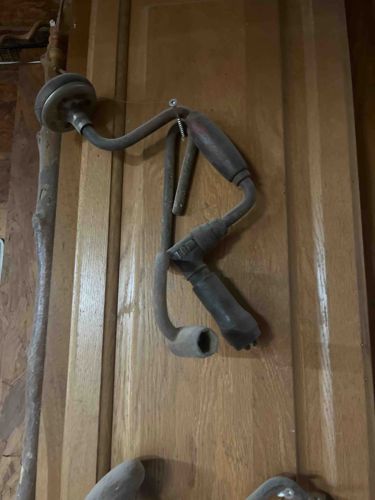
Vintage Ratcheting Bit Brace
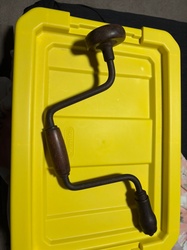
This is a vintage manual woodworking hand tool, specifically a ratcheting bit brace, likely dating from the early to mid-20th century. The tool features a U-shaped steel crank frame with a dark, oxidized patina indicating age and use. It is equipped with a turned wooden top handle (the head) and a central wooden grip on the crank. The wood shows signs of wear, surface grime, and a dull finish, consistent with a tool kept in a workshop environment. The brace includes a mechanical ratcheting selector near the chuck, which allowed the user to drill in confined spaces where a full rotation was not possible. The chuck at the bottom is designed to hold square-shank auger bits, and it appears to be a two-jaw design. There is a general layer of dust and surface rust across the metal components, but no visible structural cracks or major deformations. Such tools were commonplace in carpentry before the ubiquity of electric drills, produced by manufacturers like Stanley, Miller Falls, or Peck, Stow & Wilcox. The craftsmanship is evident in the forged steel construction and the ergonomic shaping of the wooden handles.
AI-Generated Appraisal Disclaimer
Estimated Value
$45-75
Basic Information
Category
Antique Hand Tools / Woodworking Equipment
Appraised On
March 12, 2026
Estimated Value
$45-75
Item Description
This is a vintage manual woodworking hand tool, specifically a ratcheting bit brace, likely dating from the early to mid-20th century. The tool features a U-shaped steel crank frame with a dark, oxidized patina indicating age and use. It is equipped with a turned wooden top handle (the head) and a central wooden grip on the crank. The wood shows signs of wear, surface grime, and a dull finish, consistent with a tool kept in a workshop environment. The brace includes a mechanical ratcheting selector near the chuck, which allowed the user to drill in confined spaces where a full rotation was not possible. The chuck at the bottom is designed to hold square-shank auger bits, and it appears to be a two-jaw design. There is a general layer of dust and surface rust across the metal components, but no visible structural cracks or major deformations. Such tools were commonplace in carpentry before the ubiquity of electric drills, produced by manufacturers like Stanley, Miller Falls, or Peck, Stow & Wilcox. The craftsmanship is evident in the forged steel construction and the ergonomic shaping of the wooden handles.
Related Tags
Get Your Items Appraised
Instant estimates of your treasures with AI-powered instant appraisals