EAPG Gold-Rimmed Pressed Glass Pitcher
Antique Glassware

EAPG Gold-Rimmed Pressed Glass Pitcher

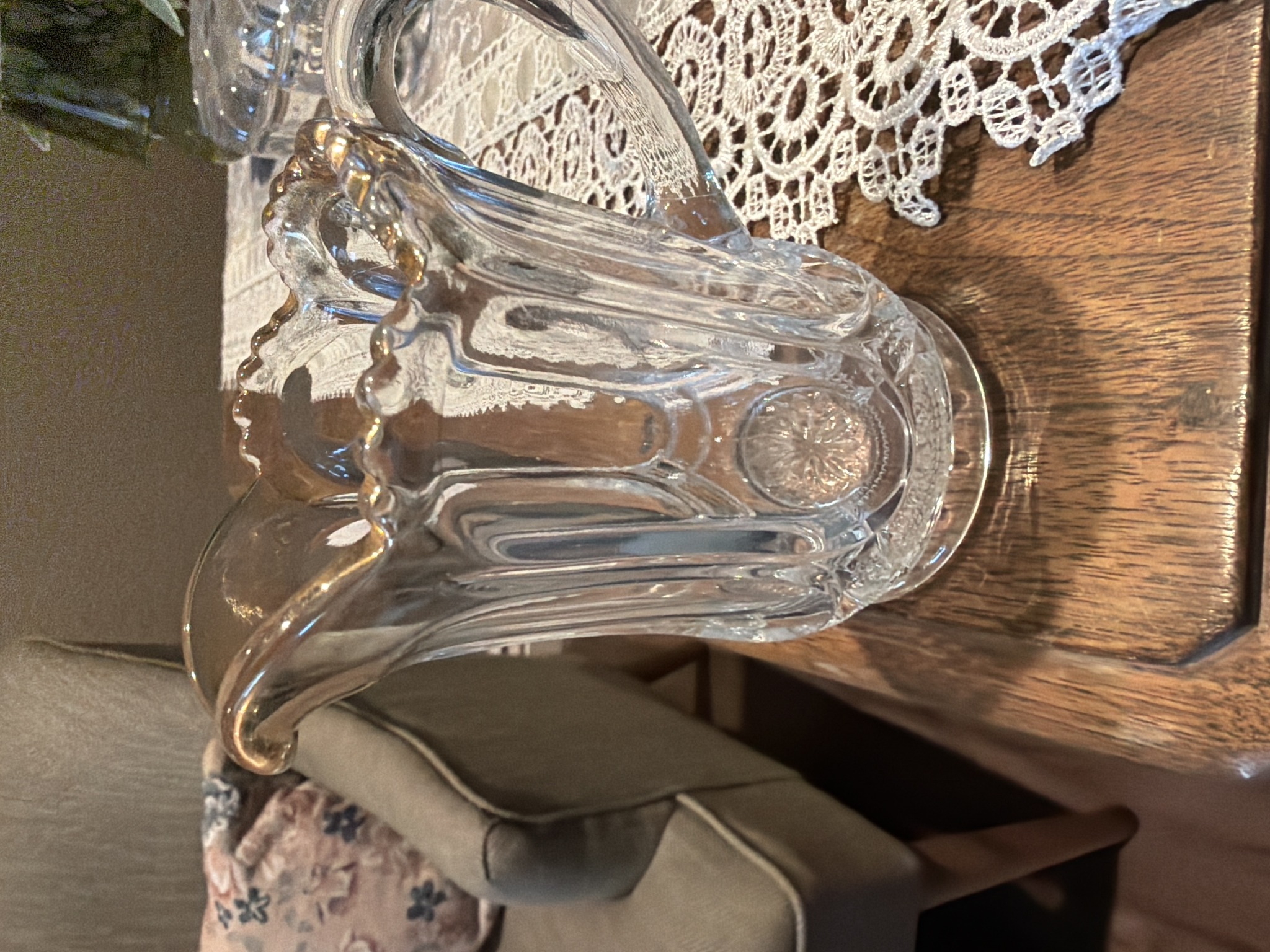
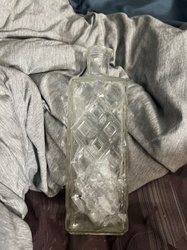
This is an Early American Pattern Glass (EAPG) pitcher, likely dating from the late 19th to early 20th century. The piece is constructed from heavy, transparent pressed glass with a notable vertical panel or fluted design. The body features deep ridges that terminate near a circular decorative medallion or 'bullseye' motif located towards the base, which contains a sunburst or star-cut pattern. The rim is distinctive for its ruffled, scalloped edge, or 'crimped' finish, adorned with a gold-leaf or gilt trim that has experienced significant wear and thinning, typical of age. A large, sturdy handle is applied to the side, exhibiting a smooth, rounded profile that contrasts with the textured body. The base is a thick, circular foot providing stability. Condition-wise, the glass appears clear without significant clouding (sickness), though there is visible loss to the gold gilding along the pouring spout and scalloped rim. No major chips or structural cracks are immediately apparent in the image, suggesting the piece has been well-maintained. This style of utility glassware was common in middle-class Victorian households, emphasizing both functionality and decorative flair through ornate glass pressing techniques that mimicked more expensive cut crystal.
Estimated Value

$45 - $65

Basic Information

Category

Antique Glassware

Appraised On

May 7, 2026

Estimated Value

$45 - $65

Item Description

This is an Early American Pattern Glass (EAPG) pitcher, likely dating from the late 19th to early 20th century. The piece is constructed from heavy, transparent pressed glass with a notable vertical panel or fluted design. The body features deep ridges that terminate near a circular decorative medallion or 'bullseye' motif located towards the base, which contains a sunburst or star-cut pattern. The rim is distinctive for its ruffled, scalloped edge, or 'crimped' finish, adorned with a gold-leaf or gilt trim that has experienced significant wear and thinning, typical of age. A large, sturdy handle is applied to the side, exhibiting a smooth, rounded profile that contrasts with the textured body. The base is a thick, circular foot providing stability. Condition-wise, the glass appears clear without significant clouding (sickness), though there is visible loss to the gold gilding along the pouring spout and scalloped rim. No major chips or structural cracks are immediately apparent in the image, suggesting the piece has been well-maintained. This style of utility glassware was common in middle-class Victorian households, emphasizing both functionality and decorative flair through ornate glass pressing techniques that mimicked more expensive cut crystal.
Get Your Items Appraised

Instant estimates of your treasures with AI-powered instant appraisals

Browse More Appraisals