Chert Hand Axe and Scraper Tool
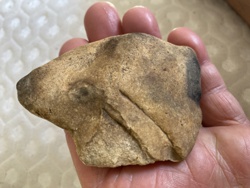
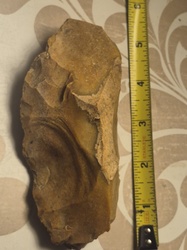
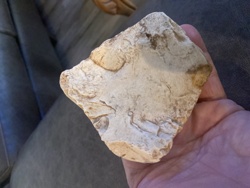
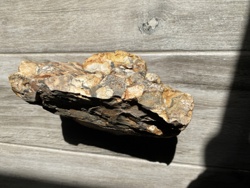
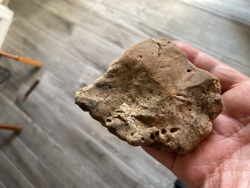
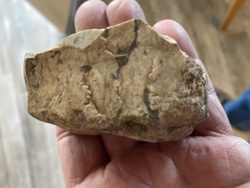
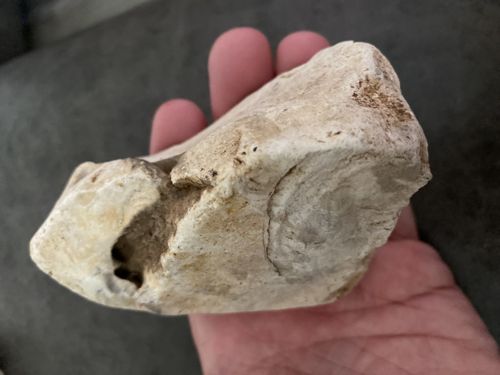
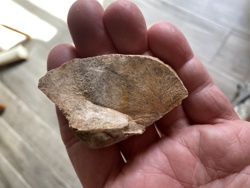
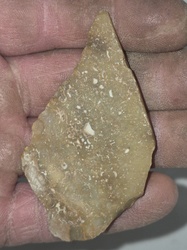
This artifact is identified as a bifacial lithic tool, specifically a hand axe and scraper combination, discovered in Guthrie, Oklahoma. Measuring approximately 4.5 inches by 3 inches, the item is fashioned from light-colored, cream-to-tan chert (flint). The tool exhibits significant unifacial and bifacial flaking along its edges, characteristic of cordiform or ovate hand axe morphologies. One end tapers to a broad point, while the thicker base is designed for a comfortable palm grip, suggesting manual use without hafting. The material shows a distinct weathered patina and calcification, consistent with long-term environmental exposure. Notable features include visible conchoidal fracture scars where flakes were intentionally removed to create a sharpened working edge. There are areas of mineral staining and some impact pitting along the ridges. While there is minor edge rolling and ancient micro-chipping indicative of use-wear, the tool remains substantial and structurally sound. The craftsmanship reflects an opportunistic yet skilled knapping technique typical of the Middle Paleolithic/Middle Stone Age era, focusing on functionality and durability for scraping and cutting tasks.
AI-Generated Appraisal Disclaimer
Estimated Value
$450 - $700
Basic Information
Category
Archeological Artifacts - Stone Tools
Appraised On
February 20, 2026
Estimated Value
$450 - $700
Additional Details Provided By Owner
User Provided Information
Middle Paleolithic Chert hand axe scraper tool found in Guthrie OK measuring 4.5" x 3"
Item Description
This artifact is identified as a bifacial lithic tool, specifically a hand axe and scraper combination, discovered in Guthrie, Oklahoma. Measuring approximately 4.5 inches by 3 inches, the item is fashioned from light-colored, cream-to-tan chert (flint). The tool exhibits significant unifacial and bifacial flaking along its edges, characteristic of cordiform or ovate hand axe morphologies. One end tapers to a broad point, while the thicker base is designed for a comfortable palm grip, suggesting manual use without hafting. The material shows a distinct weathered patina and calcification, consistent with long-term environmental exposure. Notable features include visible conchoidal fracture scars where flakes were intentionally removed to create a sharpened working edge. There are areas of mineral staining and some impact pitting along the ridges. While there is minor edge rolling and ancient micro-chipping indicative of use-wear, the tool remains substantial and structurally sound. The craftsmanship reflects an opportunistic yet skilled knapping technique typical of the Middle Paleolithic/Middle Stone Age era, focusing on functionality and durability for scraping and cutting tasks.
Get Your Items Appraised
Instant estimates of your treasures with AI-powered instant appraisals